
Bulbine semibarbata
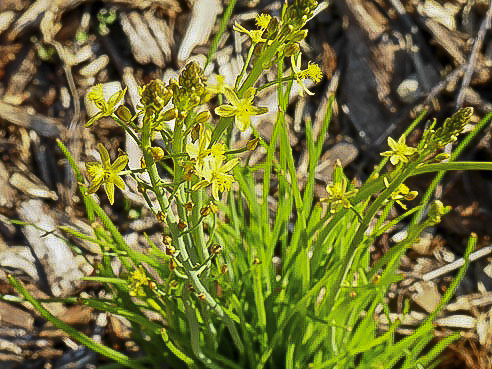
Bulbine semibarbata is a perennial herb. Succulent leaves are up to 30 centimetres long with a channel. From September to December, plants produce multiple flowering stems up to 40 centimetres long. Each flowering stem holds up to 35 yellow blooms, with each flower up to two centimetres in diameter.
Wurmbea dioica
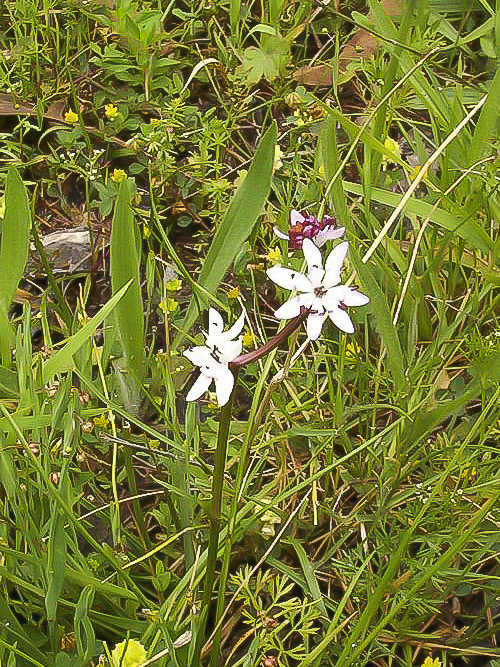
Wurmbea dioica, Early Nancy, is a member of the Colchicaceae family and is a small perennial herb with a corm, two or three annual leaves and a single flowering spike carrying one to eight flowers. Spikes may be up to 30 centimetres tall. Blooms have six petals. They are usually white and appear in spring. Early Nancy is mostly dioecious (male and female flowers on different plants). A small percentage of flowers may have both male and female parts. The fruit is a one centimetre long capsule that contains 10-50 seeds.
Lomandra Tanika or Tanika Lomandra (Lomandra ‘LM 300’)
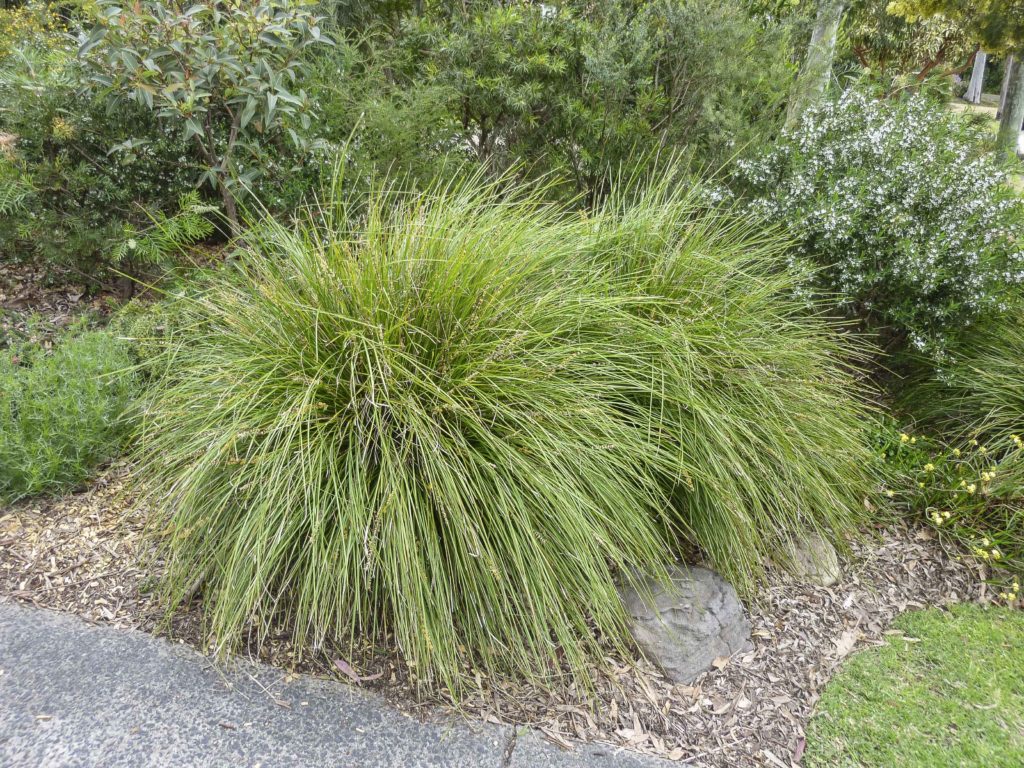
I have been growing Lomandra ‘Tanika’ in my garden in the northern Sydney suburb of Westleigh for many years. It is an improved compact fine leaf form of the popular and widely grown Lomandra longifolia and you can classify the plant as a ‘strappy leaf’ plant. My plants are growing in a thin layer of topsoil over a clay sub soil and receive little additional watering once they were established.
Lomandra leucocephala
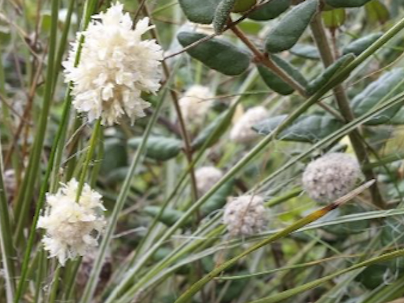
Lomandra leucocephala occurs naturally on inland drier slopes of the Great Dividing Range of Queensland and northern NSW. This slow growing Lomandra has 25mm balls of fluffy white flowers which exude a lovely caramel fragrance. The leaves are usually very narrow (1 to 2mm wide) with white leaf sheaths.
Lomandra multiflora
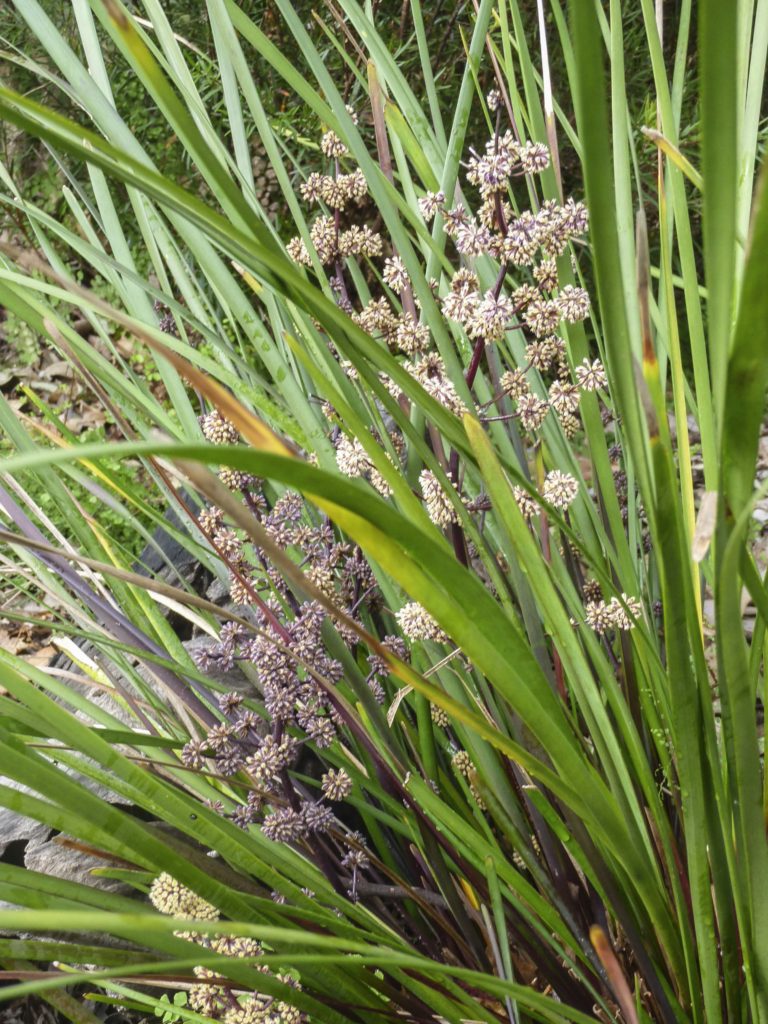
Lomandra multiflora is found in the Northern Territory, Queensland, New South Wales, Victoria and South Australia and also in Papua New Guinea. I have been growing Lomandra multiflora in my garden in the northern Sydney suburb of Westleigh for many years. My plant is growing in a thin layer of topsoil over a clay sub soil and receive little additional watering once they were established
Libertia paniculata

Libertia paniculata is widespread in rainforest and wet open forest on coast and adjacent ranges from south-east Queensland to eastern Victoria. The other Australian species is Libertia pulchella. They are both perennial herbs with grass-like leaves arising from an underground rhizome.
Arthropodium fimbriatum
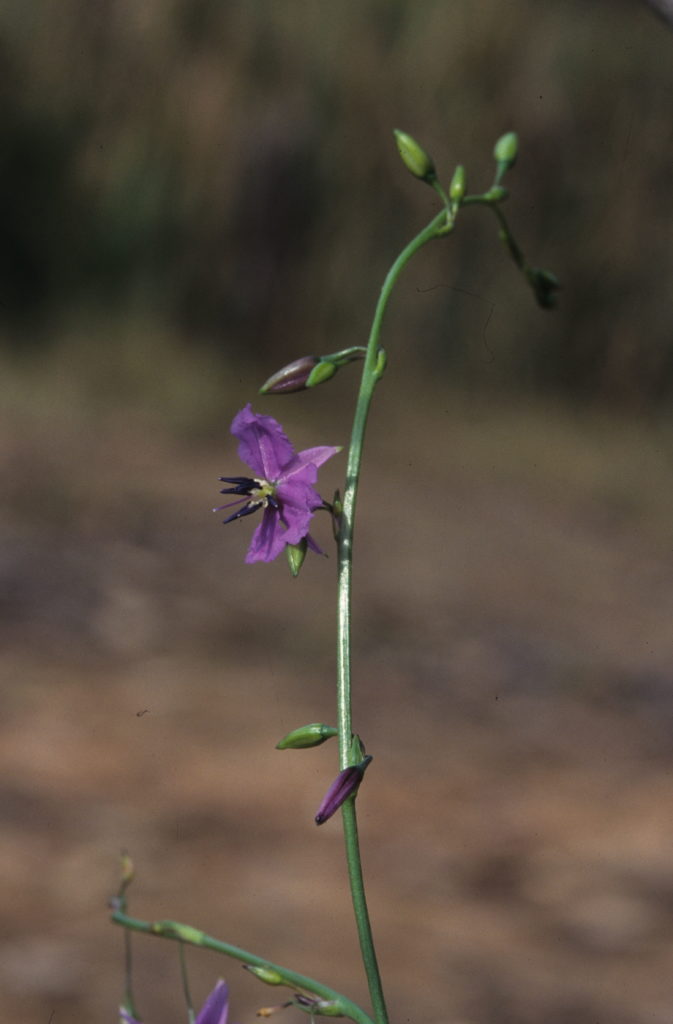
Arthorpodium fimbriatum, the Nodding Chocolate Lily, is an erect herb reaching a height of 1 metre with fibrous roots terminating in a tuber. The linear leaves are up to 35 centimetres long and grass-like in appearance. In spring and summer each plant carries a flower spike carrying about 12 large, blue, six-petalled flowers.
Dianella caerulea ‘King Alfred’
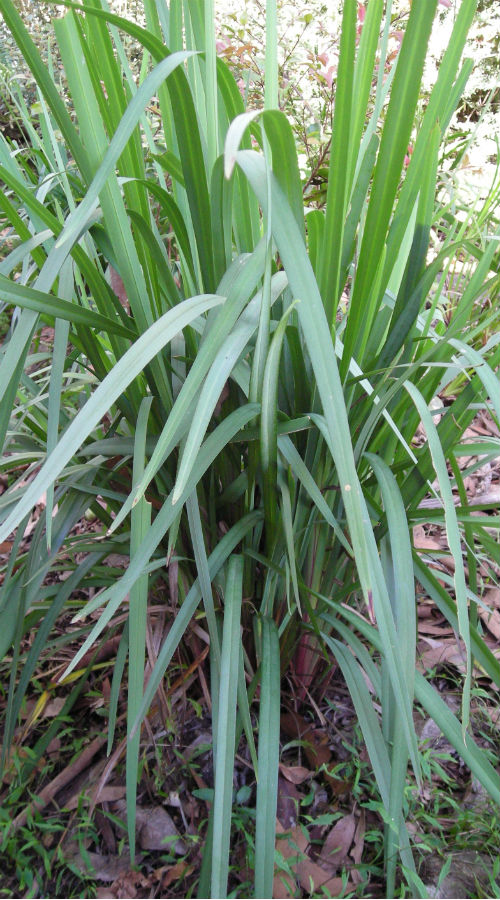
Dianella caerulea is an attractive upright plant with flax-like leaves to 60 cms high. Flowers are blue with yellow anthers and are borne on spikes to one metre high and are followed by globular bright blue-purple fruit. It grows from coast to the mountains along Eastern Australia. This species has many named varieties and this article is about ‘John 316’ King Alfred. Other varieties are ‘Cassa Blue’ and ‘Little Jess’ to name a few.
Crinum pedunculatum
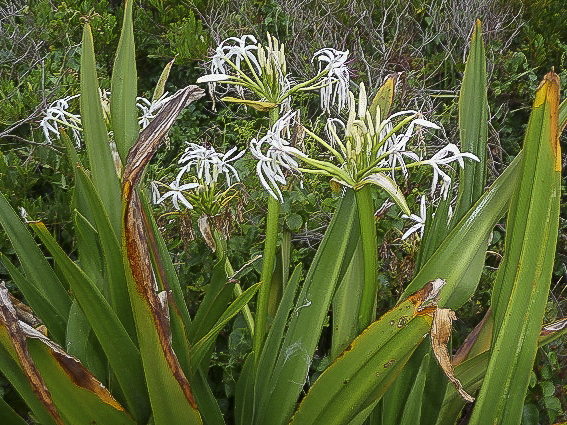
Crinum pedunculatum is a member of the Amaryllidaceae family in company with the exotic Narcissus and Nerine. The accepted common names are Swamp or River Lily. Crinum pedunculatus grows in colonies along tidal areas and streams. The species is evergreen, hardy and resists frost.