
Originally published in Research Matters, Newsletter of the Australian Flora Foundation, No. 44, July 2026
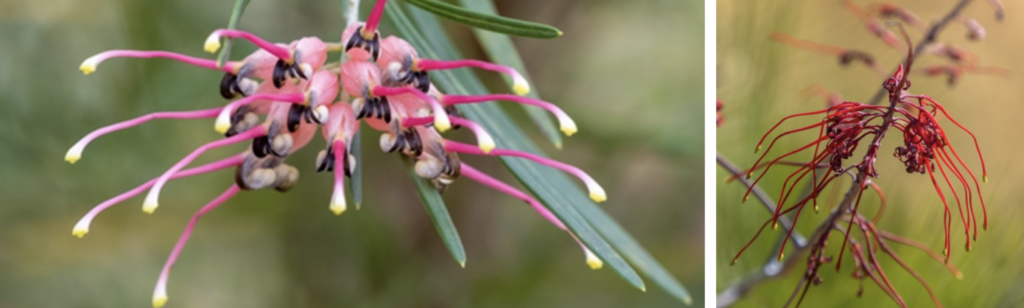
For many Australians, an interest in native plants begins simply: a flowering Grevillea noticed on a bushwalk, a desire to attract more birds to the garden, or a local field trip that reveals the extraordinary botanical diversity hidden in plain sight.
For others, the entry point is science, conservation, or professional work. Increasingly, these paths converge.
Recent generous donations to the AFF from the Australian Plants Society NSW and Australian Plants Society Victoria are a timely reminder of a relationship that runs deeper than a shared enthusiasm for plants. The Australian Plants Society (APS) movement — operating through a national network of thousands of volunteers — is a significant, if often underappreciated, contributor to Australia’s botanical knowledge and conservation ecosystem. Understanding and supporting that relationship matters for anyone who cares about the future of Australian flora and its research.
A shared foundation
The connection between the Australian Flora Foundation (AFF) and the APS movement is not incidental — it is constitutional. When the Australian Flora Foundation was established in 1981, its founding members included not only academic and government scientists and university horticulturists, but also members of what was then known as the Society for Growing Australian Plants. The two organisations were born from the same conviction: that Australia’s extraordinary flora deserved serious, sustained attention.
That founding partnership has continued quietly ever since.
As well as bequests, many of the regular donors to AFF are district-level APS groups — Sutherland, Newcastle, Mackay, and others — alongside individuals who have spent decades active in the APS movement. The donations are significant and deeply appreciated, but the relationship they represent is more important still.
A distributed network of observation and participation
Across Australia, thousands of APS volunteers contribute through a network of organisations affiliated with the Australian Native Plants Society Australia (ANPSA). State bodies operate in every jurisdiction and provide support and governance to dozens of district groups embedded in local communities across the country.
The district groups are where much of the practical experimentation happens. From 1960 to the 1980s, they were the only source of knowledge and plant material available to aspiring native plant gardeners.
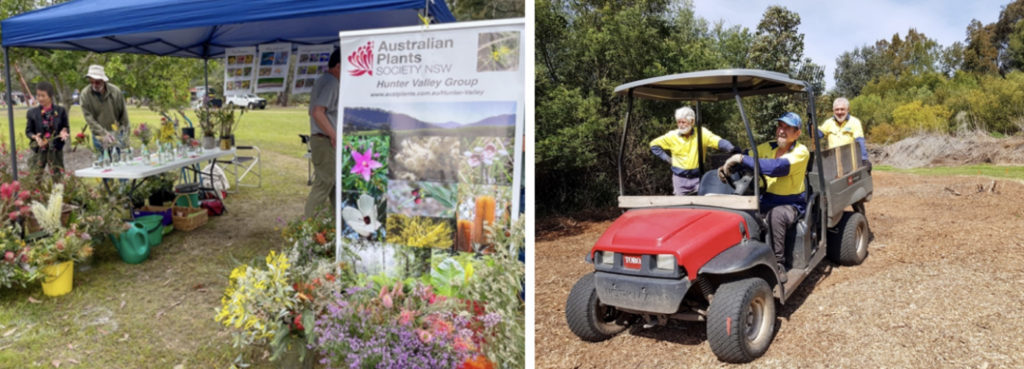
Today, members continue to contribute in remarkably diverse ways. As well as continuing to make native plants available through propagation and sale in community nurseries and markets, they are active in:
- Generating and sharing knowledge
- Creating and maintaining native gardens, requiring ongoing experimentation with what grows where and careful observation of plant performance
- Improving propagation success by trialling methods for germinating seed, striking cuttings, and grafting
- Establishing show gardens to educate and inspire local communities
- Sharing findings through books, websites, social media, workshops, newsletters, meetings, and conferences
- Directly contributing to conservation efforts
- Participating in and supporting research projects such as seed banking efforts, rare plant monitoring programs, habitat restoration projects, and ex situ conservation activities in collaboration with councils, botanic gardens, and universities.
- Creating a sense of community of like-minded people
Australian Plants Society as a creator and sharer of knowledge
Over the years, APS has cultivated deep botanical expertise outside formal academic structures. This is done in several ways.
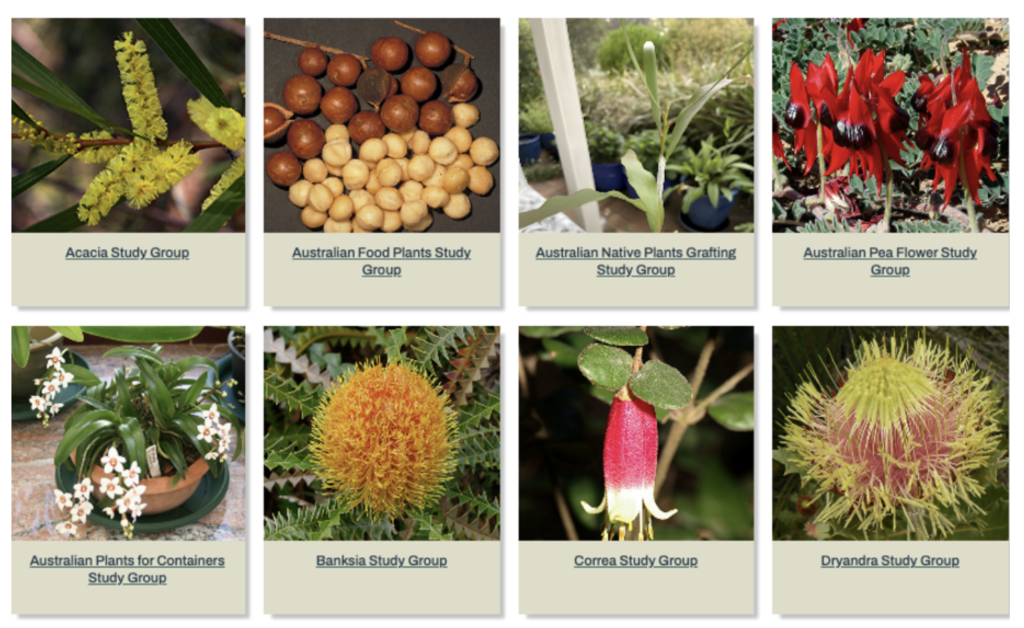
- ANPSA Study Groups
The ANPSA study groups are organised around particular genus or horticultural applications. Over time, these groups have produced bodies of practical knowledge that rival that of professional taxonomists and ecologists.
Each study group dedicates itself to creating knowledge about that genera or ecosystem, and sharing it through meetings, books, personal observation and regular newsletters and conferences.
The Grevillea Study Group, for example has issued more than 100 newsletters, covering cultivation, propagation, conservation and field trips since 1978.
The Eremophila Study Group has a long-running collaboration with the University of Queensland (UQ). Over several years, Study Group members across five states have systematically collected fruit from their gardens and from wild populations — under permit — and mailed them to UQ’s Gatton Campus for a germination project funded by the Australian Research Council. By 2023, members had contributed more than 13,000 specimens. Researchers at UQ are using this material to study seed viability, pollination, and how chromosome number affects germination across the genus. A separate study on ploidy in Eremophila, funded by the Australian Flora Foundation, grew from the same collaboration. It is a partnership that could not exist without the Study Group’s geographic reach, the decades of cultivation knowledge of its members, and their willingness to travel remote Queensland roads with collection permits and a good eye for a fruiting shrub.
2. Learning from experts
Several well-known names illustrate the connection between enthusiasm and expertise. Peter Olde’s work on the genus Grevillea is foundational to both hobbyists and taxonomists. Alex George is a major authority on Banksia, with a publication record that would sit comfortably in any university department. Rodger and Gwen Elliott’s encyclopaedic documentation of Australian plants has provided baseline data for generations of researchers. Neil Marriott’s knowledge of grevilleas spans both taxonomy and horticulture.
At a local level, experienced members play a critical role in enhancing propagation success by exhaustively trialling various methods for germinating seeds, striking cuttings, and grafting – and then sharing those insights with others. As one 35-year member says,
“The knowledge I have gained from other members on propagation has enabled me to grow plants that can’t be found in nurseries – precisely because they are often not easy to propagate. Without first learning from senior experienced members who have done much experimentation, I would not have the range of plants I have now, including more than 70 different Eremophila species, more than half of them grafts I have done myself. Such experimentation is not often encountered outside APS groups.”
- Citizen science
The flow of knowledge does not always involve field trips or laboratory partnerships. It can be as simple as opening a hard drive or smartphone app. One of us has spent at least a decade photographing native plants across Australia — thousands of images with no obvious destination. Uploading more than 2,000 of them to iNaturalist has given that archive a second life: georeferenced, searchable, and available to researchers tracking species distributions in a changing climate. It is a small act, but when multiplied across a network of plant enthusiasts, it adds up to something a funded survey program may struggle to replicate.
- Communication
Through books, newsletters, journals, conferences, field trips, show gardens, plant databases, and online forums, APS groups share their findings to enthusiasts who are well placed to act on them. A result published in a botanical journal reaches one community; the same result discussed at an APS field day reaches gardeners, propagators, seed collectors, and land managers who may apply it immediately.
These examples are not outliers. They represent a model — of rigorous observation, sustained over decades, motivated by genuine passion — that the APS movement has quietly produced over the years. Many members never publish in peer-reviewed journals, yet the knowledge they carry, and the observations they contribute to citizen science platforms, seed banks, and collaborative projects, is scientifically valuable.
Direct participation in research and conservation
In addition to creating and sharing knowledge, the APS movement plays a role that formal research institutions can struggle with — translating scientific knowledge into practical application and feeding practical observations back to researchers. Essentially, APS acts as a research multiplier.
Members assist in the implementation of research findings by directly supporting conservation efforts. This kind of distributed, motivated attention to the landscape is increasingly hard to replicate by other means.
A recent example is the ‘Conserving Wimmera Rarity’ project initiated by members of the Wimmera Growers of Australian Plants. After recognising that several rare and endangered plant species of the Wimmera and Little Desert were receiving little conservation attention, local APS members approached the Royal Botanic Gardens Cranbourne and helped establish a collaborative conservation program. Volunteers assisted with locating populations, obtaining permits, collecting propagation material, and identifying sites for future plantings. The project has since expanded to involve botanic gardens, government agencies, private landholders and community grants, with the aim of safeguarding some of the region’s rarest flora. It is an excellent illustration of how local knowledge, curiosity, and long-term observation by native plant enthusiasts can catalyse research and conservation outcomes that extend far beyond the community itself.
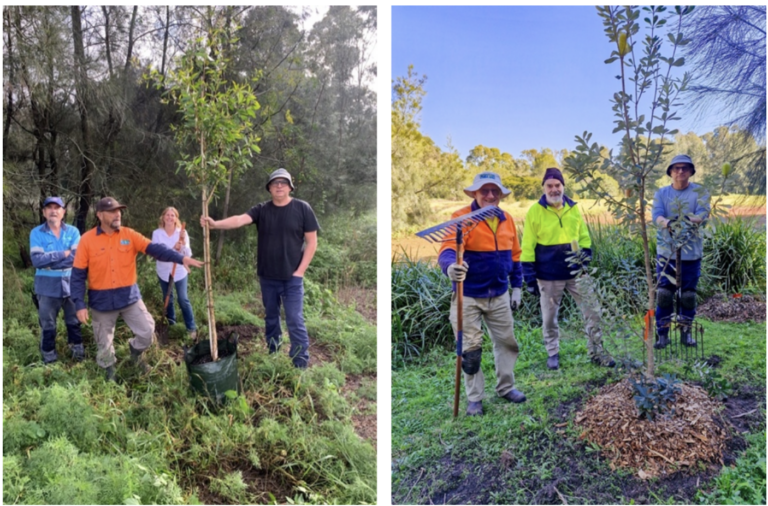
For 30 years, Lloyd Hedges was the mainstay of the Menai Group of APS NSW, developing the group’s nursery, community education programs and demonstration native garden. He also propagated thousands of native plants for restoration projects. These included revegetation projects in the Royal National Park, Dharawal National Park and Five Islands Nature Reserve, as well as leading the production of 13,000 she-oaks for the ‘Glossies in the Mist’ project for creating habitat corridors for the vulnerable Glossy Black Cockatoo.
Australian Plants Society as a supporter of community
Underlying all of this is something harder to quantify but easy to underestimate: the social fabric of the APS movement. People join APS groups to find others who share their interest. The relationships formed are what sustain long-term commitment — to the group, to the landscape, and to the work of observation and conservation that makes everything else possible.
A membership that is genuinely engaged — actively involved in field activities, propagation, and knowledge-sharing — is far more likely to contribute to research in practical ways: providing access to private land, assisting with sample collection and planting, flagging unusual observations, or funding young scientists. The APS network, in this sense, helps make Australian flora research possible.
Looking ahead
Like many volunteer organisations, the APS movement faces challenges, particularly an aging membership. Younger generations find their knowledge and connections through different media. Yet, growing public interest in biodiversity, habitat gardening, and climate resilience creates new audiences for the kind of knowledge the APS movement has accumulated, and many groups are actively reaching out to share that knowledge more broadly.
The ANPSA Biennial Conference, to be held in Mparntwe Alice Springs from 24-28 August 2026, offers a vivid illustration of what this network looks like in practice. Hosted by APS South Australia in collaboration with APS Alice Springs, and with committees that include both dedicated enthusiasts and research scientists — among them AFF’s own Professor Hans Griesser — it is precisely the kind of gathering where the ‘why’ of research meets the ‘how’ of cultivation. We encourage members of the AFF community to attend.
As we thank the state bodies, district groups, and individual members for their generous support, we invite the AFF community to see the APS movement for what it is: not simply a source of donations, but a collaborator with complementary strengths. The AFF provides the rigour and resources of funded scientific research. The APS network provides geographic reach, long-term observation, practical expertise, and an engaged community that helps sustain public commitment to Australian flora.

Together, the two movements ensure that Australia’s extraordinary botanical heritage is not only studied in the laboratory but observed, cultivated, and valued in every corner of the country.
From the observations of a gardener trialling a difficult grevillea to a researcher analysing seed viability in a laboratory, Australia’s understanding of its native flora depends on an ongoing conversation between enthusiasts and scientists. The APS movement and the AFF are partners in that conversation, linking the field and the laboratory in a shared commitment to understanding and conserving Australia’s extraordinary flora.
About the author
Heather Miles is the Secretary of the AFF and a longstanding member of Australian Plants Society NSW where she has held roles as director, president, secretary, and webmaster. In addition, she has a passion for photography with a focus on native plants and fauna (Click Here for the pdf). She can be contacted at secretary@aff.org.au. Heather gratefully acknowledges advice and input from Professor Hans Griesser and Paddy Lightfoot AOM, two fellow AFF committee members.
About the Australian Flora Foundation
The Australian Flora Foundation is a not-for-profit charity dedicated to fostering scientific research into Australia’s flora. It is totally independent. All members of the Council and the Scientific Committee give their time freely as volunteers.
Each year the Foundation provides funding for a number of grants for research into the biology and cultivation of the Australian flora. They are often vital in enabling such projects to be undertaken. Many of the researchers are honours or postgraduate students, and their success with an Australian Flora Foundation grant hopefully stimulates their interest in researching Australia’s unique and diverse plants throughout their careers.
This work is only made possible by the generous support of donors and benefactors.
The Council (Governing Body)
- Dr E Charles Morris, President and Treasurer
- Mr Ross Smyth-Kirk OAM, Vice President
- Prof. Jennifer Firn, Vice President
- Ms Heather Miles, Secretary
- Emeritus Prof. Hans Griesser, Grants Officer
- Assoc. Prof. Tina Bell, Newsletter Editor
- Dr Gabrielle Lebbink, Website Editor
- Mr Paddy Lightfoot OAM
- Prof. Angela Moles
- Dr David Murray
The Scientific Committee
- Prof. Jennifer Firn, Chair (Queensland University of Technology)
- Dr Jason Bragg (Royal Botanic Gardens Sydney)
- Dr Siegy Krauss (Kings Park and Botanic Gardens)
- Dr Mark Ooi (University of New South Wales)
- Prof. Angela Moles (University of New South Wales)
- Assoc. Prof. Rachel Standish (Murdoch University)
- Prof. Richard Williams (University of Queensland)
Email contacts
Charles Morris, President: president@aff.org.au
Heather Miles, Secretary: secretary@aff.org.au
Hans Griesser, Grants Officer: grants@aff.org.au
Tina Bell, Newsletter Editor: tina.bell@sydney.edu.au