
This article has been adapted from CALEYA, the newsletter of the APS Northern Beaches Group, and is based on a presentation by Jennifer McLean at the group’s September meeting. The text has been modified for publication (Ed.).
Poaceae Family
The Poaceae family, also known as the grass family or Gramineae (since Linnaeus), consists of monocotyledonous flowering plants. Worldwide, there are approximately 11,000 to 12,000 species across nearly 800 genera. Grasses provide 60% of the world’s food in the form of cereals and fodder for grazing animals. Bamboo is a major building product in Asia. Sugarcane is a significant source of sugar, fibreboard, motor spirits and rum. Other grass species produce oils, while some are used to make baskets.
Characteristics of Grasses
Grasses are annual or perennial herbs and may have a rhizome or stolon. Mostly tufted, their leaves consist of two parts: a cylindrical sheath (usually split on one side) surrounding the stem, and a blade. Stems are usually hollow except at the nodes. A ring of hairs or transparent tissue, called a ligule, is found at the junction of the blade and sheath.
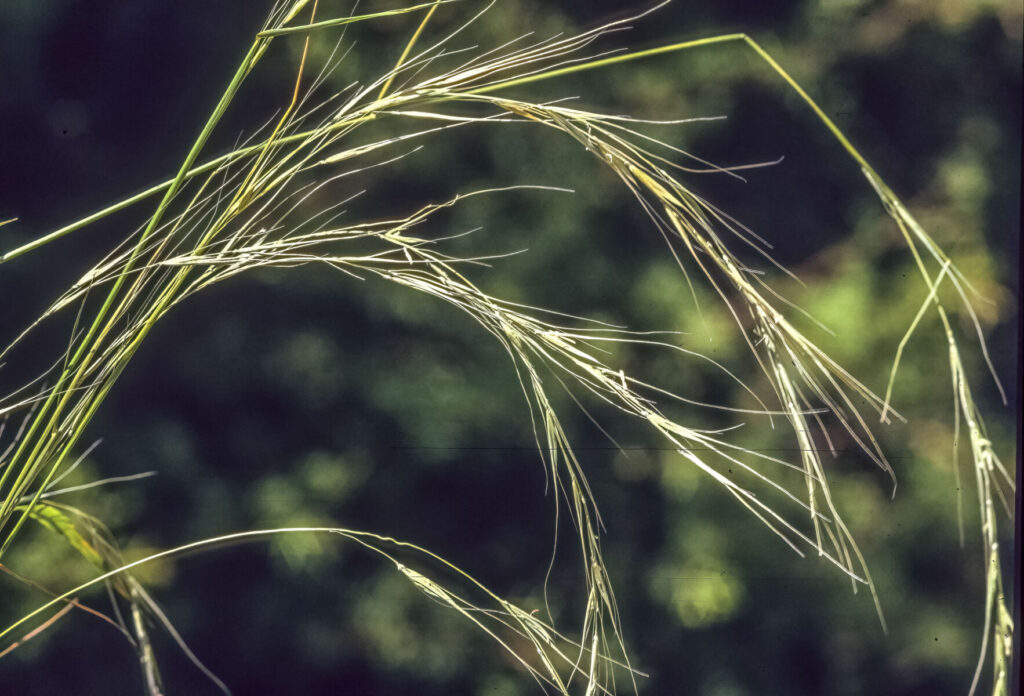
The inflorescence is usually a panicle divided into spikelets, which typically have two bracts called glumes. These enclose one or two florets. A floret consists of a flower enclosed within two additional bracts. The outer bract is called the lemma, and the inner one the palea. The lemma often has one or more awns that help with identification.
Australian Native Grasses
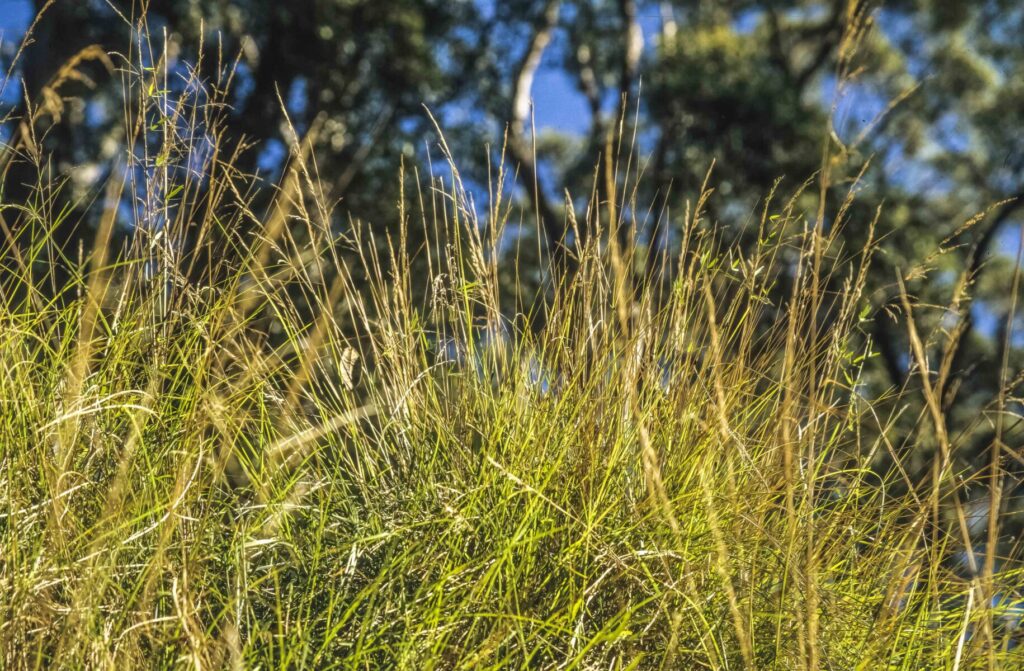
Australia has approximately 1,000 native grass species that have evolved over millions of years to thrive in harsh, low-fertility soils and variable climates. They are primarily perennials, with significant environmental benefits, including drought tolerance, soil stabilisation and support for wildlife. They are grouped into cool-season & warm season grasses with distinct growth patterns and habitat preferences.
Warm season: Kangaroo grass. Blue green foliage & reddish seed heads; edible seeds; a staple for native wildlife.
Cool season: Wallaby grass (Rytidosperma sp.) prevalent in Southern & Eastern Australia fine leaves & fluffy white seed heads.
Poa labillardiaeri hardy, tolerant of cold, drought & shade. Microlaena stipoides found in Eastern Australia grows in moist, well drained soils & partial shade. Spinifex triodia sp. Dominant in arid inland, forms dense tussocks on sandy soil. Native grasses used in sustainable landscaping & no-mow lawns provide texture and movement. Most species are non-invasive useful in restoring degraded land, creating wildlife habitat & reducing soil erosion; offering growth in different seasons. They provide consistent green feed for livestock. Indigenous Australians cultivated native grasses.