This article first appeared in the South East NSW Group Newsletter No. 221, July 2025 edition, all images were captured by Dylan Morrissey.
Orchid seed is incredibly small, and unlike most seeds they lack an endosperm. In simple terms – the seed lacks energy stores to support its germination until such a time as it can produce its own energy and has developed a root system capable of taking in water and nutrients. In nature, orchids rely on complex relationships with fungi to support germination and establishment of seedlings.
Recently, whether from madness or some sense of optimism for the future, I have been buying orchid flasks. With just a couple of hundred dollars outlay I find myself in possession of around 300 new plants – by my justifications a good investment. Buying orchids grown from seed offers a few benefits. In the first instance, the obvious value.
Depending on the species, the price is generally from $50-100, and most commonly sold as containing twenty to twenty-five plants, although in reality it is often more like 50 plants, and they can be picked up cheaper or in some instances much more expensive. One of the flasks of Dockrillia I recently deflasked was just thirty-five dollars and contained ninety good sized plants.
Secondly, it is an opportunity to acquire “good” plants. Hybrids that are a standout in quality and will go on to win prizes for the grower. By growing out thirty or forty plants to flowering from flask your chances are increased of finding that special one.
Some orchids rely on fungi for their entire lives. These orchids can entirely lack leaves, and rely on mycorrhizal relationships for energy, only flowering above ground (E.g. Dipodium spp.). Some species even flower below ground level like, Rhizanthella slateri. Plants that rely on fungi for energy are known as myco-heterotrophs.
Many species of orchid, especially terrestrial species, are specific as to which species (or occasionally a single species) of fungi they are compatible with. For the orchid enthusiast, this means an almost insurmountable challenge to growing orchids from seed without advanced methods.
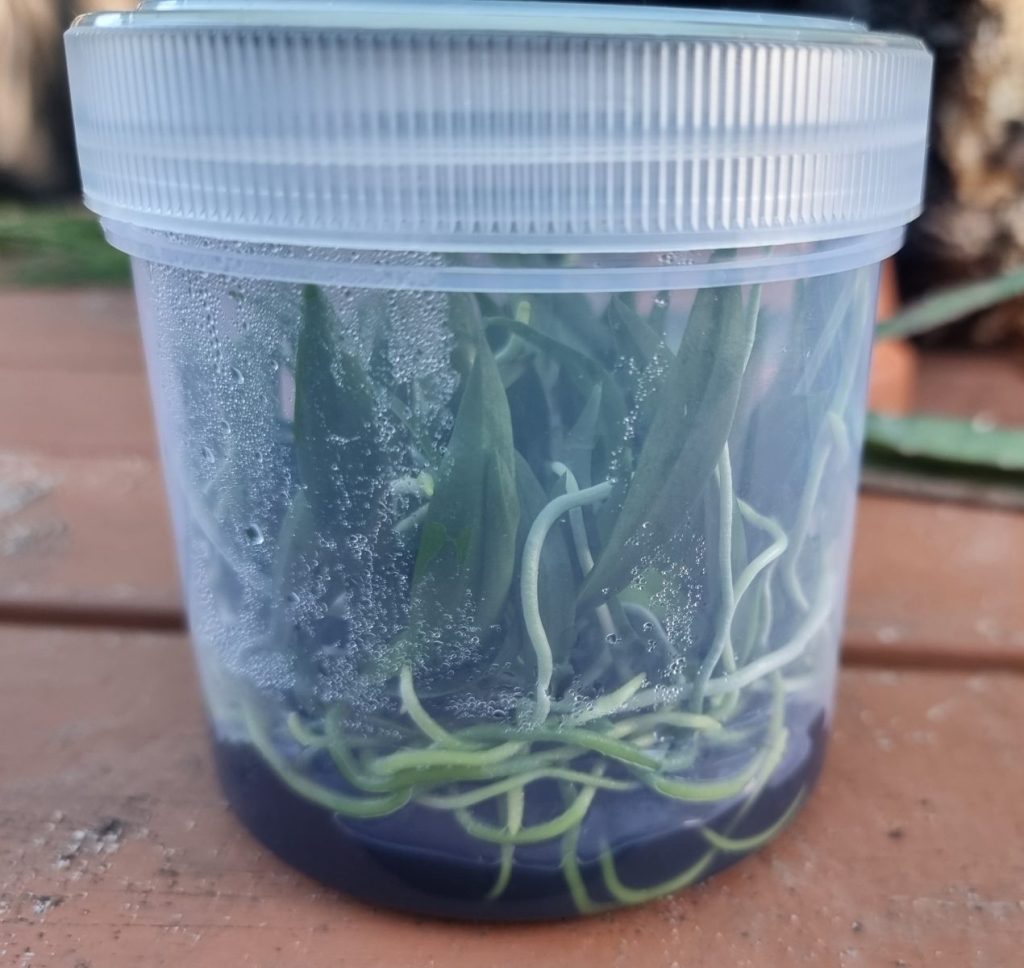
This is why orchids are usually grown from seed in flasks. Division is obviously possible too, however it is a slow way to produce any quantity of plants and doesn’t allow for hybridisation. The term “flask” refers to a vessel, usually a glass jar of some description, that is used to sow the seed in an agar solution with nutrients. It is important that this is done under sterile conditions, as any bacteria or fungal spores that find their way into the flask will rot the germinating plants and cause them all to die.
Orchid seed pods can take anything from weeks to eighteen months to mature. From the point of sowing seed to potting up can be from one to two years growing in flask. Depending on the plants, flowering after potting up can be up to ten years or more. And you think doing cuttings takes patience! Thankfully many plants don’t take quite that long, with some even flowering while still in the flask. Most plants can be expected to flower within three or four years if grown well once potted up.


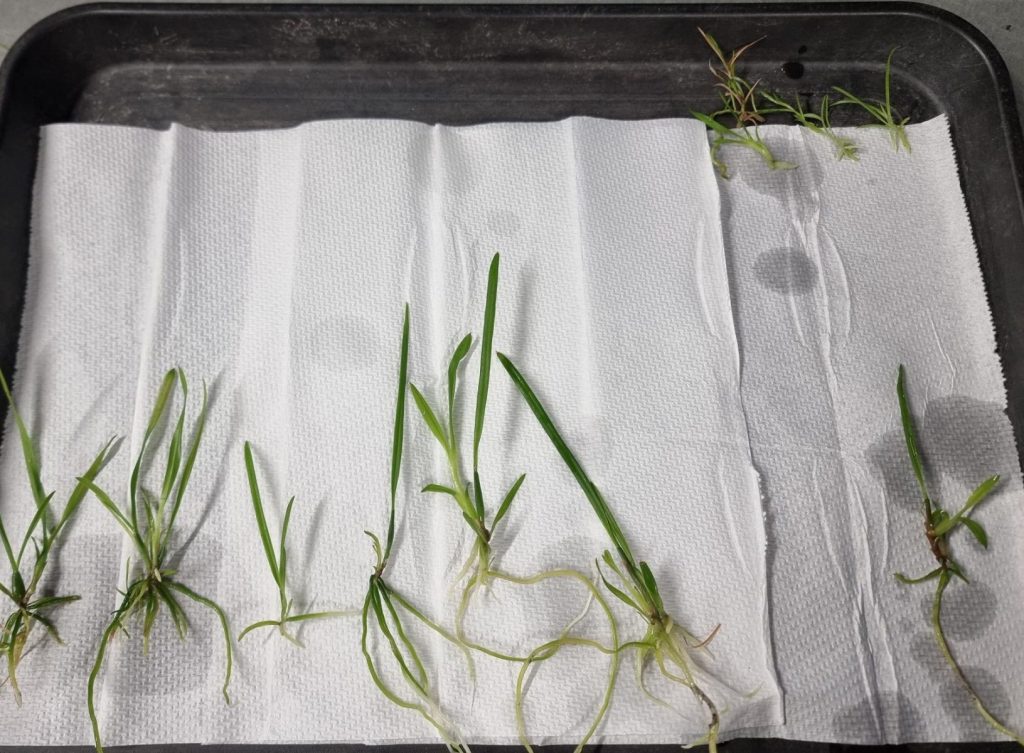
Often the flask must be broken to get the plants out without causing damage. It is important, too, to ensure care is taken with the roots when separating the plants and removing the agar. Plants should be gently separated and rinsed in clean lukewarm water. Any dead leaves or roots, and any that are broken should be cleanly and carefully removed from the small plants.
Just like cuttings or seedlings they can go through shock if conditions change too rapidly. It’s a good idea, if possible, to give the flask a few days when you get home to let the plants acclimatise to local temperatures (you’ll often be buying them from interstate). If sent through the post, check the plants on arrival and if they have been shaken up during transit its best to deflask straight away.
The plants will usually be a range of sizes. Some with two or three growths and well-established root systems, others just a single growth with few, or underdeveloped root systems.
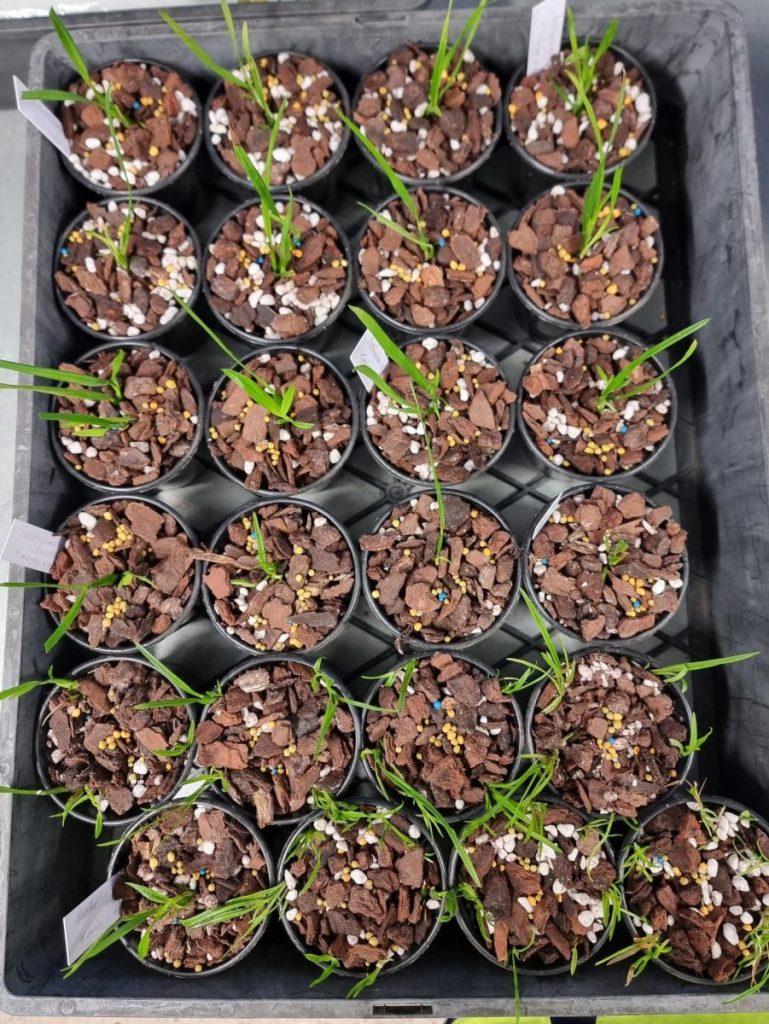
I usually prioritise potting up the largest, strongest plants first, and then smaller less developed ones. The smaller plants I pot three or four to a pot, until they are a bit bigger – they will often survive but I am loath to give such tiny plants their own pot with space at a premium!
After potting up, plants get misted with a seaweed solution, and continue to be misted with water a few times day to keep them humid more so then wet. After a week or two I will give them a proper watering, a few slow release fertiliser in each pot and move them outside. Depending what you are growing, they will likely take colder weather better than hot weather. I like to deflask in autumn and winter to give the plants time to develop as many roots as possible before the heat of summer.
Some people also treat seedlings with fungicide a part of the de-flasking process and while the plants are young, although for what I have been growing I haven’t found it necessary.
After a couple of months the plants should have new roots growing and new growth visible and be well on their way to establishing.
I know orchids aren’t everyone’s thing, and I know not everyone wants 20 or 30 of the same thing, but I can highly recommend giving it a go – even if just for something different.