David M Watson, ecologist and mistletoe researcher, spoke at the recent ANPSA conference. We are grateful to David for permission to share this piece, first published on his website ecosystemunraveller.com. Read the original at here.
Parasitic plants are an intriguing group of organisms that do not play by the same set of rules as other plants. Over evolutionary time, they have come up with sneaky ways of cheating the system.
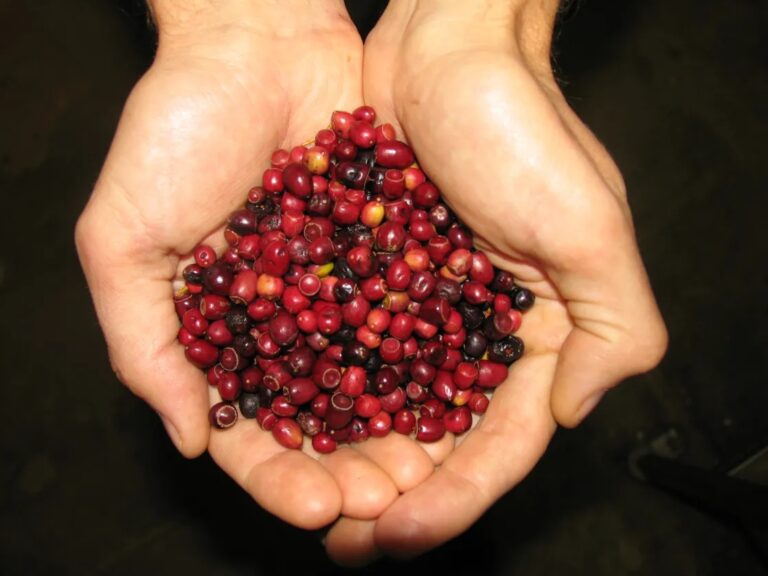
Handful of ripe sandalwood fruit (Santalum leptocladum). Photo David M Watson
These plants depend on hosts for their nutrition, exhibiting a range of strategies to avoid detection by the host while still attracting animals to disperse their pollen and seeds.
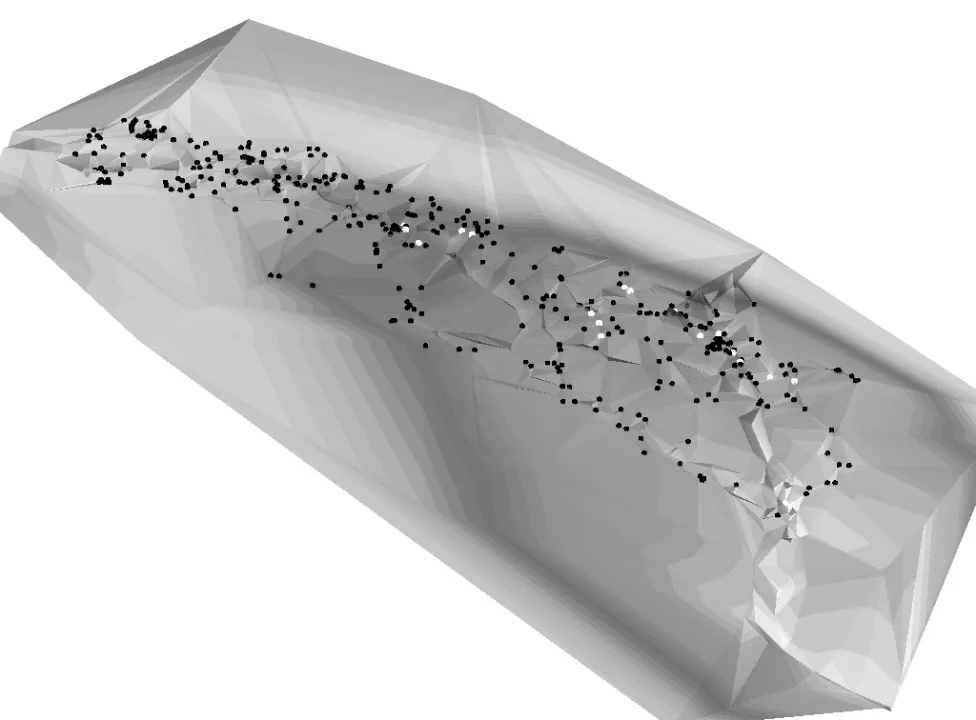
Parasitic plants are characteristically patchy in their occurrence patterns, reflecting movement patterns of their seed dispersers as well as variation in host plants. In this diagram, the black dots represent all prospective hosts along an arid zone creekline (Dead Finish, Acacia tetragonophylla). The white dots represent the small number of acacias infected with mistletoe (Wire-leaved Mistletoe, Amyema preissii), found only on those hosts growing close to the drainage channel, and therefore with more reliable access to water year round.
Distribution of Wire-leaved Mistletoe (Amyema preissii) along an arid zone creekline. Diagram David M Watson
Although I have conducted some research on sandalwood and Exocarpos, most of my parasitic plant research relates to mistletoes, primarily within the following areas:
As well as improving our understanding of how mistletoe contribute to the structure and function of woodlands and forests, this work also informs on-ground management, including: