Originally published WGAP (Wimmera growers of aust plants) Oct/Nov25
Some of you will have heard a bit about this project at the last two meetings. For those who haven’t, here is a short rundown on what the Conserving Wimmera Rarity project is about.
At last year’s APSNA National Conference we heard quite a bit about saving our rare and endangered plants and the conservation programs that are going on to preserve these species. It seemed to me that most of this work was centred around the alpine regions, higher rainfall areas and a little closer to home, the Grampians. I thought to myself, “why isn’t the Wimmera and Little Desert included in these programs?” and then it dawned on me that perhaps we needed to do something about this ourselves.
My first contact was Russell Larke from the Royal Botanic Gardens Cranbourne. Russell was one of the speakers who spoke on the various programs which they have running to preserve our rare and endangered flora. After several emails and phone calls I finally made contact with Russell, and he was very enthusiastic about something happening in our area, as this was one part of the state that they hadn’t touched. After some discussion, a list of plants was drawn up for collecting and arrangements were made for two people, Mitch Burns from Cranbourne Garden and Georgie Moyes from Melbourne Garden. They would come up towards the end of February to collect material for propagating. In the meantime, two thirds of the Little Desert was burnt. We then had to look elsewhere, mostly on roadsides and in the western block of the Little Desert to collect suitable material. After three days of collecting the team went back to Melbourne to start work propagating.
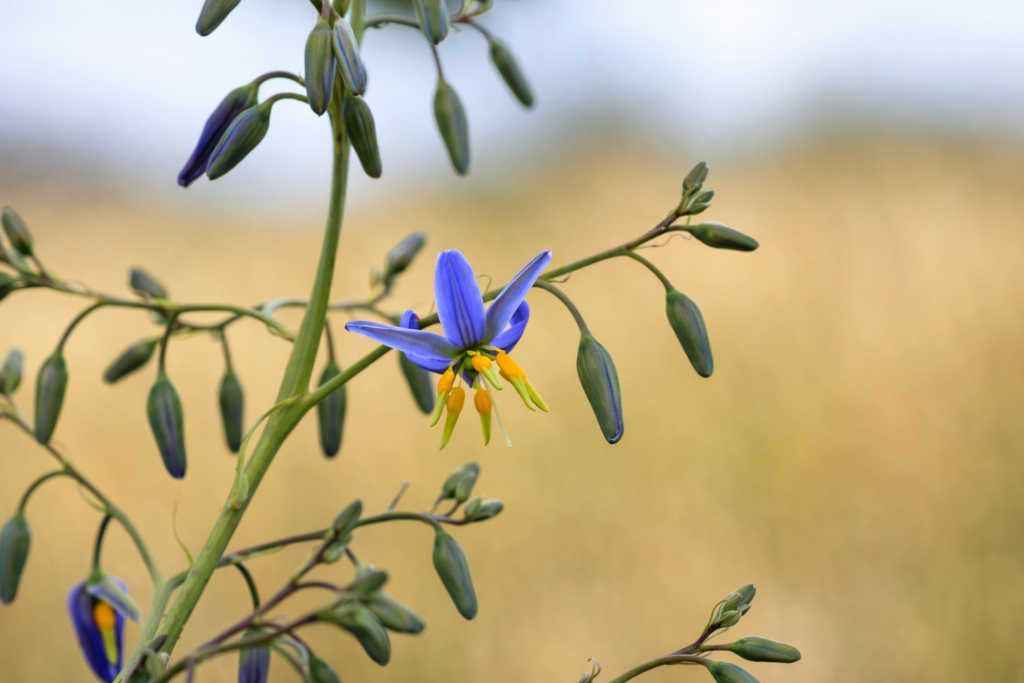
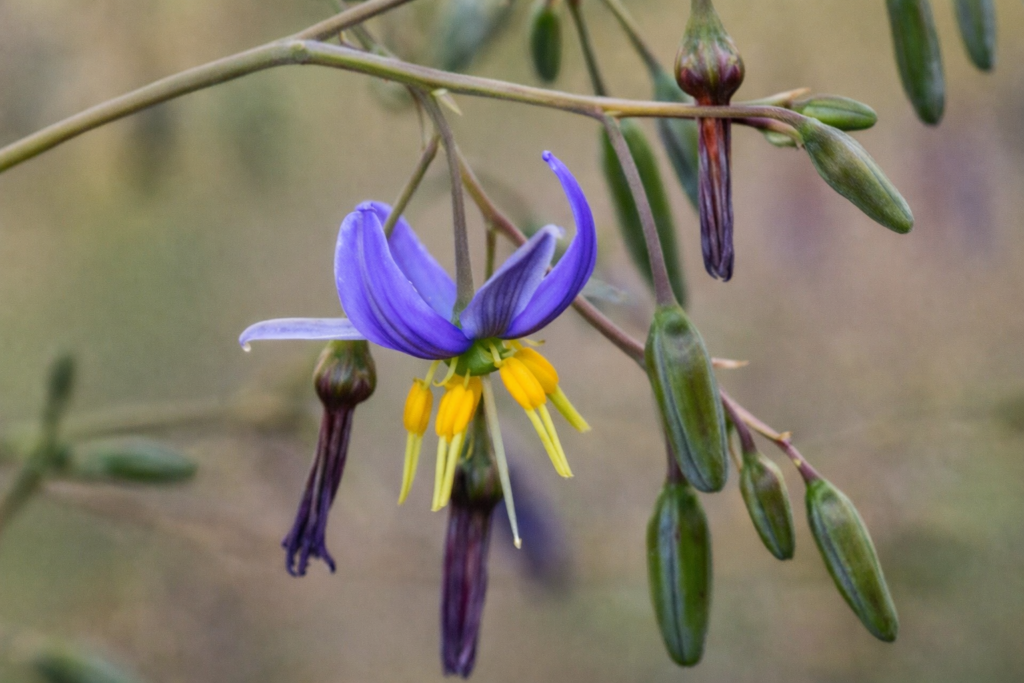
Dianella longifolia var. grandis flowers
Graham and I visited the Cranbourne Gardens at the end of May, and we were thrilled with some of the results from their expedition to our area. I decided we needed to continue this work as it wasn’t feasible for them to come to the Wimmera to collect all the time.
Robin Barber mentioned at a committee meeting that the Horsham Botanic Gardens didn’t contain many native plants and could we as a group do something about it? Alan Bedggood met with Ryan Johnston, Curator of the Horsham Botanic Gardens and over the following months they have come up with a great plan for the western side of the gardens to showcase our local plants including those that are rare and endangered.
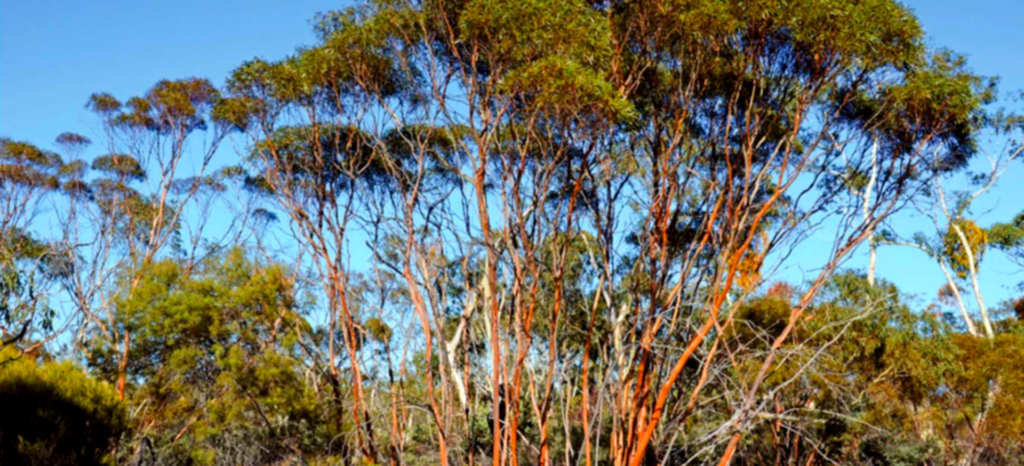
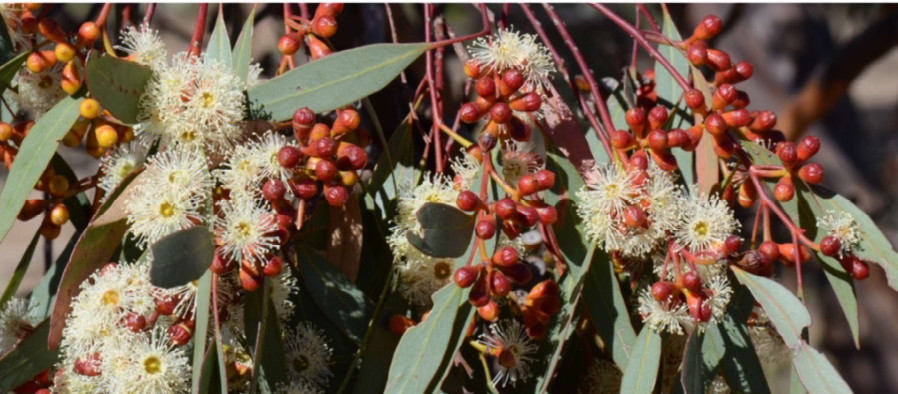
Eucalyptus phenax at Hillside Property
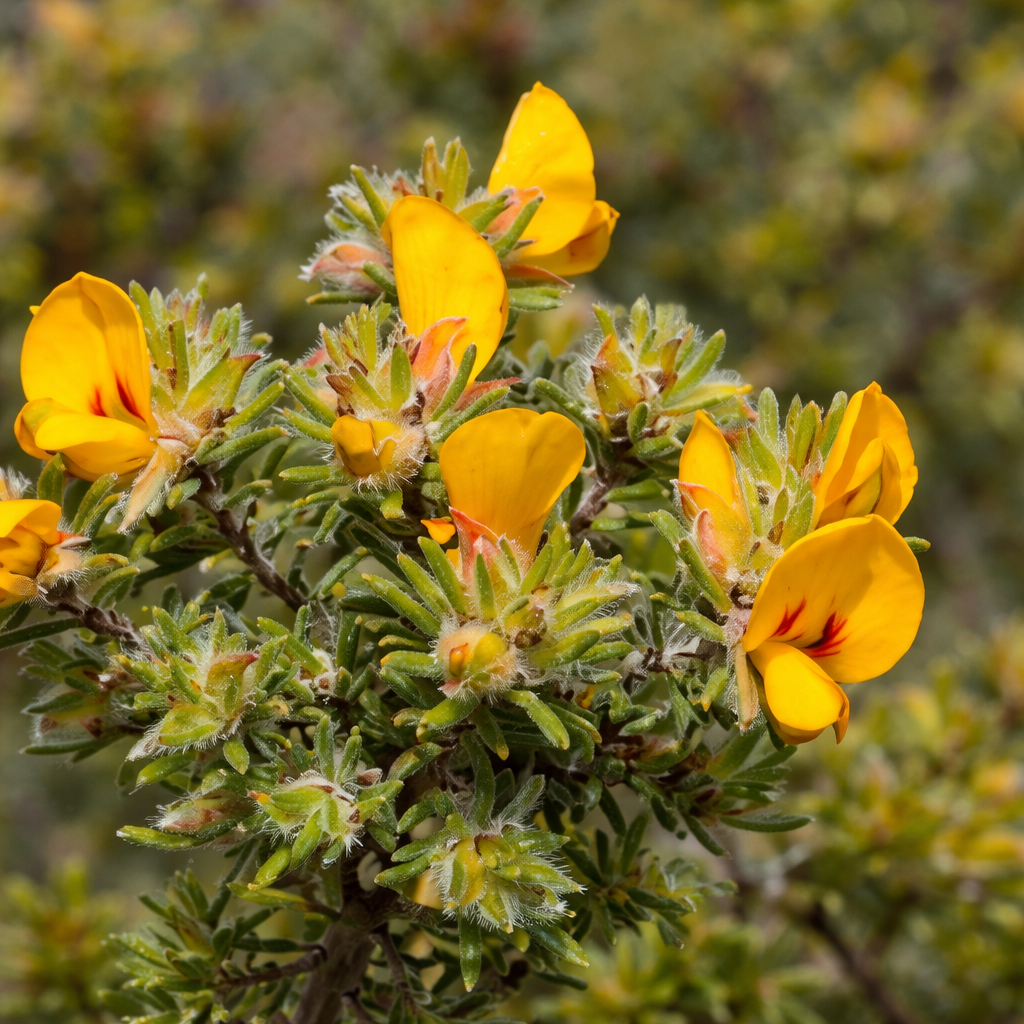
Pultenaea daltoni, Hoary Bush-pea
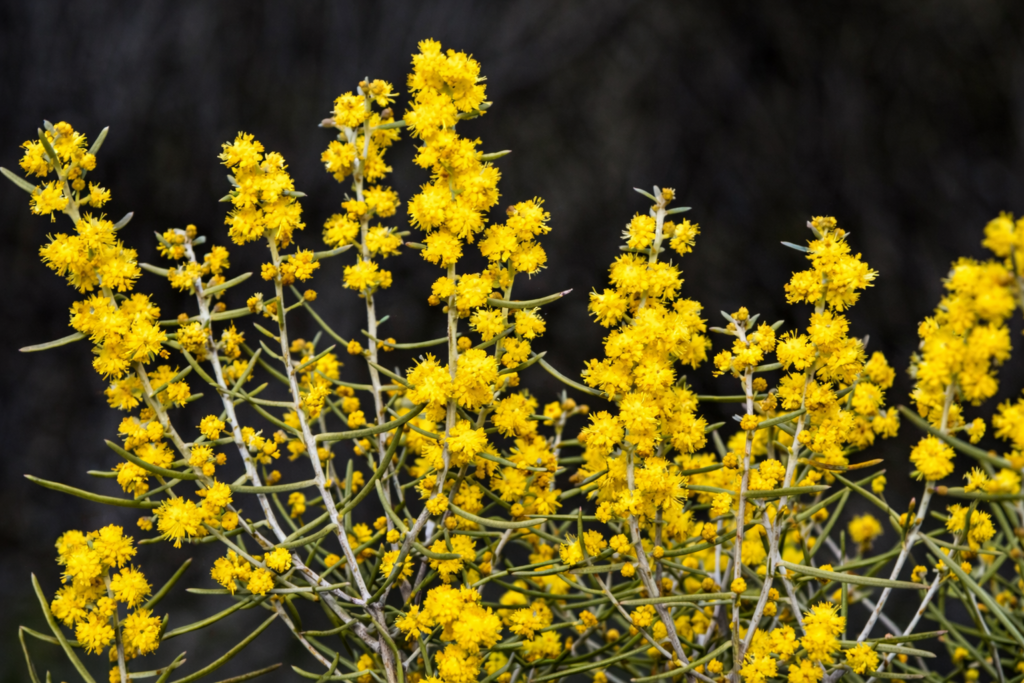
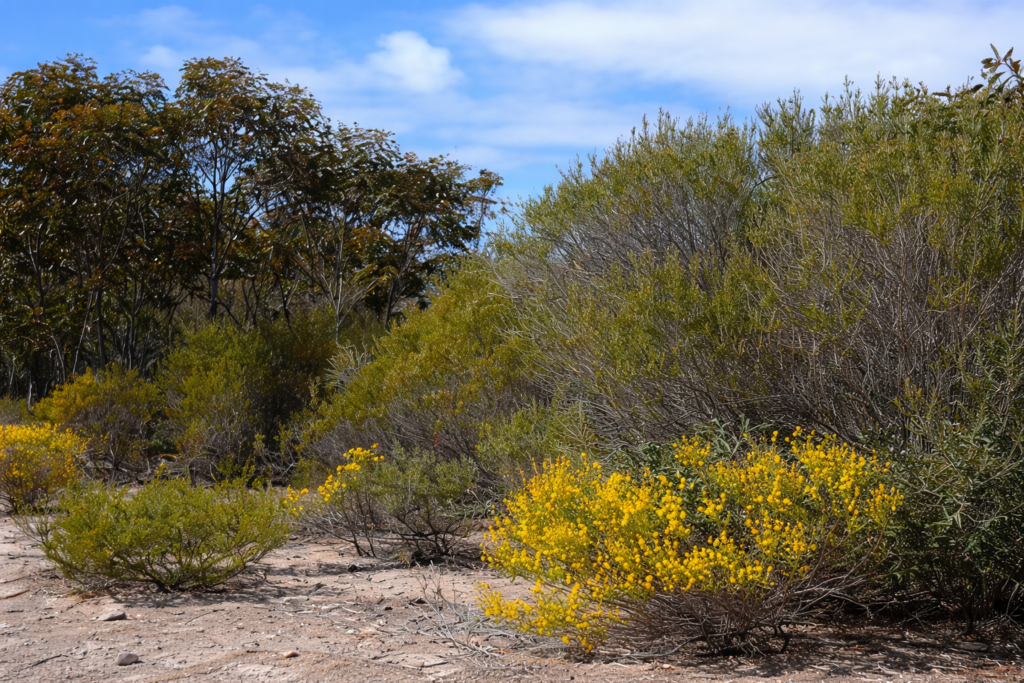
Acacia ceneramis
What did this mean? We needed to get a collecting permit so that everything was legal. With the help of Pauline Rudolph, one of our members who also works at DEECA, was able to supply us with an application form and advise us on how to go about it. With the help of Graham, Alan and Wendy Bedggood, Robert Blake and Mitch Burns from Cranbourne Gardens, we successfully submitted the application and two weeks later received the permit. We were up and running. Our project Conserving Wimmera Rarity was now official.
In the meantime, Mitch contacted me and asked if our group would be interested in applying for a Community Grant to the value of $5,000 from Eucalypt Australia to assist with the costs of this project. He sent us the link, and we submitted our application. We will not know until October if we have been successful or not. But in the meantime, collecting material and propagating has commenced.
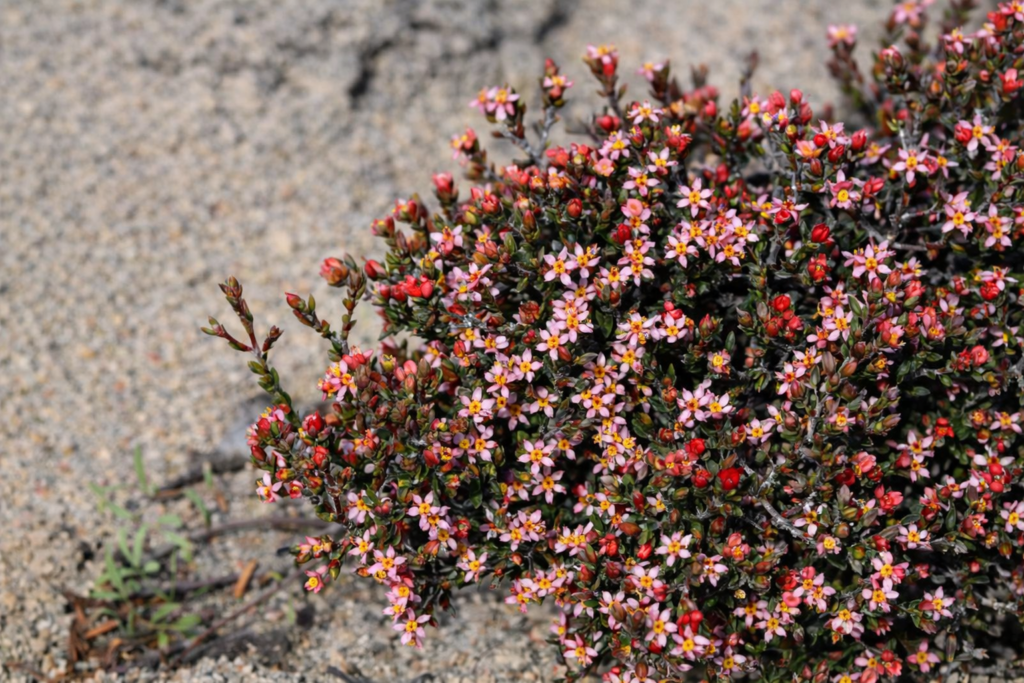
At this stage it is confirmed that planting will take place in the Horsham Botanic Gardens and the Urban Forest Walk, most likely in autumn next year. We are still looking at other places and Joshua Hodges, who was our March guest speaker, has indicated that he would like some plants of one of the species we plan to collect, Pimelea spinescens subsp. publiflora. If successful, plants of this species would be relocated to another site where currently only one plant exists.
We have collected some species from a Trust for Nature Property at Nurcoung on the southern side of the Little Desert. The owners of this property were delighted that we thought their block was suitable and in their own words “It is so rewarding to know that our scrubby old block is going to be of use to the wider environment.” It is through this sort of cooperation that we are able to collect outside the Little Desert since the fires in February burnt out so much of the National Park.
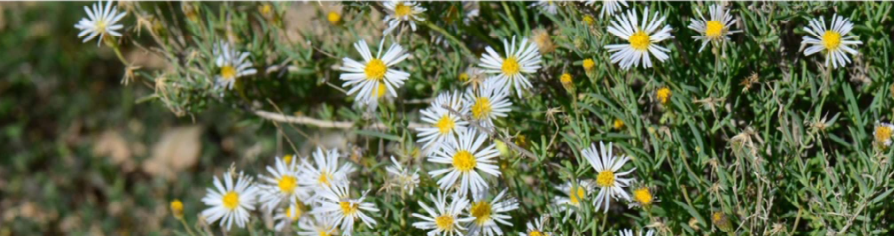
Minuria cunninghamii
We have received permission to collect from the Urimbirra Cooperative property which is on the north side of the Central Block of the Little Desert. It borders the Little Desert and to learn more about Urimbirra you can go to their website.
An excursion to Urimbirra has been planned for Monday 13 October so keep this date free if you would like to come. We will also be collecting some material that day so it could be a hands-on excursion.
You are probably wondering how you can get involved? As the number of plants multiply, we may be looking for homes for them until such time as they are ready for planting. If you would like to be involved with the collecting or propagating, let either myself or Alan know. We can organise this as it will be ongoing for several months, and even into the next couple of years. Later, we will have planting bees. I am sure there will be other tasks that will evolve as time goes on. If you would like to know more about this project or get involved, please do not hesitate to get in contact with Maree.
Note from the Newsletter Team: What fantastic work that is being carried out locally. A real opportunity to be involved now and into the future with preserving our native flora. Well done to everyone involved so far in getting this up and running.