This article first appeared in Hunter Valley Group Newsletter, Gumleaves June 2025 edition
Have you ever noticed that wattles can have two very different types of leaves?
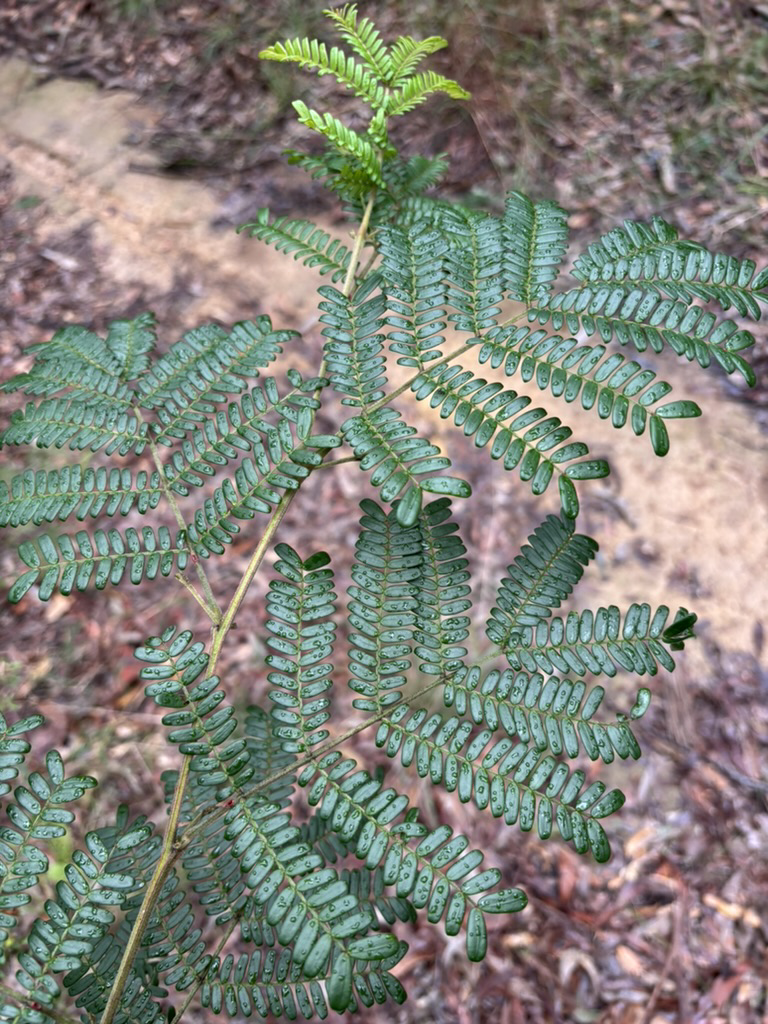
One type is a compound bipinnate leaf (feathery looking), and the other type looks more like a normal simple leaf.
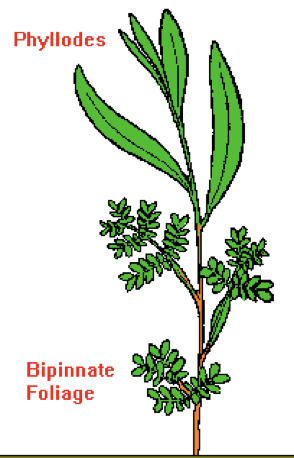
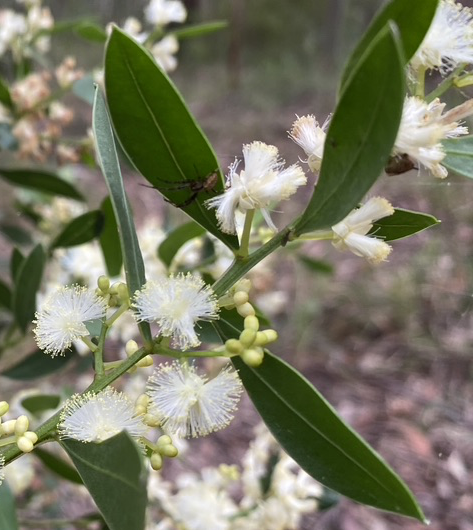
It turns out that the simple “leaves” are not true leaves at all, but are rather flattened leaf stalks, modified so that they look and function like leaves. These are called phyllodes.
Around 90% of the Acacia species have phyllodes rather than bipinnate leaves. Like many leafy plant genera, there is a great range of shapes and sizes to be found in Acacia phyllodes. Phyllodes are considered to be an adaptation to dry conditions and helped Acacias spread into drier environments. Indeed, the bipinnate leaved Acacias are generally found in wetter and cooler environments than those with phyllodes.
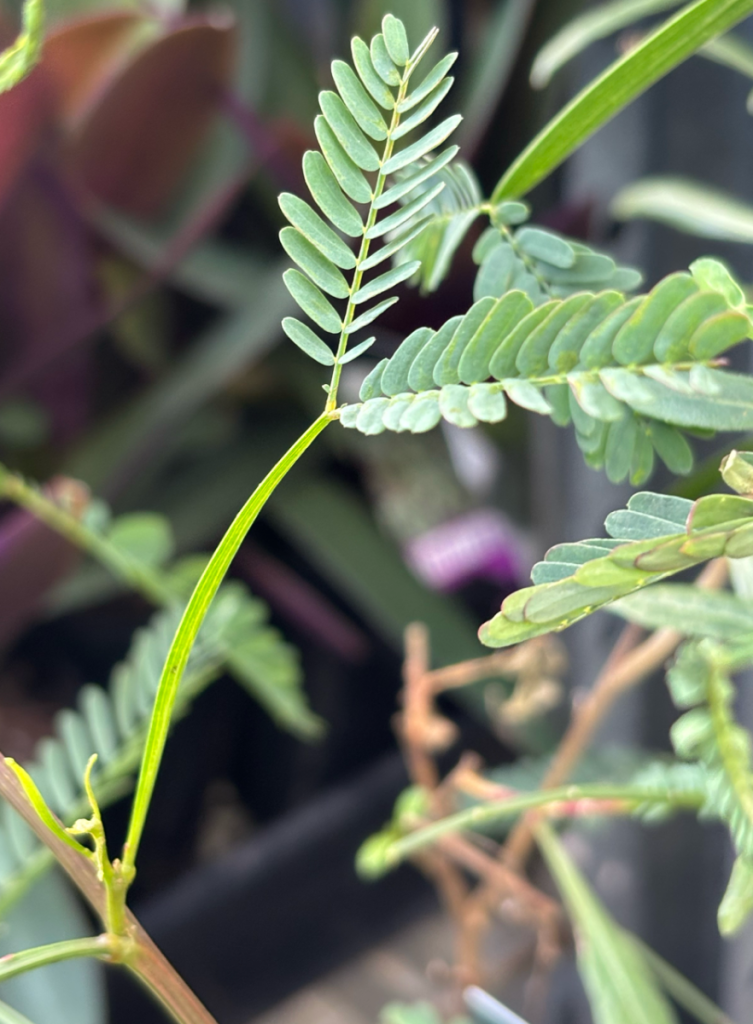
Of note is that all acacia seedlings start out with bipinnate leaves as young seedlings. For those with phyllodes as adult plants, these get replaced with phyllodes as they grow and it is possible to observe this transition in young acacia seedlings. The 10% of bipinnate acacias retain their feathery foliage for their entire life.
The presence of bipinnate foliage in seedlings is an indication that the ancestral Acacia had bipinnate leaves.
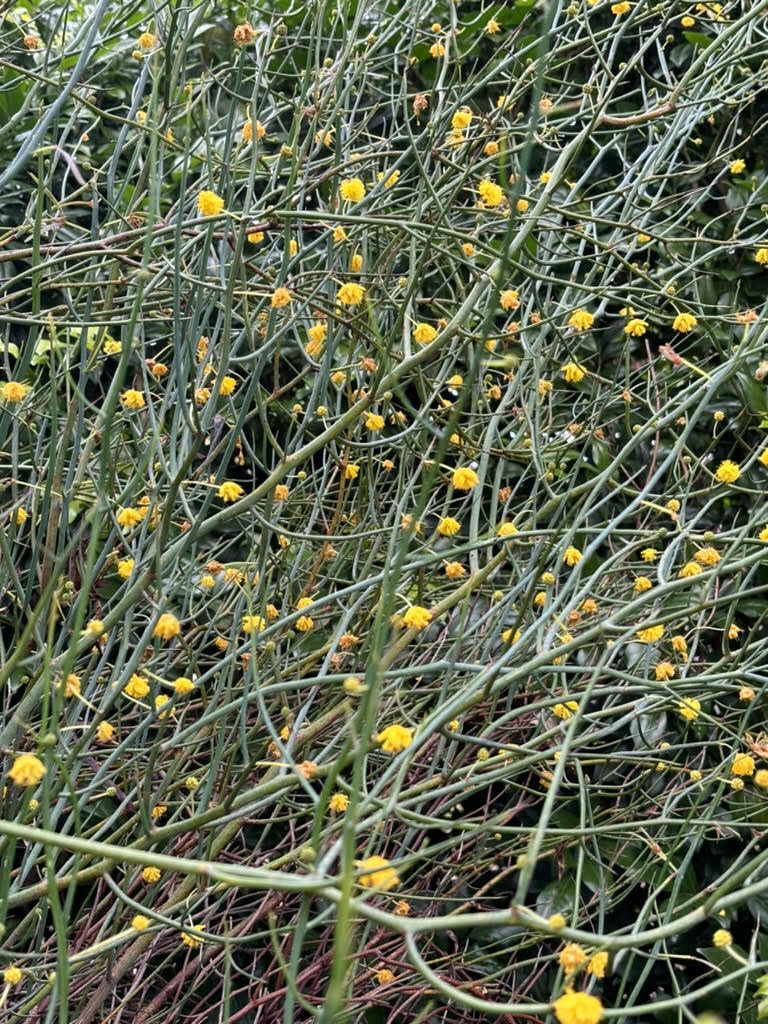
There are also some wattles (e.g. Acacia aphylla) from drier areas that have dispensed with leaves altogether and rely on photosynthesising through their stems.
Bipinnate leaves of Acacia terminalis - Sunshine Wattle. Image by Mark Abell
transition between bipinnate leaves and phyllodes on Acacia
irrorata - Green Wattle. Image by Mark Abell
diagram from ANPSA website showing the transition to
phyllodes.
photosynthetic stems on Acacia aphylla - Leafless Rock Wattle. Image by Mark Abell
Phyllodes of Acacia myrtifolia - Myrtle Wattle. Image by Mark Abell