I have a liking for yellow flowers ever since I saw the flowers of Senna artemisiodes many years ago. It was the first yellow flowering plant in my garden. For me the big advantage of yellow flowers is they brighten up my lightly shaded garden. While they do not flower as prolifically if they were in full sun, they still brighten up my garden. Most of us, immediately think of wattles, when yellow flowering plants are mentioned and the yellow flowering ones are stunning but often have a short flowering time. As well, there are many with pale cream flowers. A few yellow flowering plants I have growing and recommend are:
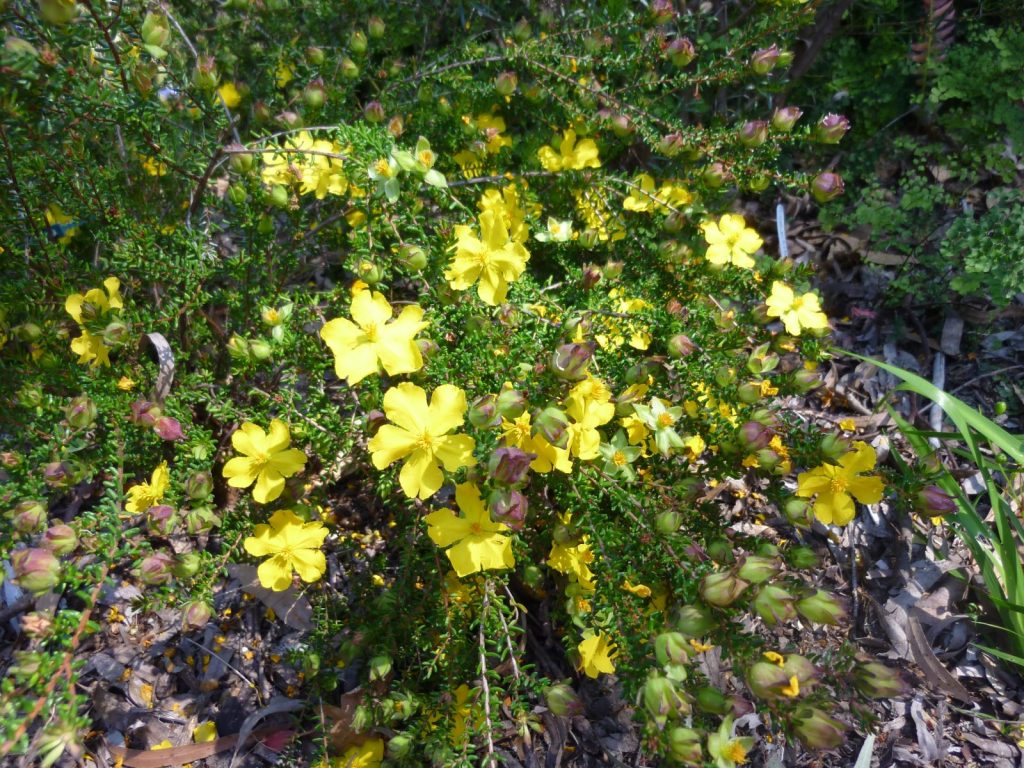
Hibbertia vestita flower, image by Jeff Howes
Hibbertia vestita flower , image by Jeff Howes
Hibbertia vestita Hibbertia is a genus of around 150 species, most of which occur naturally in Australia and have bright yellow, buttercup-like flowers. Hibbertias are commonly known as Guinea Flowers and this name refers to the resemblance of the flower shape and colour to the ancient Golden Guinea coin. Hibbertia vestita grows naturally from Rockhampton in Queensland to central-eastern New South Wales. It is found just about everywhere in the south-east Queensland coastal region, as well as on the sandstone plateau west of Rockhampton. I have had a few of them growing for many years my garden. They flower best when they receive almost full sun, however my plants still flower well with less sun than that. Hibbertia vestita is a fairly long-lived, hardy species for me, adaptable to most situations as long as the soil has good drainage, and they appreciate that extra bit of water during dry times. It grows to 30cm high and about the same width or a bit larger. The 3cm diameter bright yellow flowers appear from spring into summer.
Homoranthus prolixus,
Image by Jeff Howes
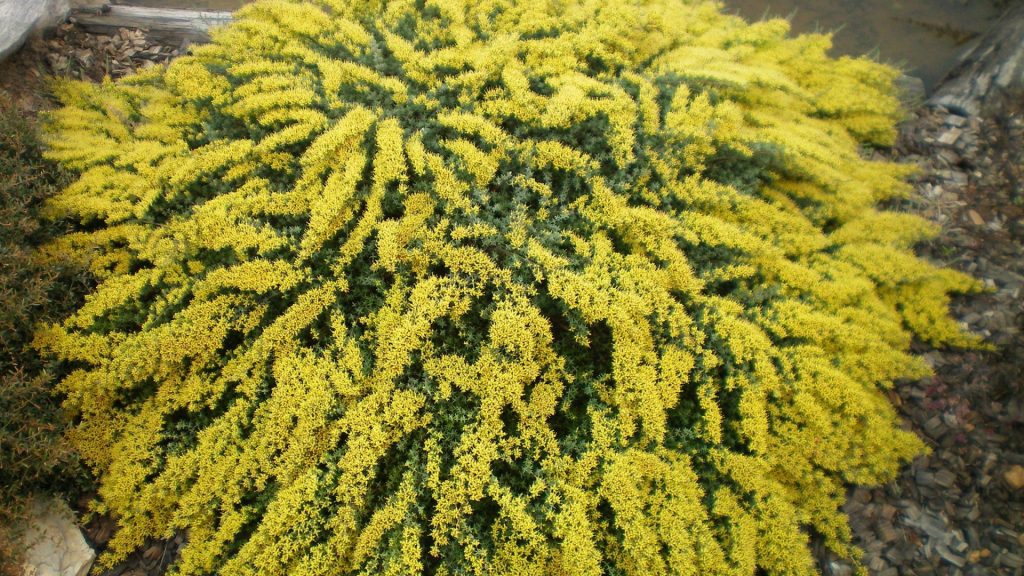
Homoranthus prolixus,
Image by Jeff Howes
Homoranthus prolixus Golditops Homoranthus – it is reported that this name is derived from the Ancient Greek words homos meaning ‘same’, ‘uniform’, ‘like’ or ‘similar’ and anthos meaning ‘flower’. However, it may also refer to omor in Greek which means ‘beautiful’, hence translating to ‘beautiful flowers’
Homoranthus prolixus is restricted to a small area in NSW in the Northwest Slopes and Tablelands, specifically the Inverell and Bendemeer areas. It is typically found growing in amongst granite rocks and boulders on shallow soils, in heath and dry sclerophyll woodland.
The main form cultivated is Homoranthus prolixus ‘Golditops’ and is a readily available cultivar that is quite popular. This form was collected at Copeland Dam near Inverell by Ian Cox, Ray Brown and Peter Olde, three members of the ANPSA Grevillea Study Group, while looking for a rare Grevillea. Golditops’ – named by Brian Roach to reflect the golden-yellow flower colour, which projects horizontally over the plant. It is a small spreading shrub to about 0.3 metres tall and up to 2 metres wide, creating a moderate low cover. My plants are growing in heavy soil and dryish conditions and it performs well. It also is prunable, but not into old wood. Tiny yellow flowers cover the whole top of the plant and have a strong aroma. Flowering occurs in late September to November and can be very showy. Well worth growing.
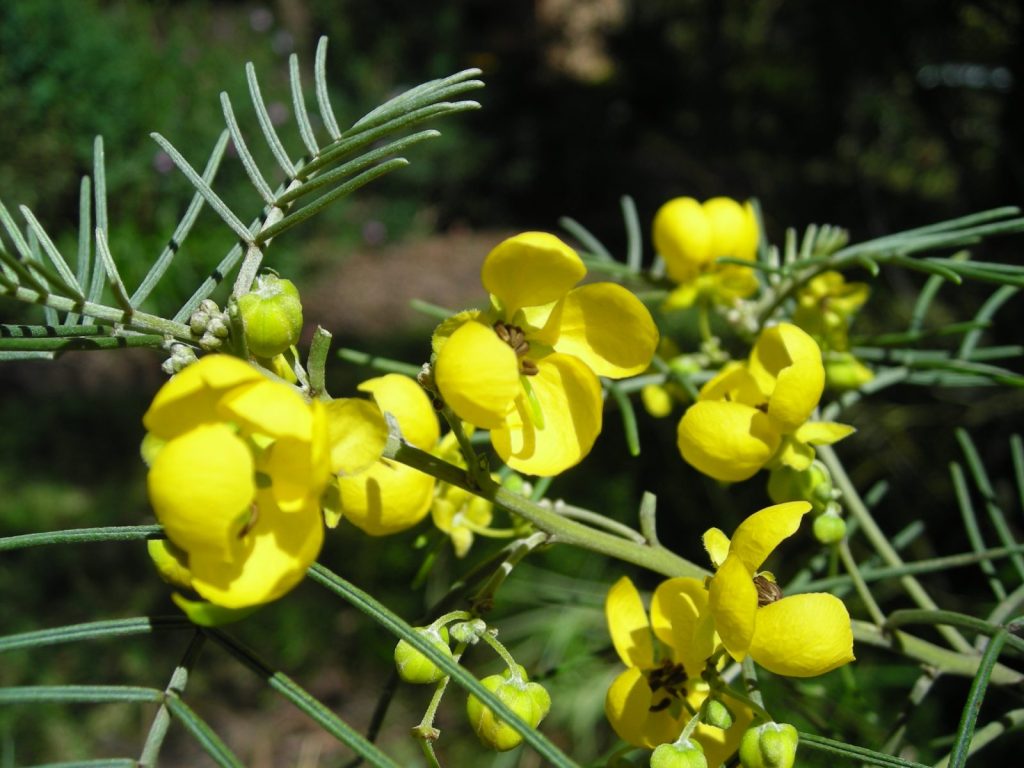
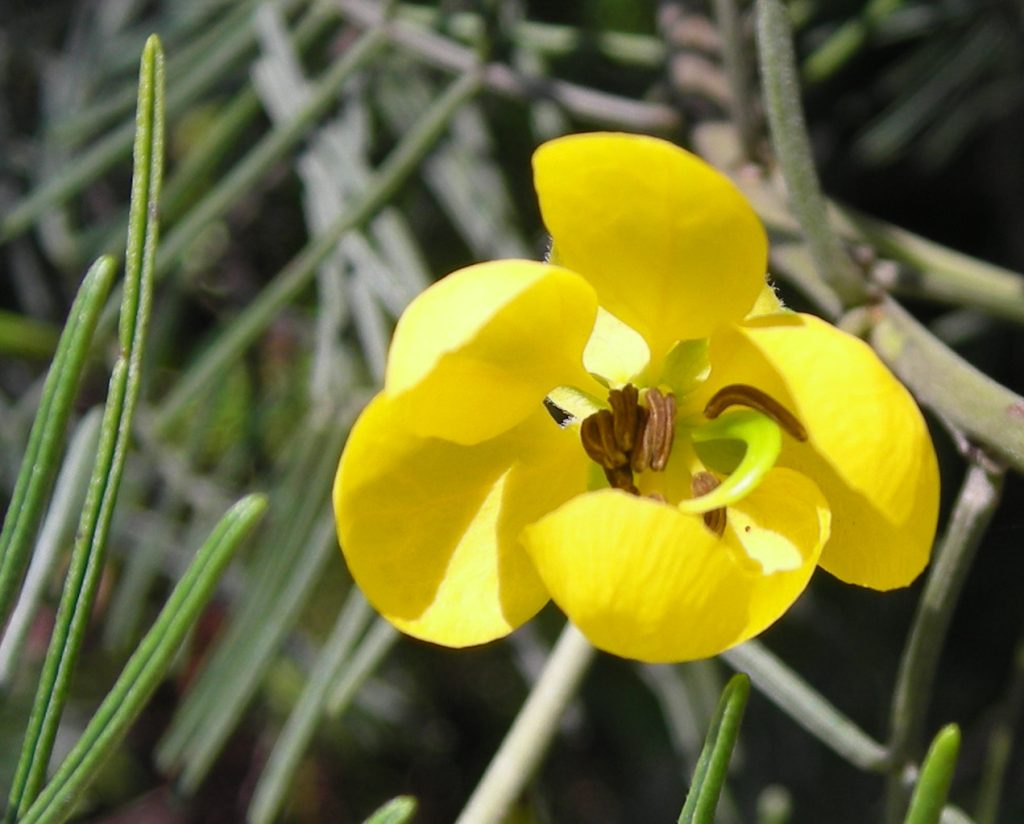
Senna artemisioides Senna – reportedly derived from the Arabic sana – a name applied to plants which have laxative properties. When I became interested in Australian native plants in 1976, this was the first plant I grew in my garden in the northern Sydney suburb garden. After joining the Australian Plants Society, I obtained seeds from their seed bank and successfully germinated them after treatment with boiling water. The subspecies I have grows to approximately 1.5 metres high and about the same width. It is hardy, long lived with yellow flowers. It has the additional bonus of being a legume – which means it improves soil fertility through ‘fixing’ nitrogen. While they prefer lighter/sandy soils/full sun, my plants are growing in a heavy soil with dappled light and still perform well. Once established, this species needs no additional watering and the only maintenance is to lightly prune after flowering to maintain shape as they tend to become straggly with age. For further information click here