
Brachychiton populneus
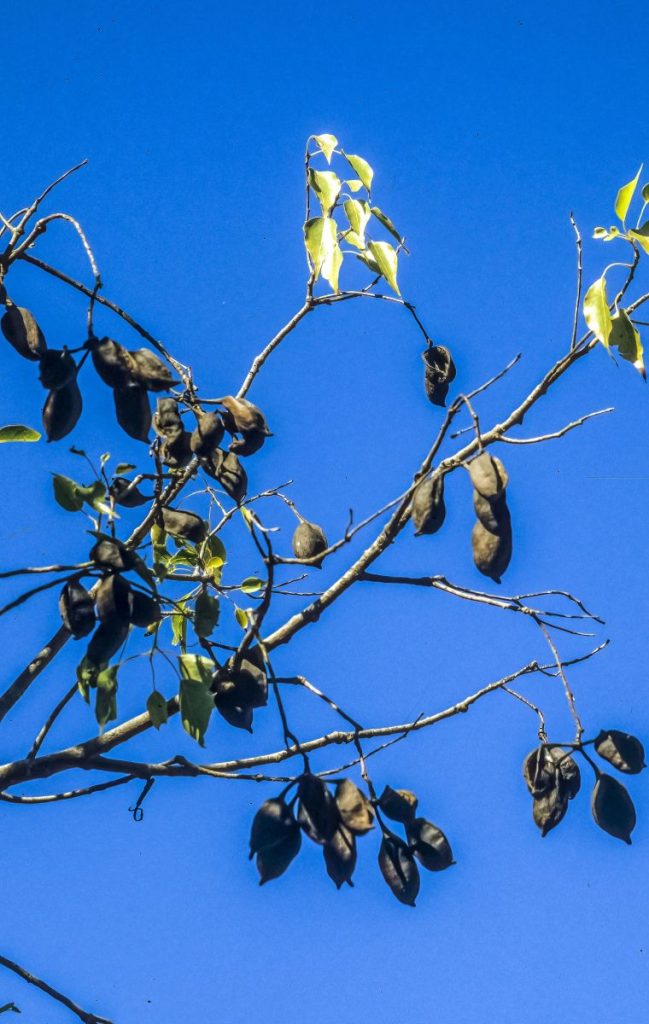
It is a common sight in NSW inland areas, occurring throughout virtually all of the western slopes and plains as well as tableland areas. It is also found in the coastal hinterland. It grows as far west as Ivanhoe. It extends into Queensland, growing as far as Cairns-region.
Brachychiton acerifolius
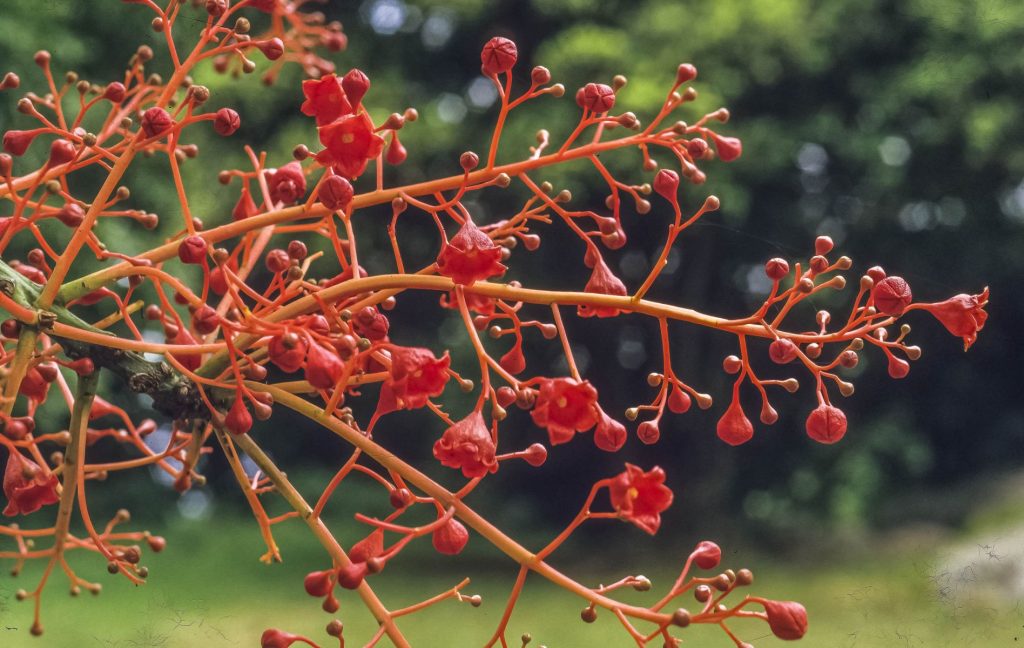
A large deciduous tree to 35 m in height, with a broad canopy-spread. It is found in NSW mainly in coastal areas, as far south as the Shoalhaven River (possibly extending to Batemans Bay, northwards in disjunct patches, extending into Queensland where it also has a coastal distribution up to the Cape York Peninsula.
Podocarpus elatus
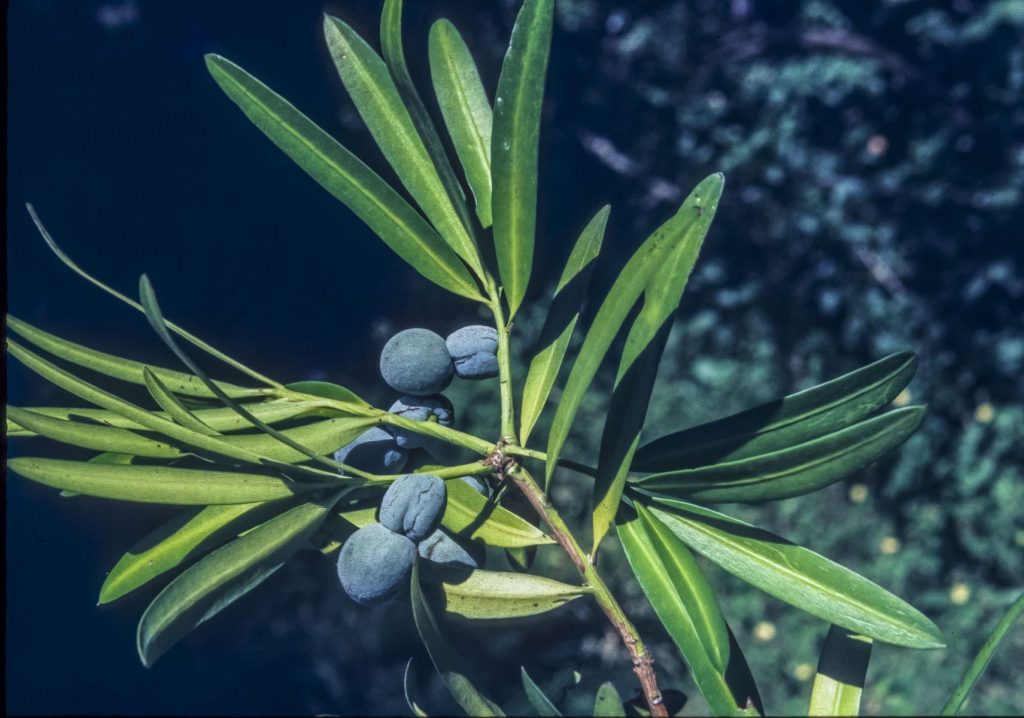
A medium to large and slow growing tree, to 35 m tall (usually up to 15 m tall in cultivation) with a round spreading canopy to several metres wide, often with horizontal branches.
Ceratopetalum apetalum
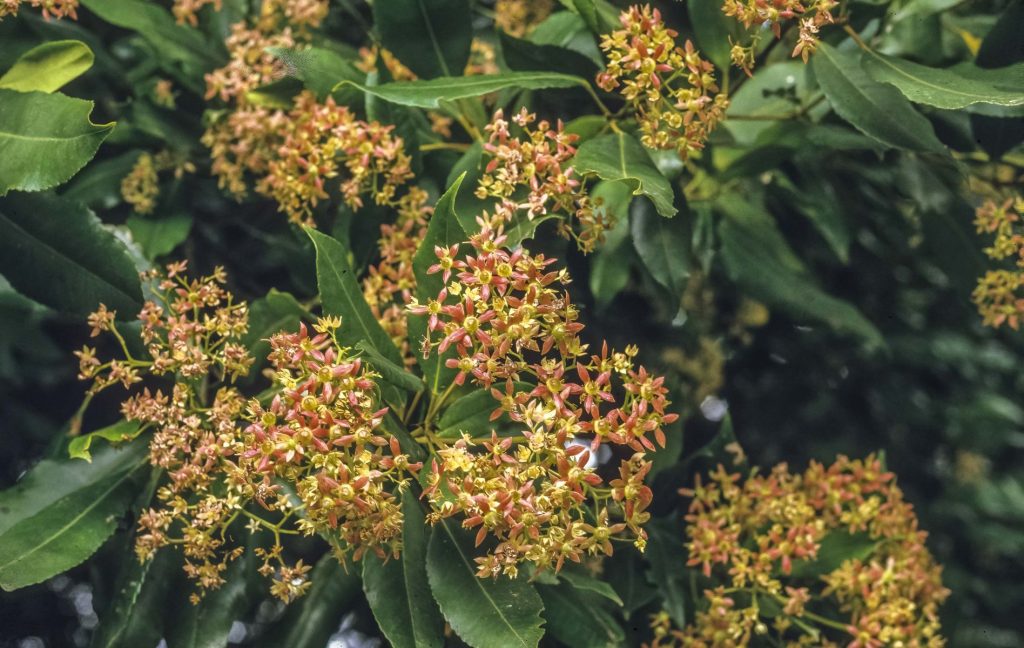
A tree growing up to 40 metres (often seen much smaller) with a broad-spreading crown. Sometimes multi-trunked.
Callicoma serratifolia
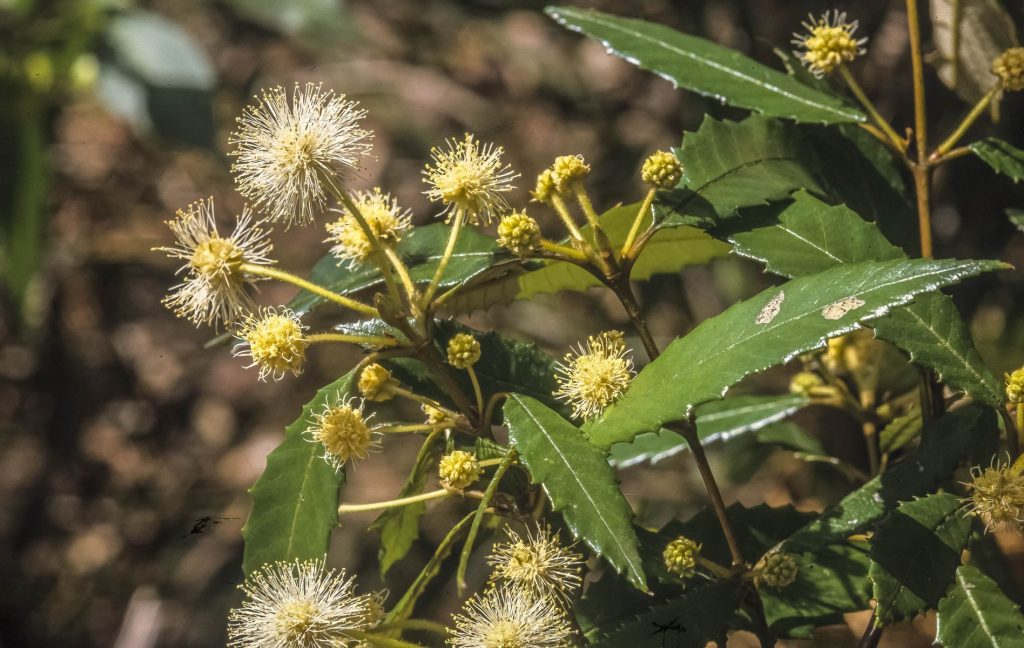
A tree, often seen as a large shrub, potentially growing up to 20 metres in height with a 3-metre spread, sometimes multi-stemmed. It grows naturally in New South Wales and Queensland, in near-coastal areas, as far south as Batemans Bay, and as far west as Lithgow, extending up the coast and tableland-fringes, as far north as Kroombit Tops National Park in Queensland (east of Biloela).
Pittosporum undulatum

A tree to 15 metres tall, forming a canopy to 10 metres wide, with light-brown to grey bark with conspicuous lenticels.
Synoum glandulosum
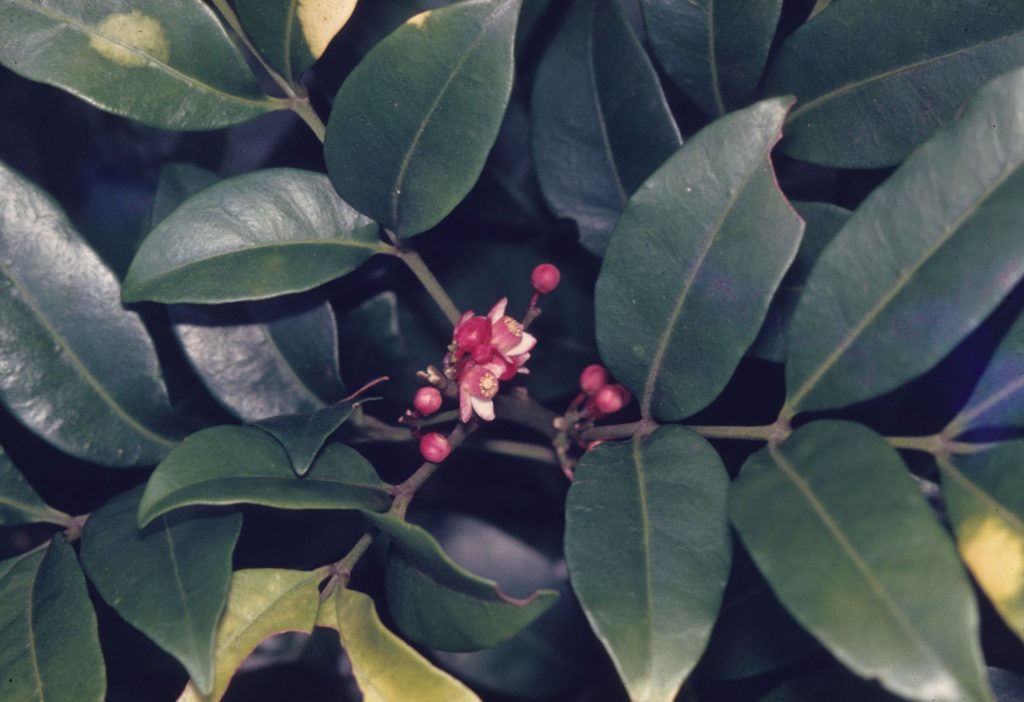
A common, evergreen, large shrub to small tree, growing to 8 metres tall by several metres wide.
Stenocarpus salignus
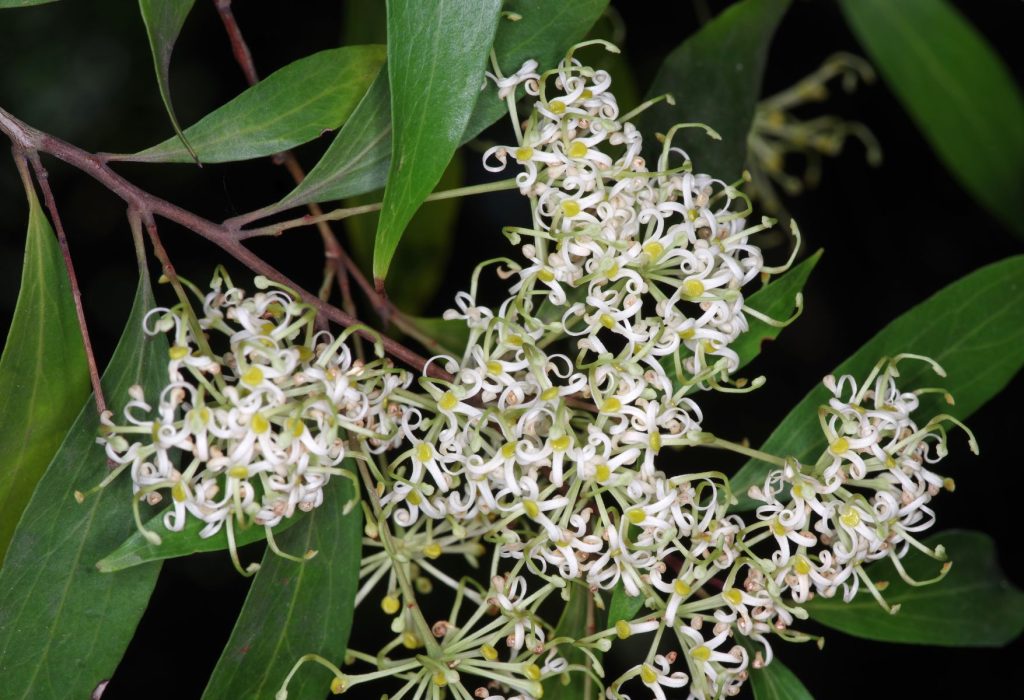
A tree, sometimes found as a large shrub, growing to potentially 30 metres tall by 10 metres wide. The trunk has dark brown and fissured bark and can have buttress roots.
Stenocarpus sinuatus
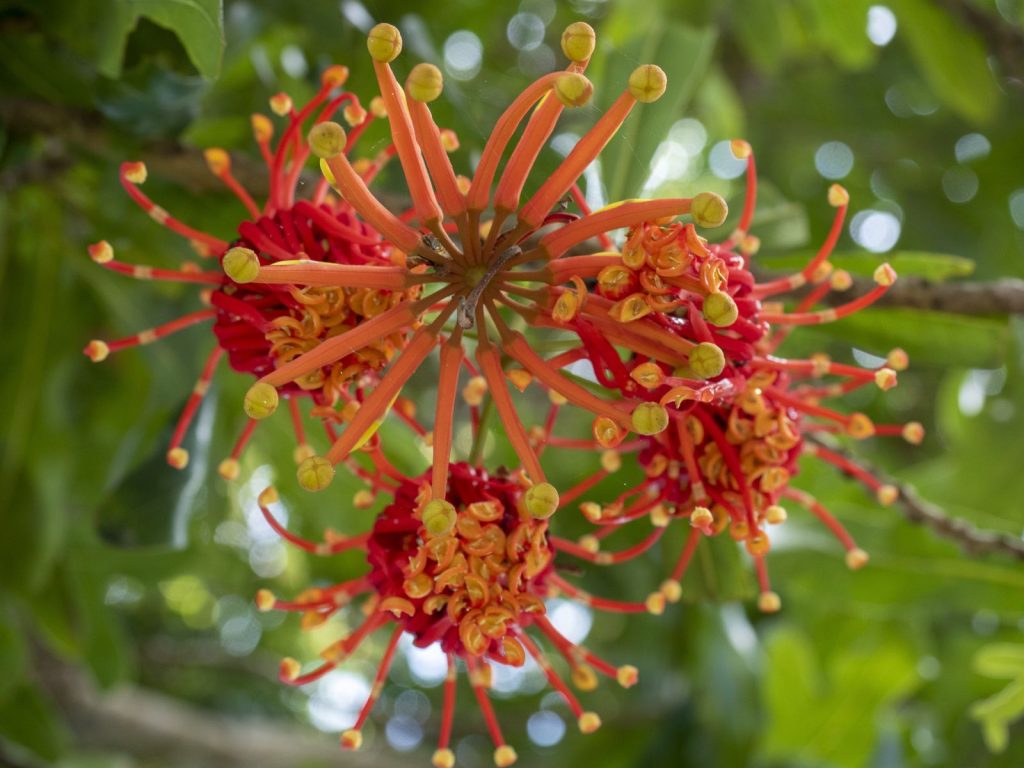
A potentially large tree (usually growing slowly), up to 40 metres tall with an upright erect canopy and with a trunk potentially reaching over 70 cm in diameter. The bark is greyish brown, not smooth and irregular.
Buckinghamia celsissima
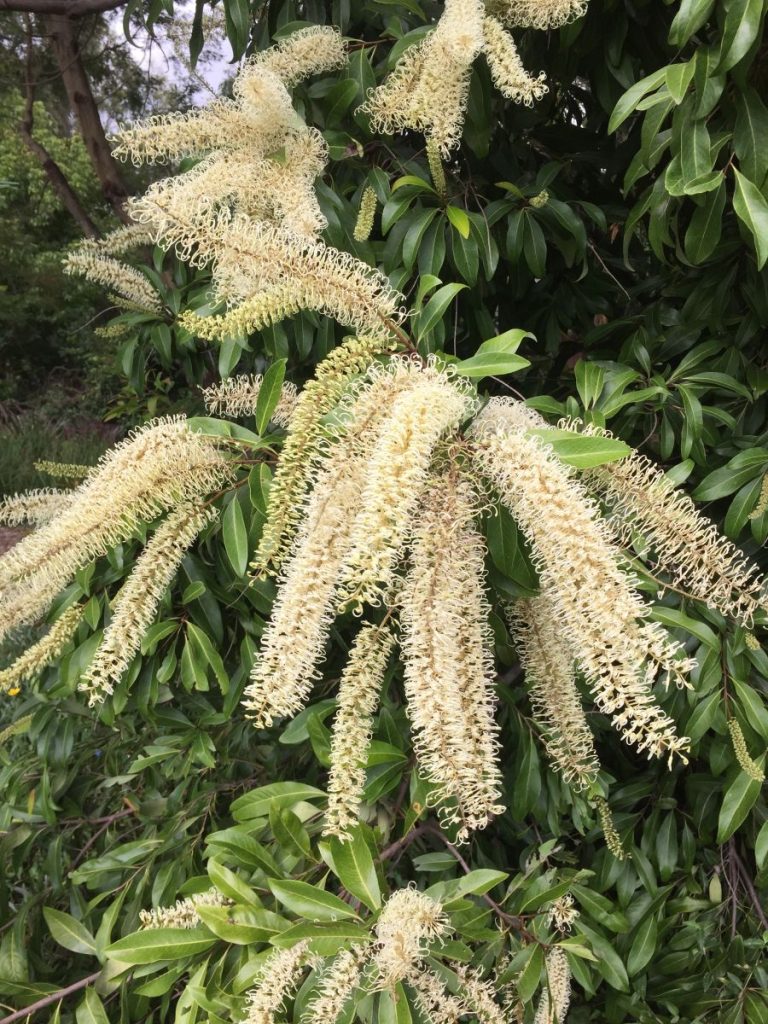
A tree to 30 metres tall in its natural habitat. It grows in Northern Queensland, close to the coast, from south of Cooktown to west of Townsville.
Acacia rubida
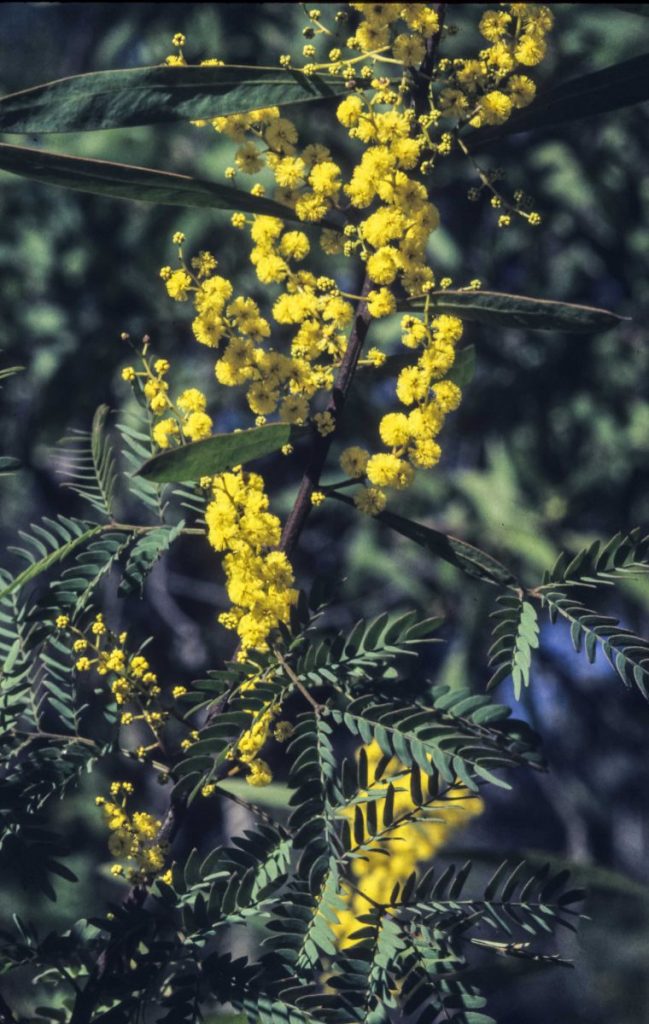
A bushy shrub or tree to 10 metres high.I t is often seen as a shrub, mostly single-stemmed.
Acacia binervata
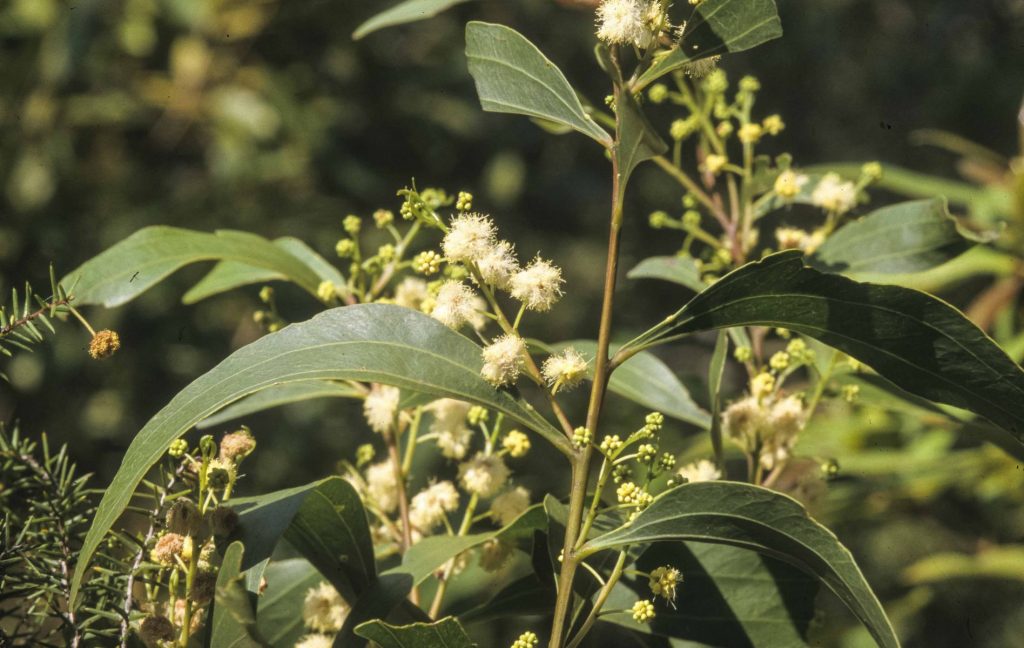
Acacia binervata is a tree to 15 m tall, which can create a dense canopy.
It is found in a range of habitats, growing in dry to moist sites in sandy, to more enriched, to basalt soils. It can be found in dry and wet sclerophyll woodland and forest, or on the margins of rainforest communities
Eucalyptus steedmanii
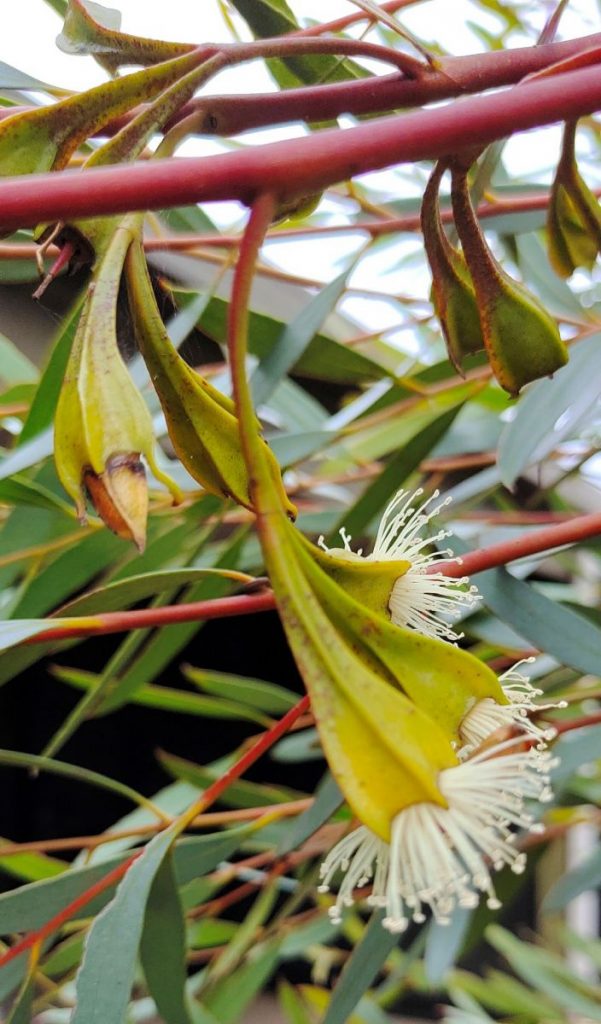
Eucalytptus steedmanii is a mallet-eucalypt, growing to a height of 10 metres, spreading to 7 metres wide (larger in favourable conditions).
Melaleuca squarrosa
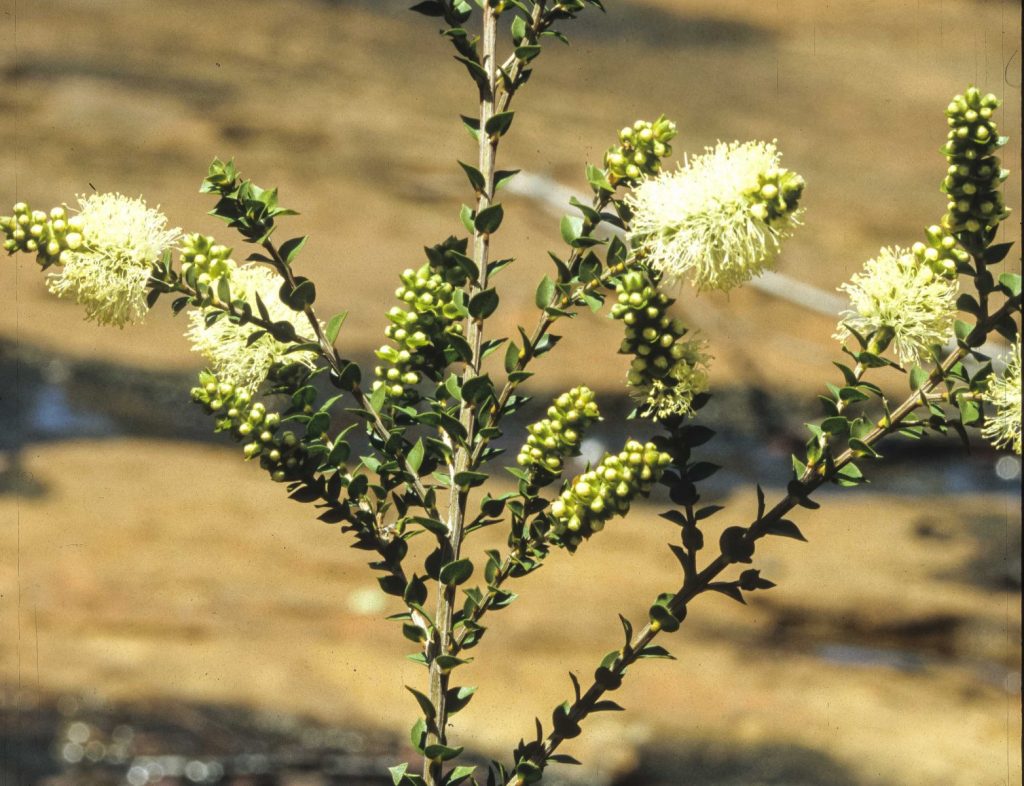
A shrub to tree, growing to 12 metres tall but often seen much smaller. It has white to grey papery bark.
Melaleuca sieberi
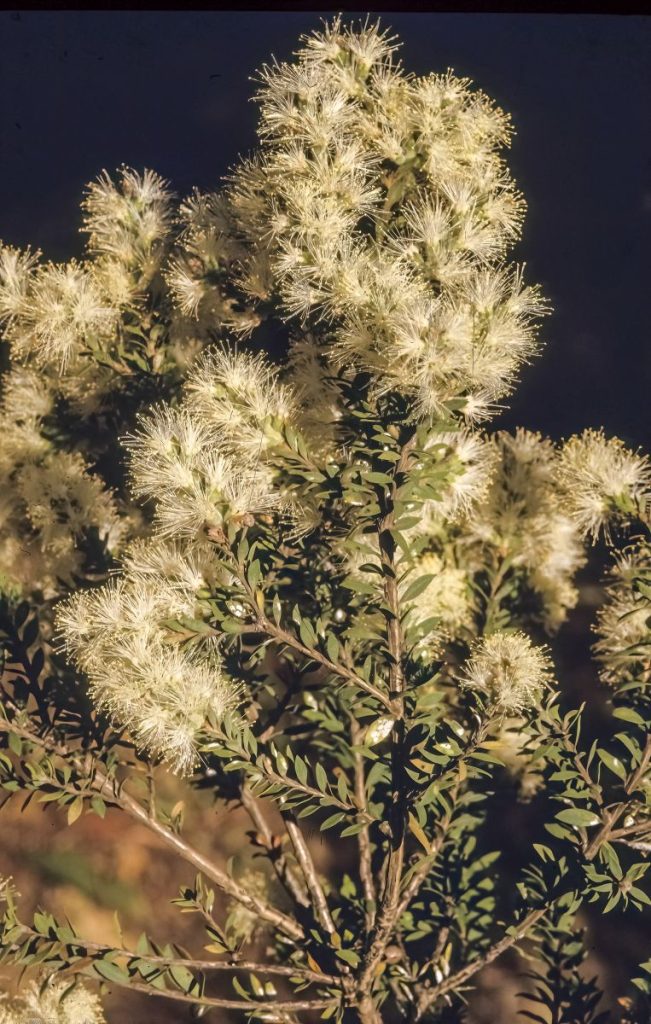
A small tree, usually growing to 5 metres tall, with white, grey or brown papery bark.
Melaleuca linariifolia
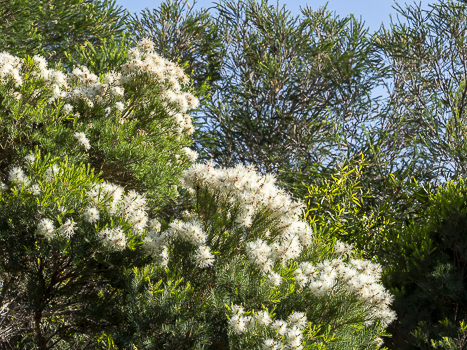
A tree potentially reaching 12 metres with white to creamy papery bark.
Melaleuca nodosa
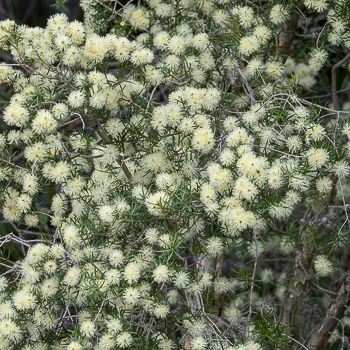
A large shrub to small tree, growing to 10 m tall in some cases but can also be seen growing as a rounded shrub to 2 metres tall, with corky to papery bark.
Melaleuca biconvexa
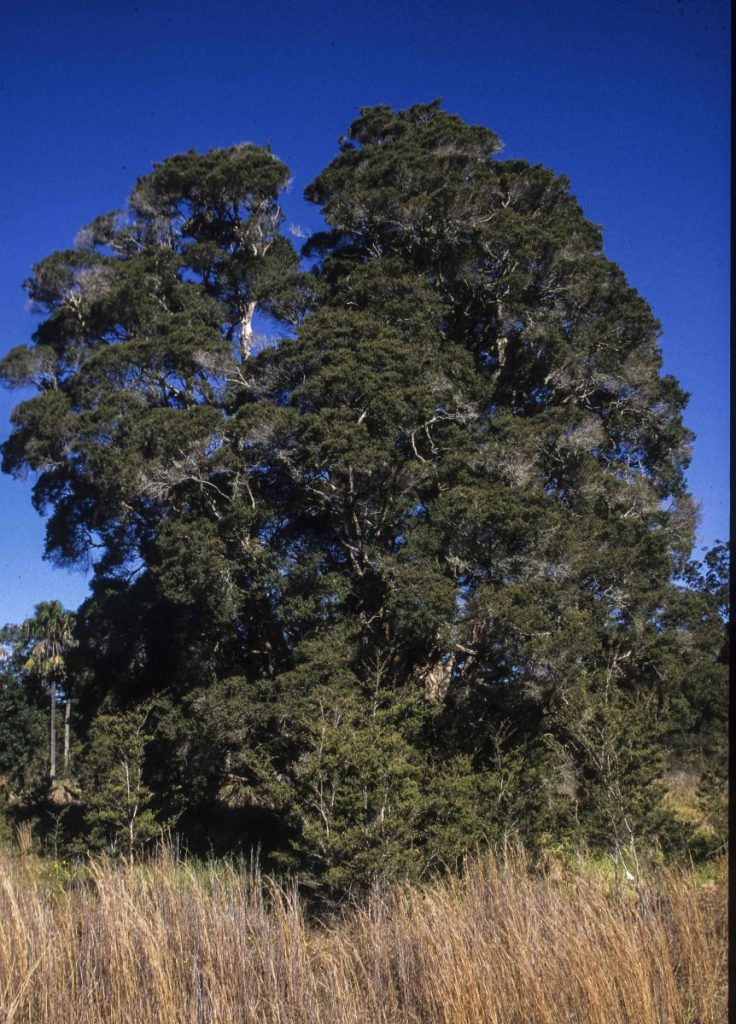
A shrub or small tree, up to 10 metres tall, though occasionally as high as 20 metres. It has typical paperbark.
Eucalyptus fracta

Eucalyptus fracta is a small tree (to 8 m) or a mallee. It has grey-black ironbark on its trunk and larger branches with smooth whitish bark on smaller branches.
Corymbia citriodora
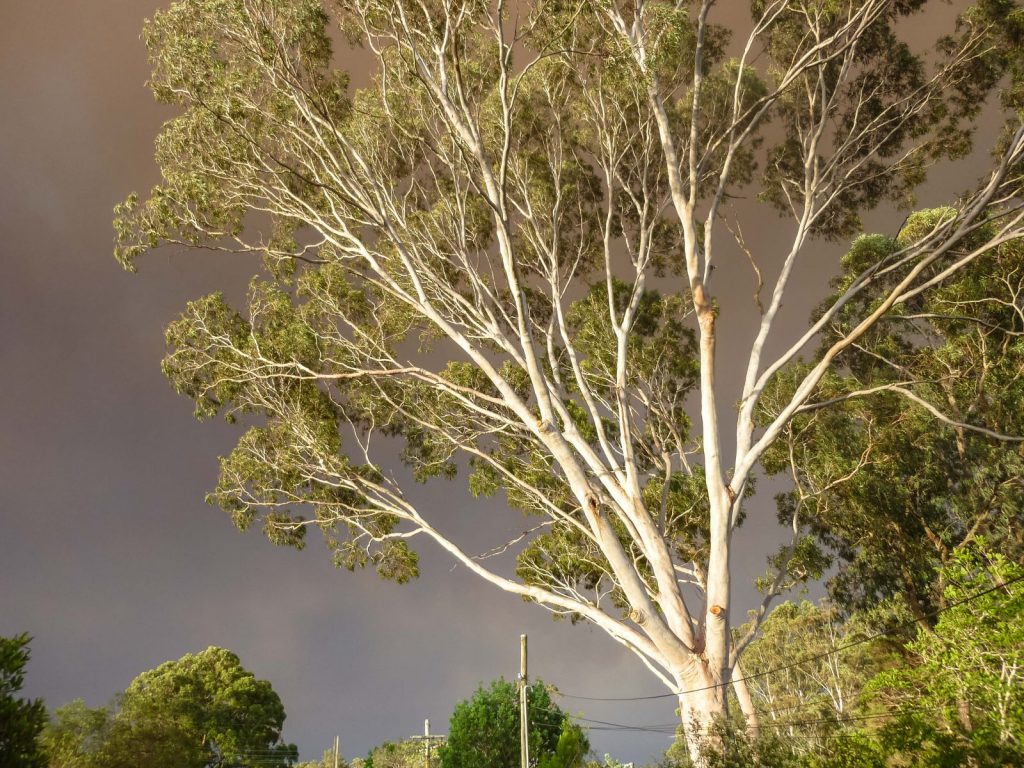
Corymbia citriodora – An erect tree to a height of 50 metres, forming a lignotuber.
Angophora hispida
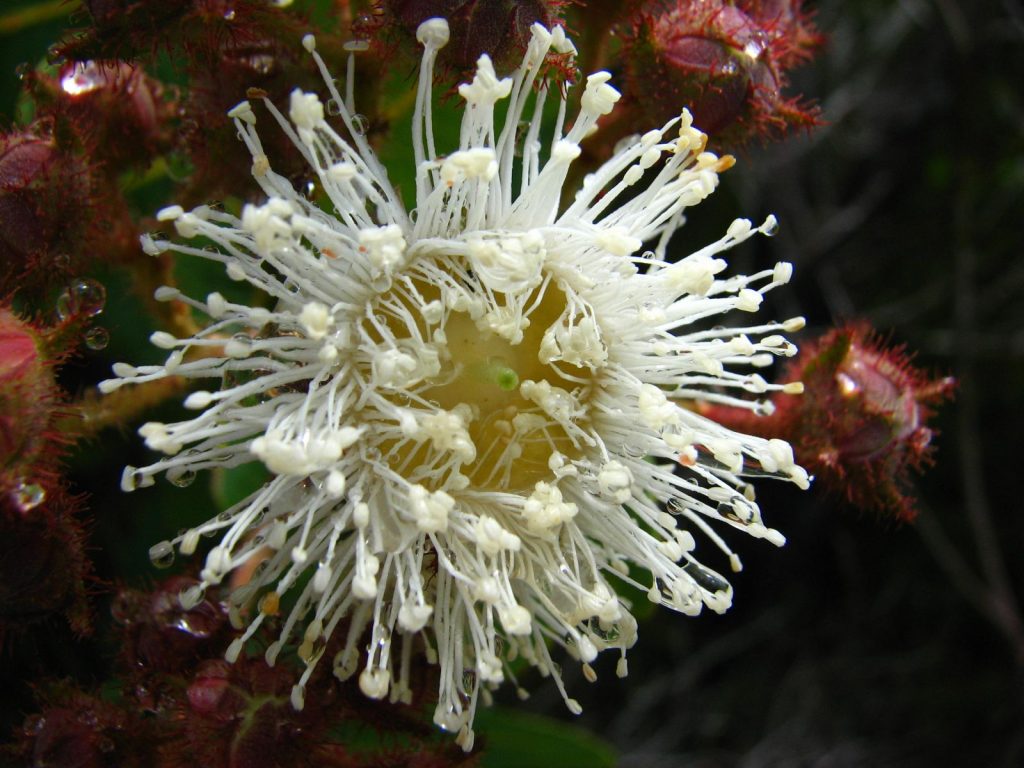
Angophora hispida – A small tree or mallee, capable of reaching 7 to 10 metres tall but often seen much smaller, forming a lignotuber. It sometimes has a wide spread for a small tree.
Angophora floribunda
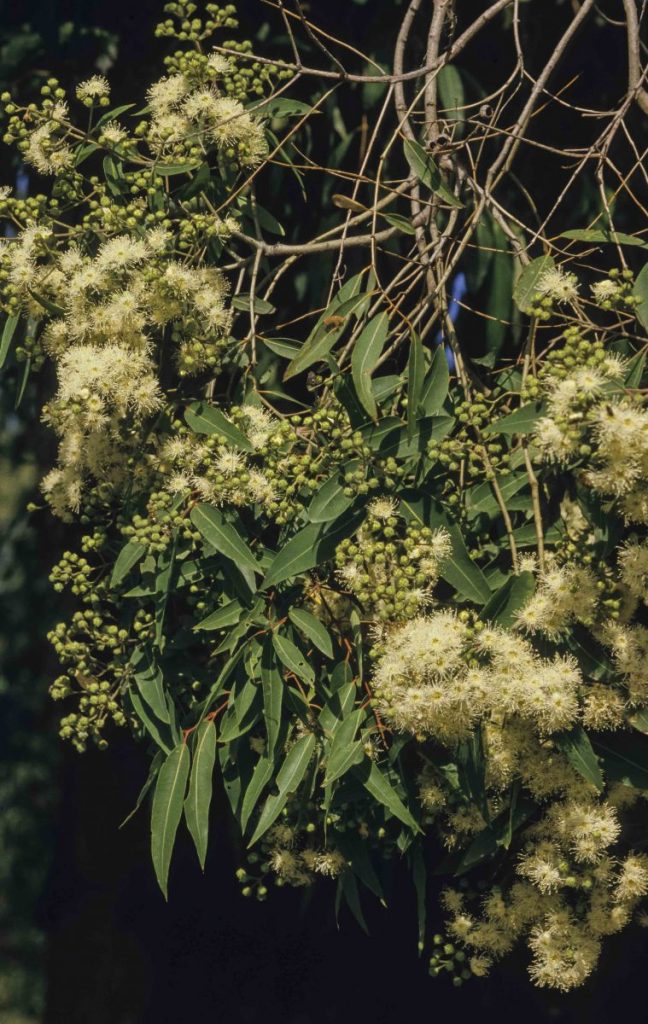
Angophora floribunda – It is a very widespread tree in a variety of habitats in NSW. Its primary occurrence is from south-eastern Victoria, along the whole of the NSW coast into central Queensland.
Angophora subvelutina
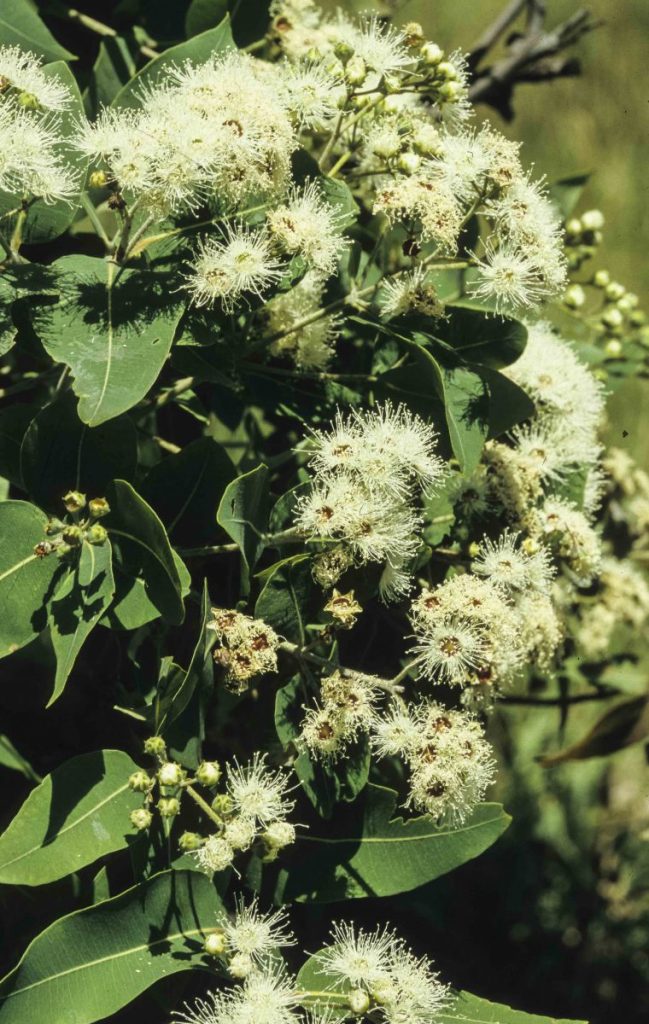
Angophora subvelutina – a large tree up to 20 m tall. It is a widespread tree but is found primarily in coastal subdivisions, growing north from Araluen on the NSW south coast, along the central and north coasts into Queensland to around the Sunshine Coast and inland
Angophora crassifolia
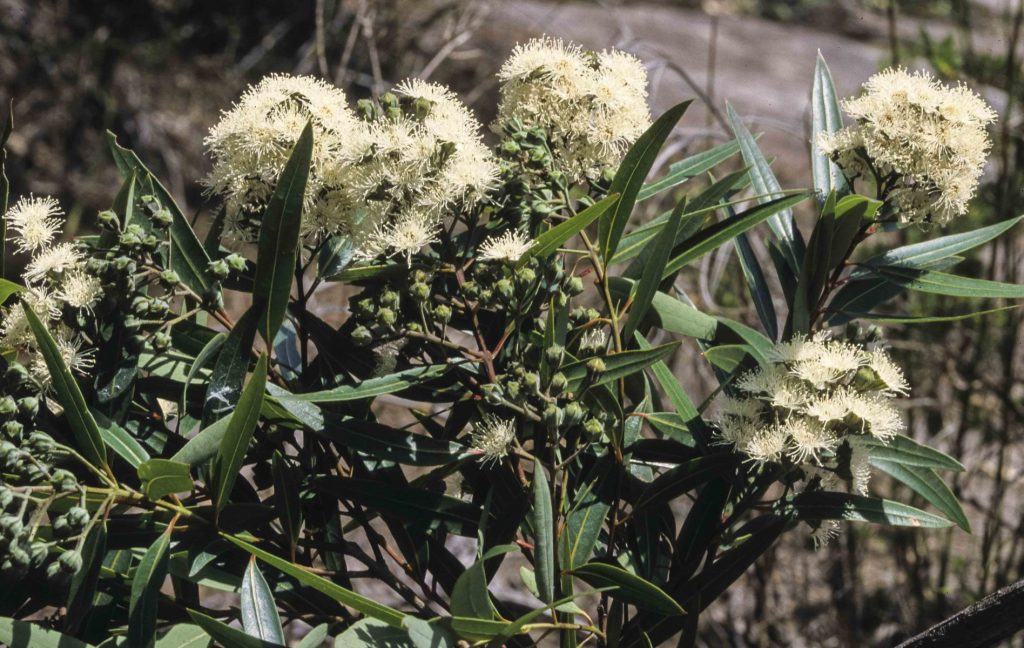
Angophora crassifolia – A smaller tree, or mallee, reaching up to 15 m tall. It has a very restricted range, confined to northern Sydney on the Ku-ring-gai Plateau. Records are from North Sydney to Brooklyn.
Angophora bakeri
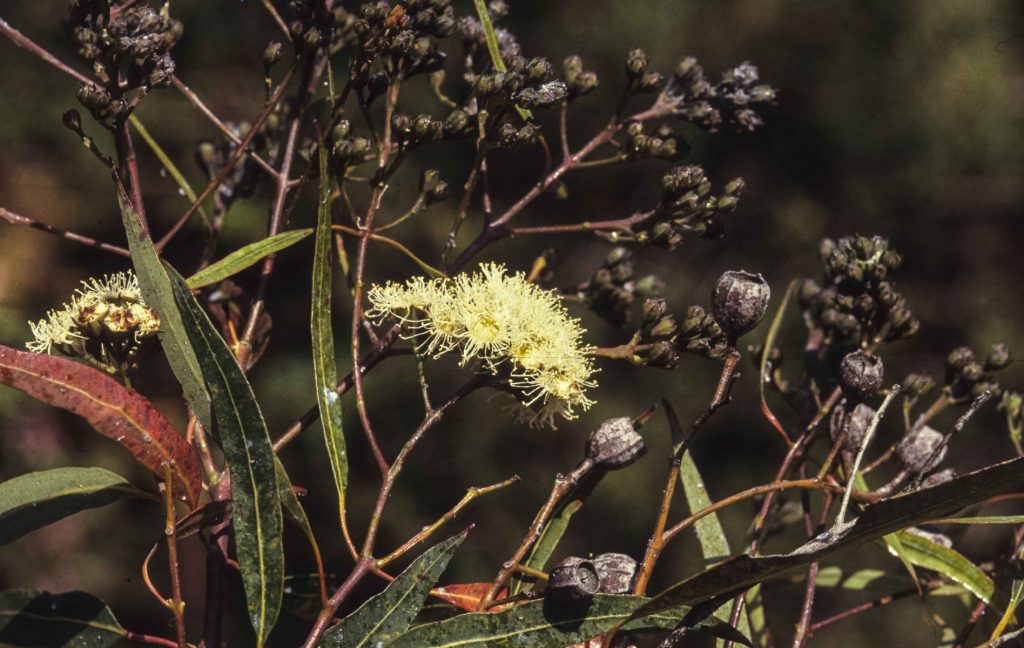
Angophora bakeri – A small tree reaching up to 10 m tall. It is has a much smaller range compared to some of its other relatives, growing primarily on the NSW Coast, from Nowra to Port Stephens, and west into the Hunter Valley and Blue Mountains.
Angophora inopina
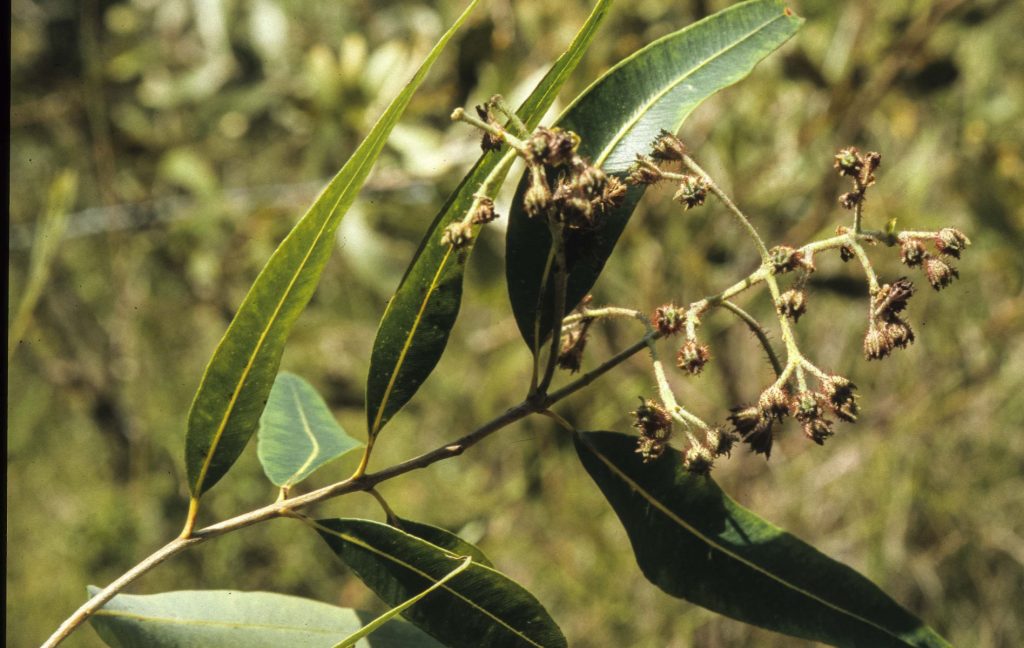
Angophora inopina – A smaller tree, or mallee, reaching 8 metres. It has a very restricted range, confined primarily to the Lake Macquarie area of coastal NSW, between Wyong and Newcastle.
Angophora costata
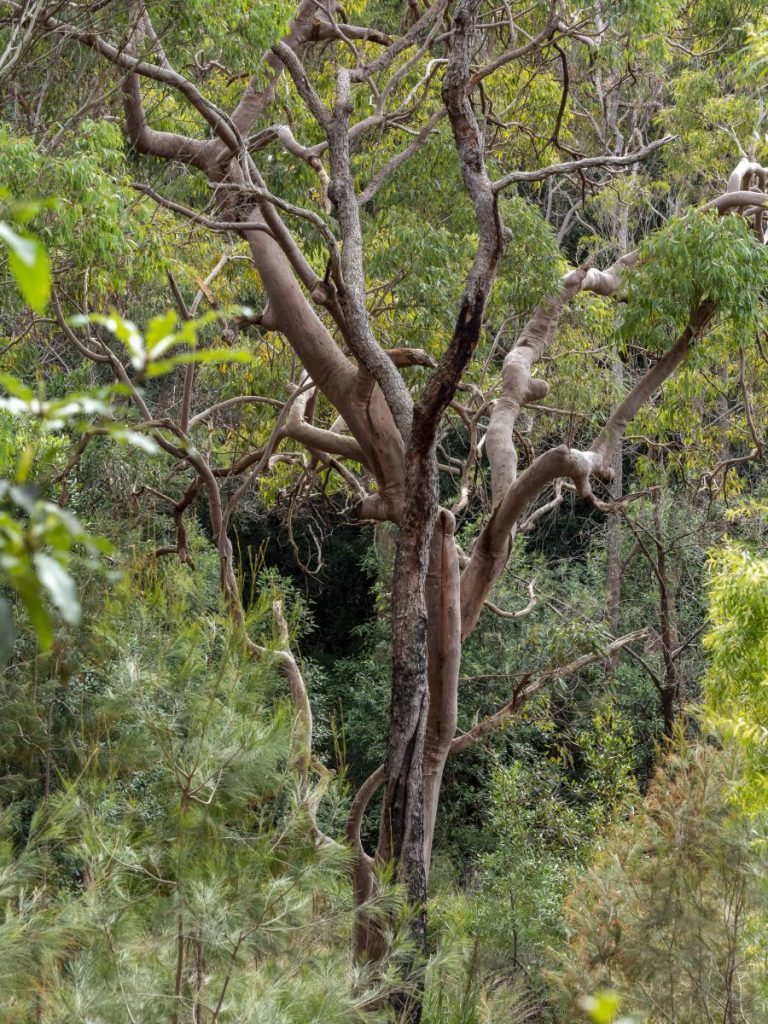
Angophora costata – A large tree (rarely a mallee), reaching up to 25 m tall. It has a primarily coastal occurrence in NSW, extending down to the south coast, with some disjunct records in Victoria (north of Melbourne). It extends northwards to north and west of Tamworth, and Armidale, into Queensland and up in disjunct patches, to the west of Townsville.
Corymbia ficifolia
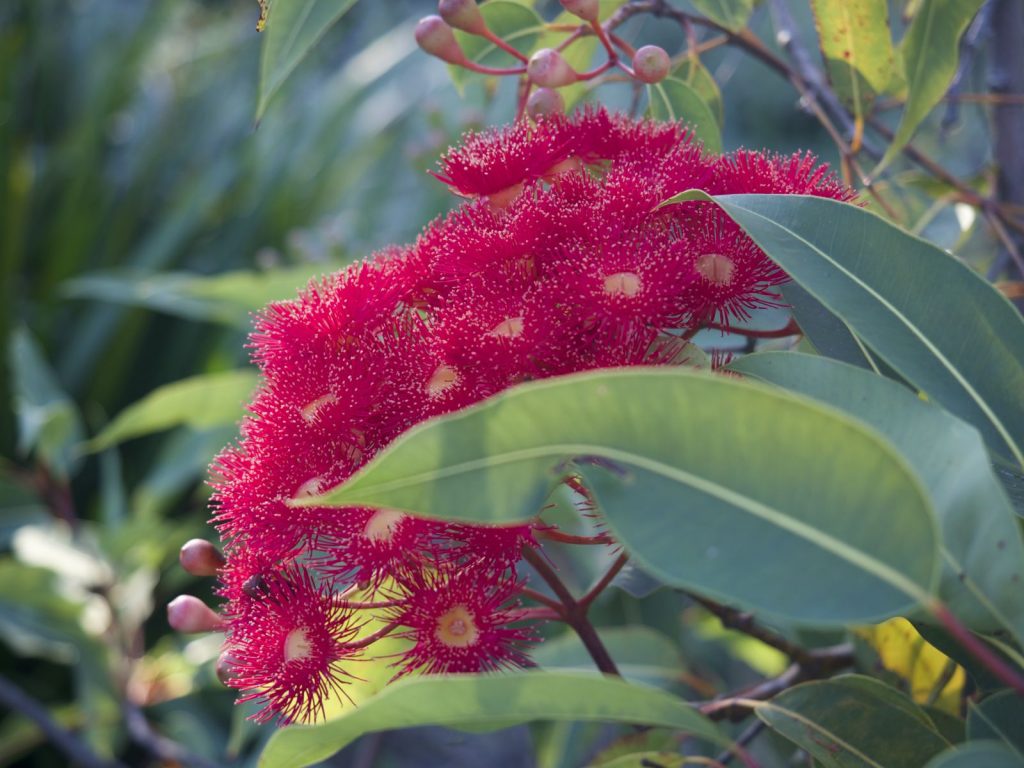
Corymbia ficifolia – A tree restricted to the south-west of WA where it grows to a typical height of 10 metres, forming a lignotuber. It is generally found in the Walpole-Mt Frankland region (west of Albany) with some smaller populations to the east.
Corymbia gummifera
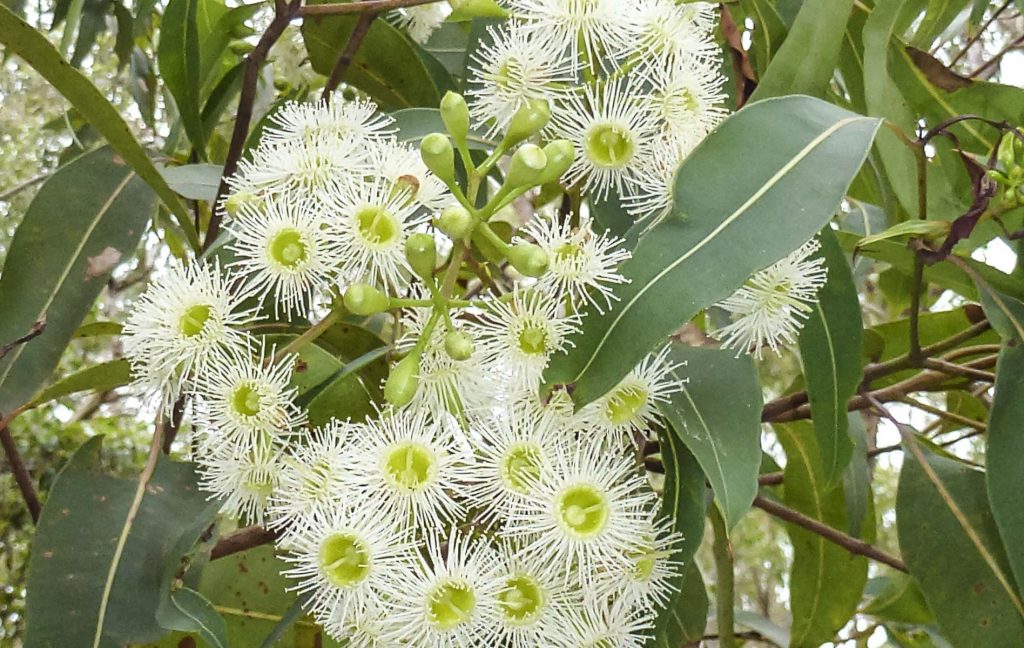
Corymbia gummifera – A very common tree growing to 30 m tall, forming a lignotuber. It sometimes exists as a mallee and smaller tree on ridgetops.
Eucalyptus microcorys
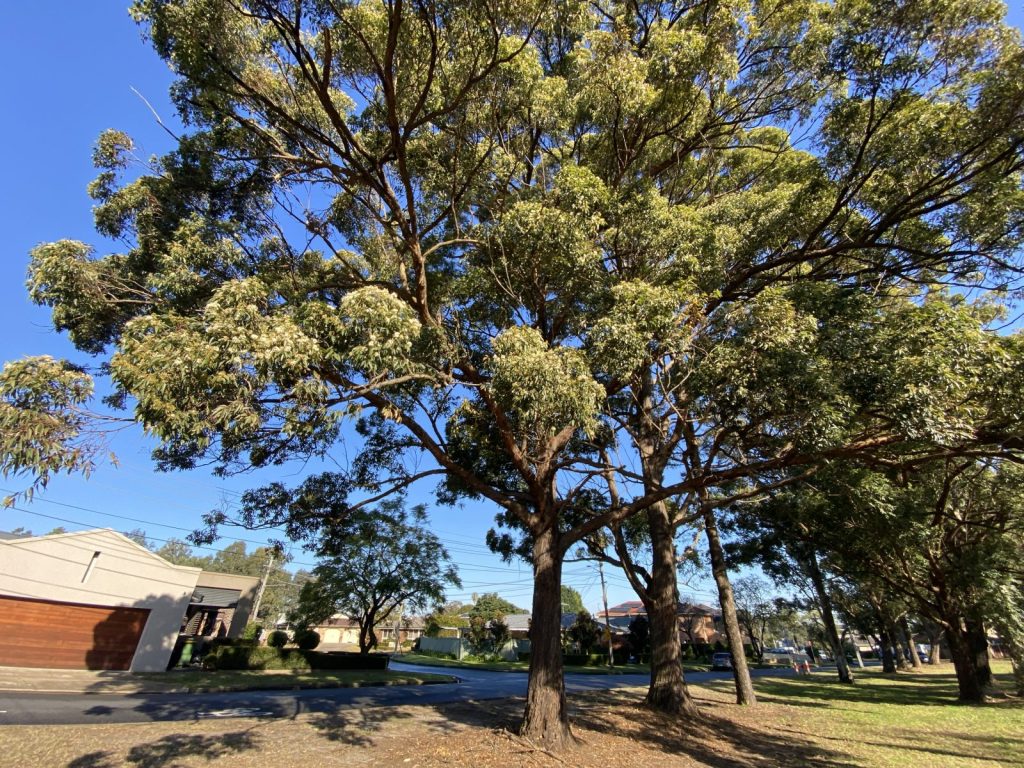
Eucalyptus microcorys – Potentially a very tall tree, reaching 60 metres in some habitats. It has a sturdy straight trunk with continuous stringybark and forms a lignotuber, with continuous stringybark (stringy / mahogany-like) with very small brown-mica flakes on the surface (which aids identification).
Eucalyptus fastigata
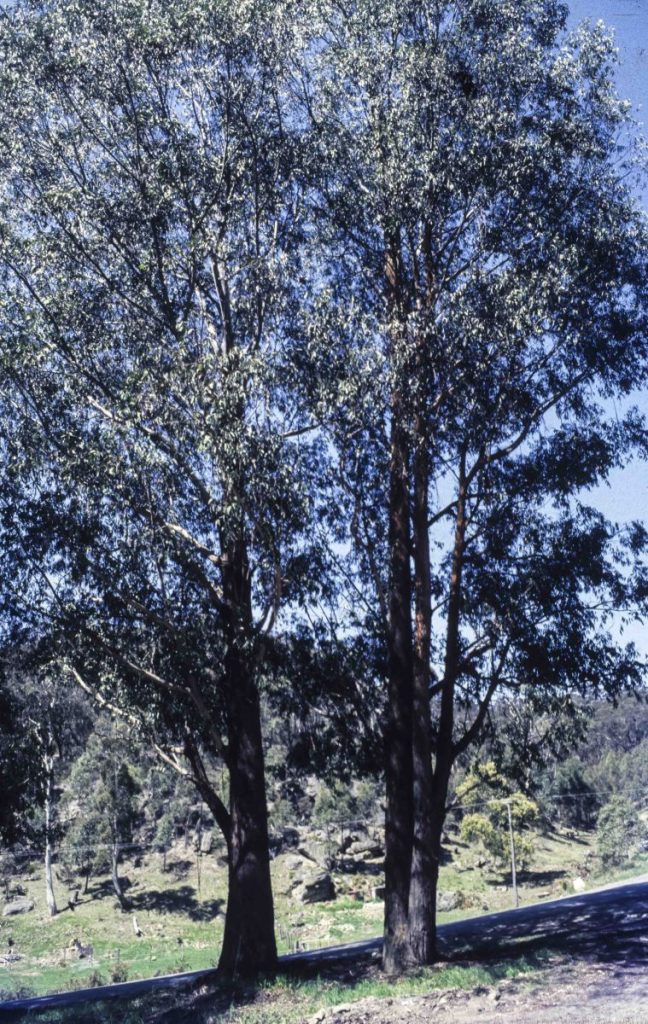
Eucalyptus fastigata – Potentially a very tall tree, reaching 50 metres in some habitats. It has a sturdy straight trunk with fibrous-stringybark at the base, but does not form a lignotuber.
Eucalyptus cypellocarpa
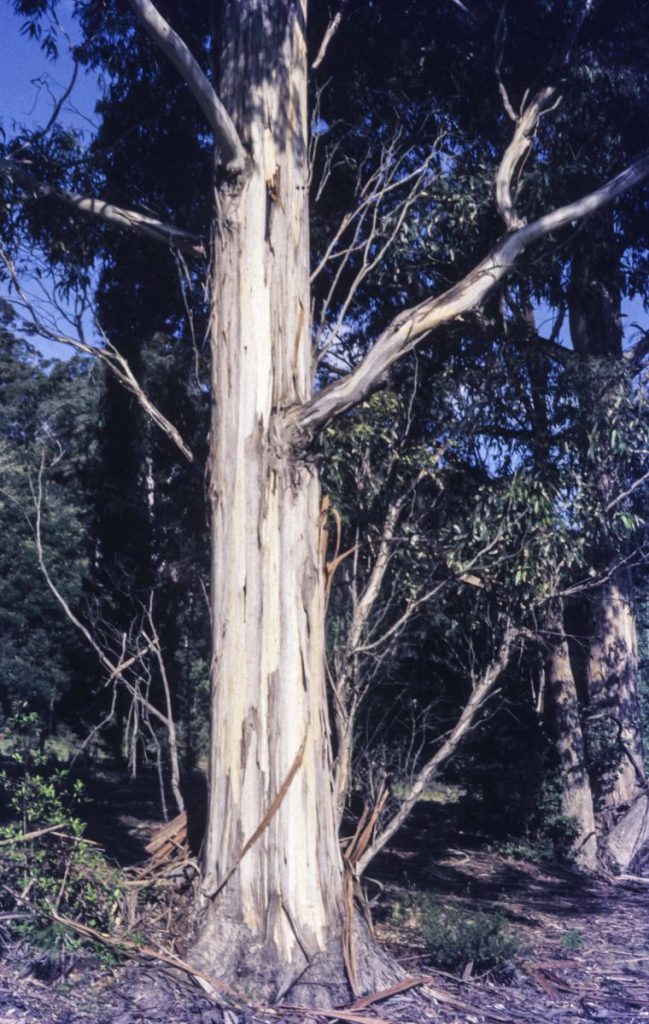
Eucalyptus cypellocarpa – Potentially a very tall tree, reaching 50, to even 65 metres, in some habitats, forming a lignotuber. It has a sturdy straight trunk with mostly smooth bark with shades of white, grey and yellow, which sheds in long ribbons.
Eucalyptus tereticornis
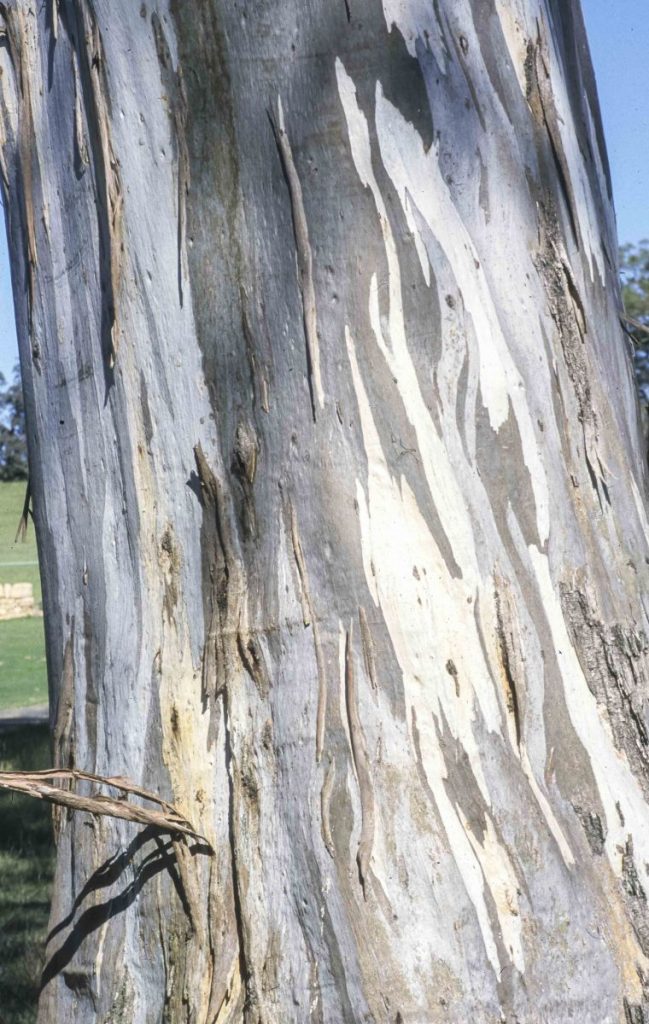
Eucalyptus tereticornis – A large tree growing to 50 m (and forms a lignotuber) and has a wide distribution, occurring over the widest range of latitudes of any Eucalyptus species, occurring from southern Papua New Guinea at latitude 15°S, to south-eastern Victoria at latitude 38°S.
Eucalyptus stellulata
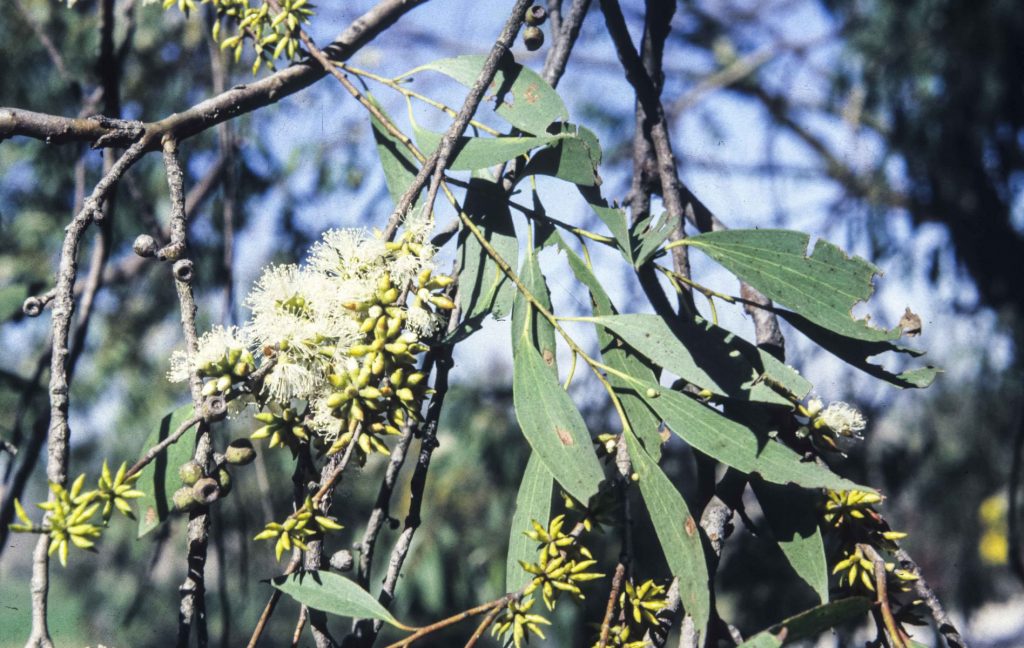
Eucalyptus stellulata – A medium tree, growing to a height of 15 m (and forms a lignotuber). It is confined to the tablelands of NSW, extending into Qld and Vic.
Eucalyptus squamosa
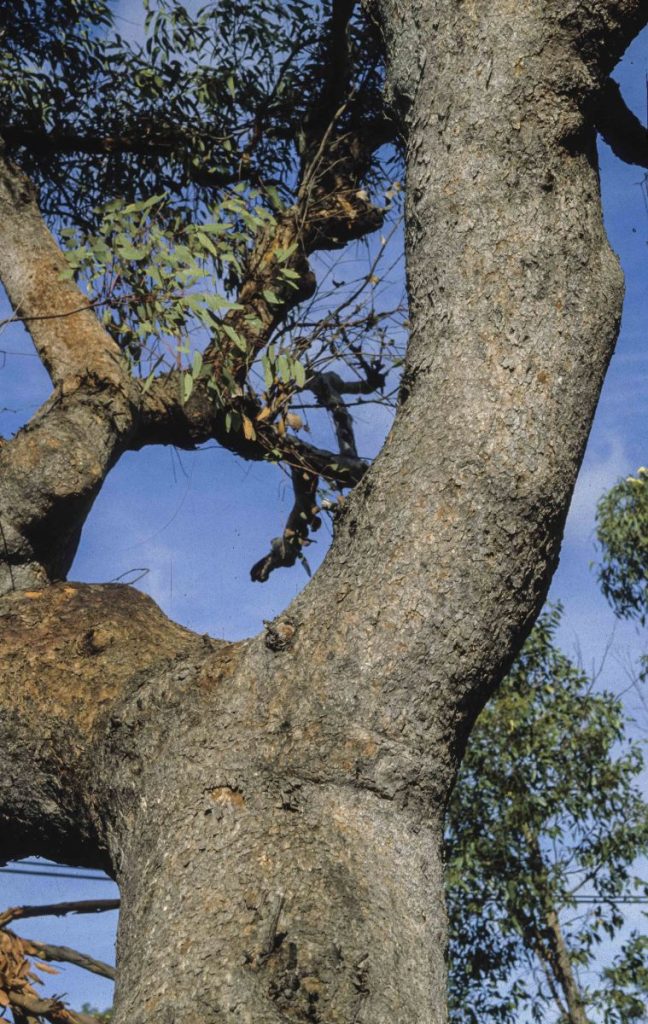
Eucalyptus squamosa – A medium tree, growing to a height to 15 m and forms a lignotuber. It is generally found in sclerophyll woodland on ridgetops and plateaus, where soil accumulates in depressions on the sandstone, on and around sandstone plateaus, and often on lateritic soils.
Eucalyptus stricta
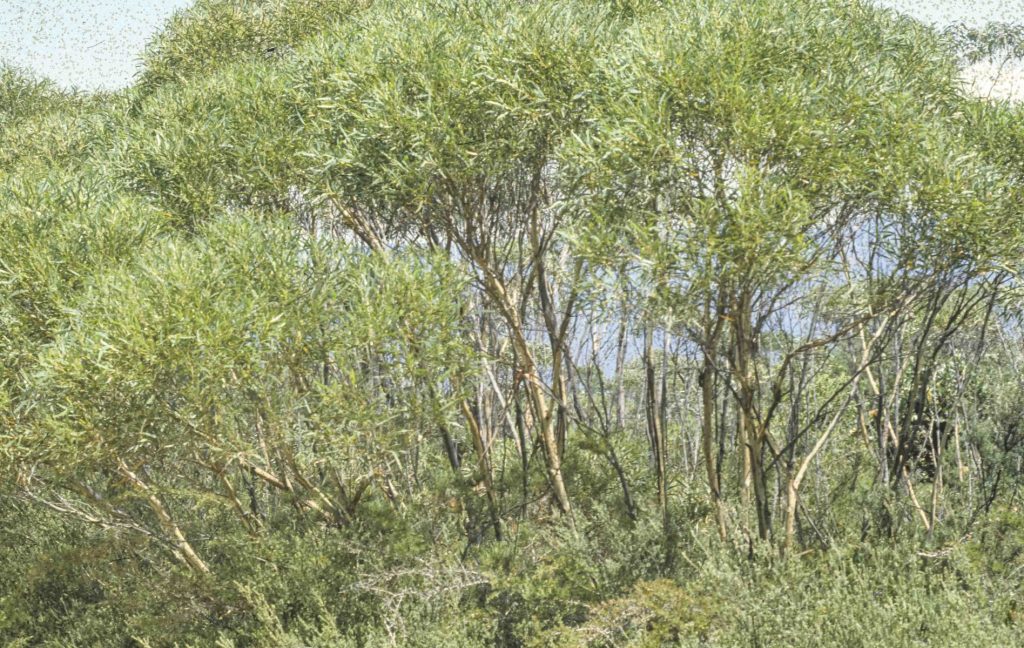
Eucalyptus stricta – A small tree or mallee endemic to New South Wales, growing to 7 m tall, forming a lignotuber. It has a scattered distribution from the Central Tablelands around Newnes Plateau, south to Dr George Mountain north-east of Bega