Mistletoe and bird interactions with Alan Leishman
By Rhonda Daniels
Originally published in: Sutherland Group News, July 2026. Reproduced with acknowledgement.
Alan previously worked at the Botanic Gardens, and has been involved in bird banding projects. Alan noted that Professor David Watson at Charles Sturt University has provided a lot of information on mistletoes, but there is still much to learn about this group of plants with 1,500 species worldwide, and 97 species in Australia including Amyema genus. Mistletoes have been misunderstood as parasites (and bad for plants), but are actually a keystone species for
food and habitat. They show affinity to the plant they are growing on, with the mistletoe leaves looking like the host plant. Different mistletoe species prefer different host tree or shrub species. They are adapted to various environments including woodlands and forests, even urban areas. They do not regenerate after fire. Mistletoe flowers and fruit are good food sources when other environmental sources are scarce or not available. Mistletoes provide food for a range of life, including birds and butterflies. They have a range of flower colours, yellow-orange-red, to attract birds, and the fleshy fruit also comes in a range of colours. The flowers provide nectar, rich in lipids and protein. For instance, 44 bird species are recorded as feeding on mistletoe nectar. In terms of fruit, 38 species of birds, all honeyeaters, feed on fruit. Other non-honeyeater birds, such as blackbirds and emus, also eat mistletoe fruit.
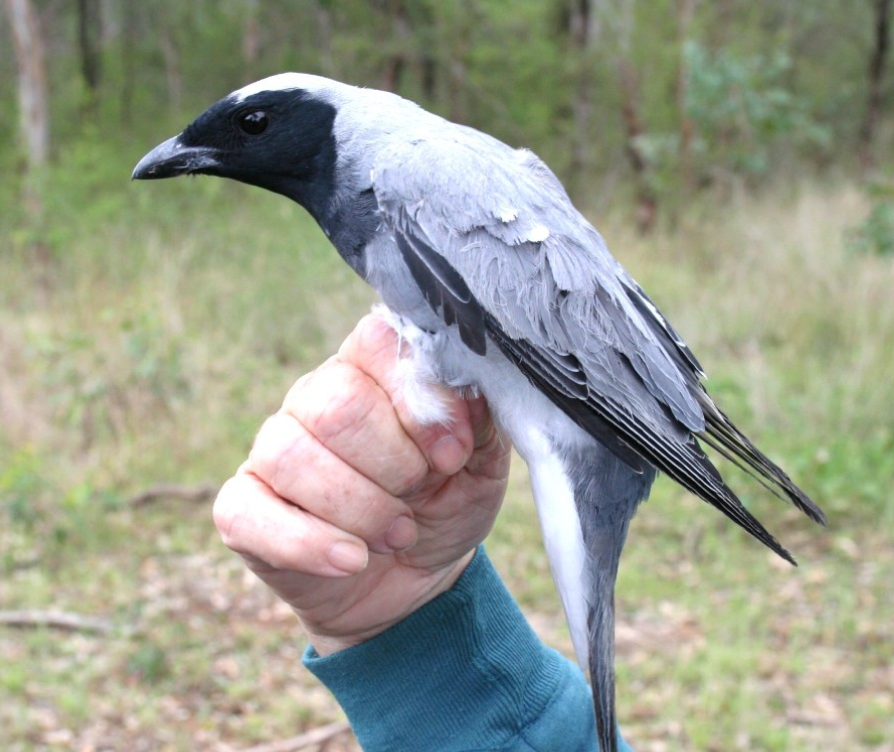
Black-faced Grey Cuckoo Shrike
Coracina novaehollandiae
Photo: A. Leishman
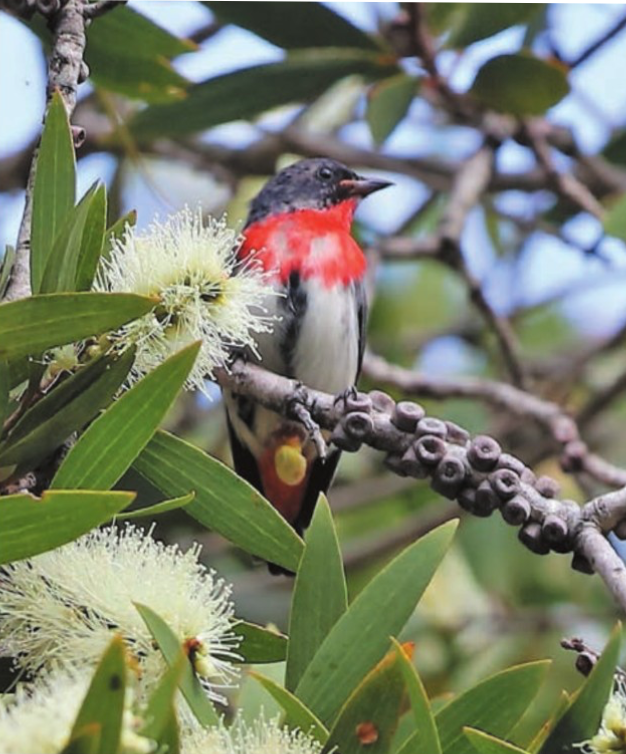
Mistletoebird propagating
Photo: Ray Burton
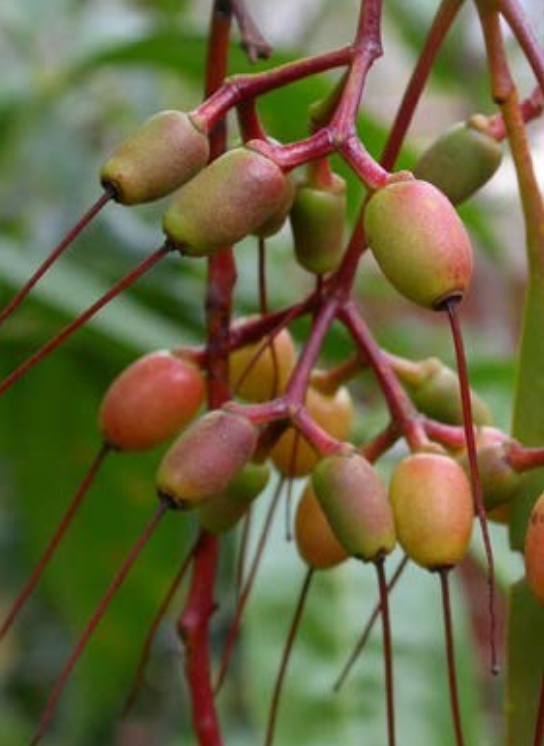
Box mistletoe fruit
Amyema miqueli
Photo: Ross Kendall
Mistletoebirds (Dicaeum hirundinaceum) have a modified digestive system. The mistletoe fruit has a laxative effect and passes through and out the bird in a very speedy 4–12 minutes! The bird then wipes and twists the expelled sticky seed on the bark of the tree host. The enzymes dissolve a layer of bark so the seed can take hold and germinate. Interestingly, the Mistletoebird is not found in Tasmania as the state does not have mistletoes. Mistletoes provide nesting and roosting habitat for 217 species of birds – two-thirds of all possible tree nesting bird species. As they have denser foliage than eucalypt foliage, they are an important shelter plant in many habitats.
Alan discussed a bird banding project at Ungarie, a wheat town near West Wyalong in western NSW. It is a sparse agricultural area with little tree vegetation. It has Acacia pendula (weeping myall), with a grey mistletoe Amyema quandang. The project is banding the painted honeyeater (Grantiella picta), which specialises in eating mistletoe fruit. The birds are tiny, weighing 18–25 g each, and less than 200 birds are banded in Australia.
Box mistletoe fruit, Amyema miqueli
Photo: Ross Kendall
Black-faced Grey Cuckoo Shrike
Coracina novaehollandiae
Photo: A. Leishman
Mistletoes provide a range of ecosystem benefits, including nutrient recycling, through healthy soil, understorey and trees. In Melbourne, councils are even planting mistletoes on (deciduous) plane trees on urban streets to create biomass, and improve habitat for diverse species. As with many of our talks, this one showed once again how plants and animal life are connected and the need to preserve our biodiversity.
For books, see Mistletoe Propagation, by Birdlife Australia , (a free PDF to download) and Mistletoes of Southern Australia by David Watson – the definitive illustrated guide to all 47 mistletoe species found in southern Australia. (Also see: Gardening Australia interview with David Watson) Rhonda Daniels Flashback to 2017 interview with Alan on ABC radio Ed. – A note from the Mistletoe Propagation manual: Remember that while the mistletoe germination rate is very high, only a few plants are likely to establish and reach maturity. So you can plant 20-30 seeds per tree without concern of overloading the host tree. If there is an over-abundance of mistletoe, these can easily be pruned off later.