Originally published in Australian Plants, Vol. 32, No. 255, Winter 2023. All images by Emma Brame
Emma has been working as a horticulturalist at the Sutherland Shire Community Nursery in southern Sydney for over 7 years. The nursery propagates plants indigenous to the area, all of which have local provenance. A portion of the plants are planted back out into the local reserves and bushland areas. Some plants are used for the Green Web initiative, which aims to widen green corridors in the local area. Plants are also for sale to the general public and contractors. Emma has a passion for experimenting with all things propagation, in particular experimenting on introducing new species to the nursery including ferns and experimenting with improving the success rates on harder to grow species.
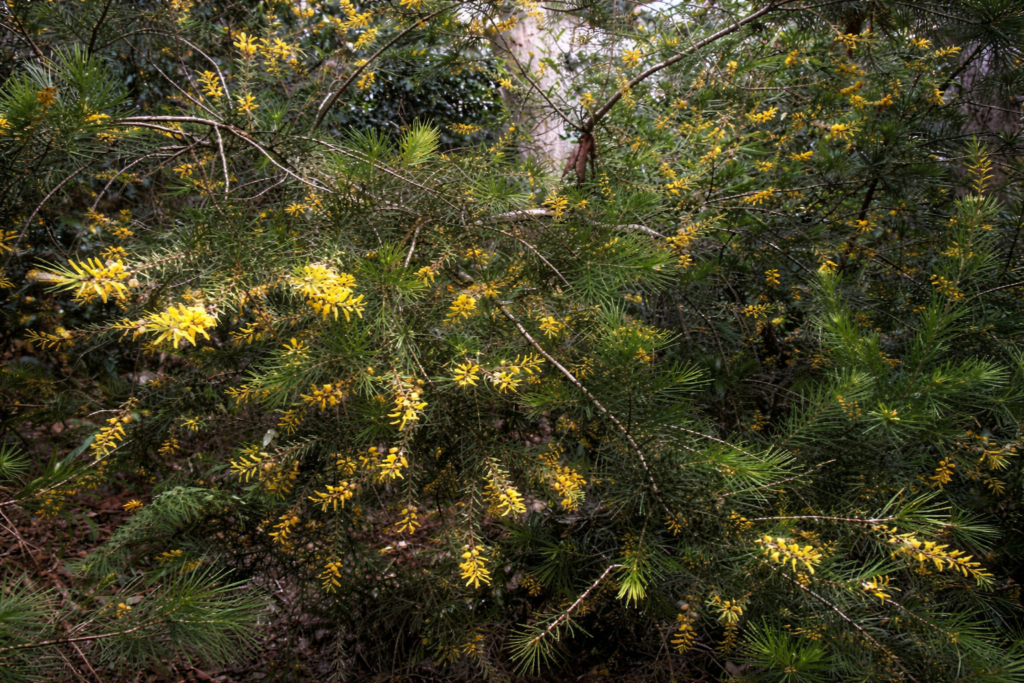
Germinating persoonias is notoriously hard and successful germination is something in which to be proud of participating. I have been fortunate enough to work alongside some very experienced and passionate people that have shared their understanding and knowledge on growing native plants. Persoonias are proving to be one of the harder genera to master and propagate successfully. The Sutherland Shire is home to a number of Persoonia species and the nursery has had success with four different species, Persoonia pinifolia, P. lanceolata, P. linearis and my favourite (if not one of my favourite native plants) P. levis.
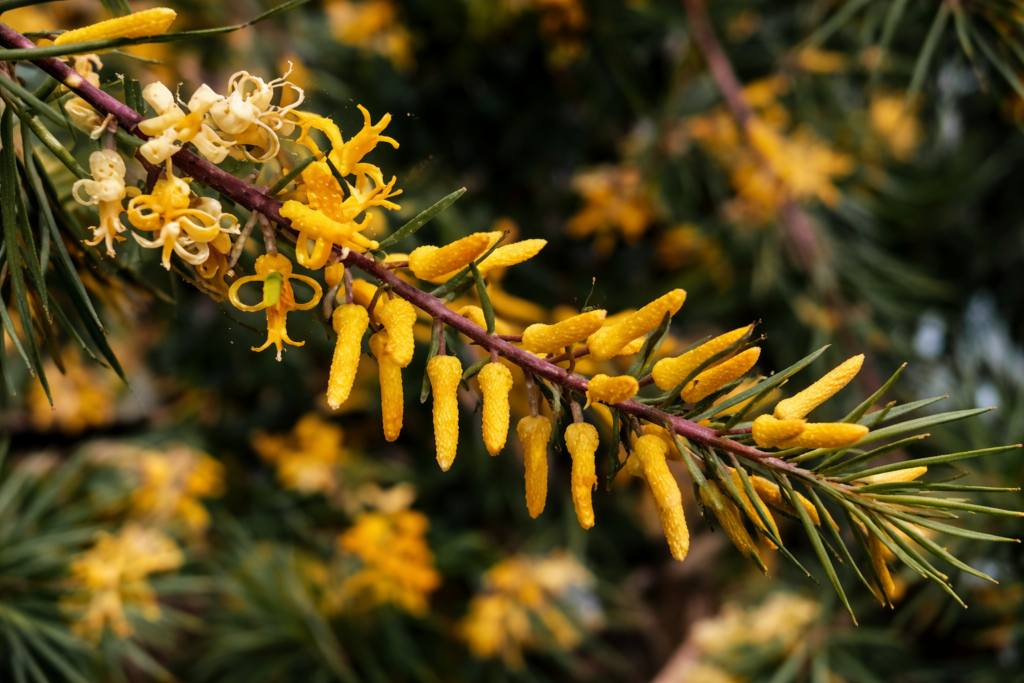
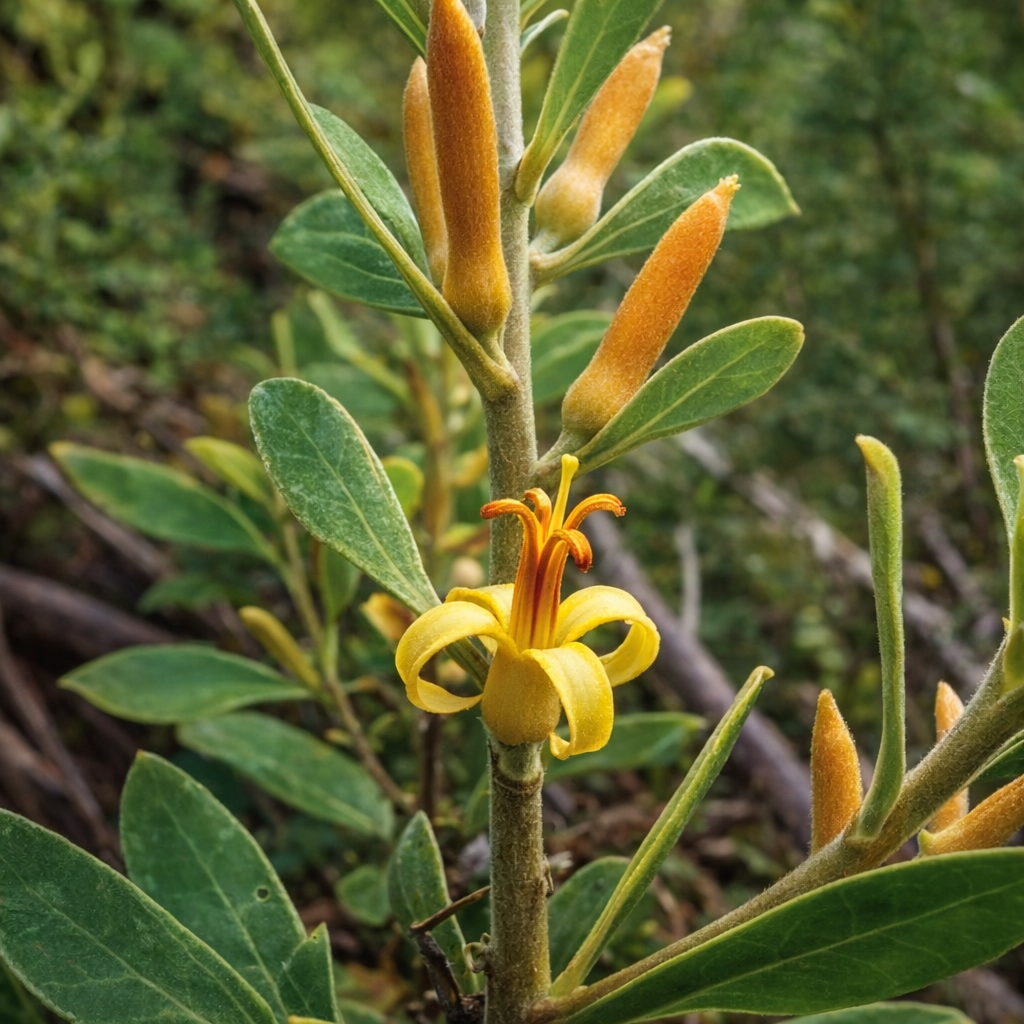
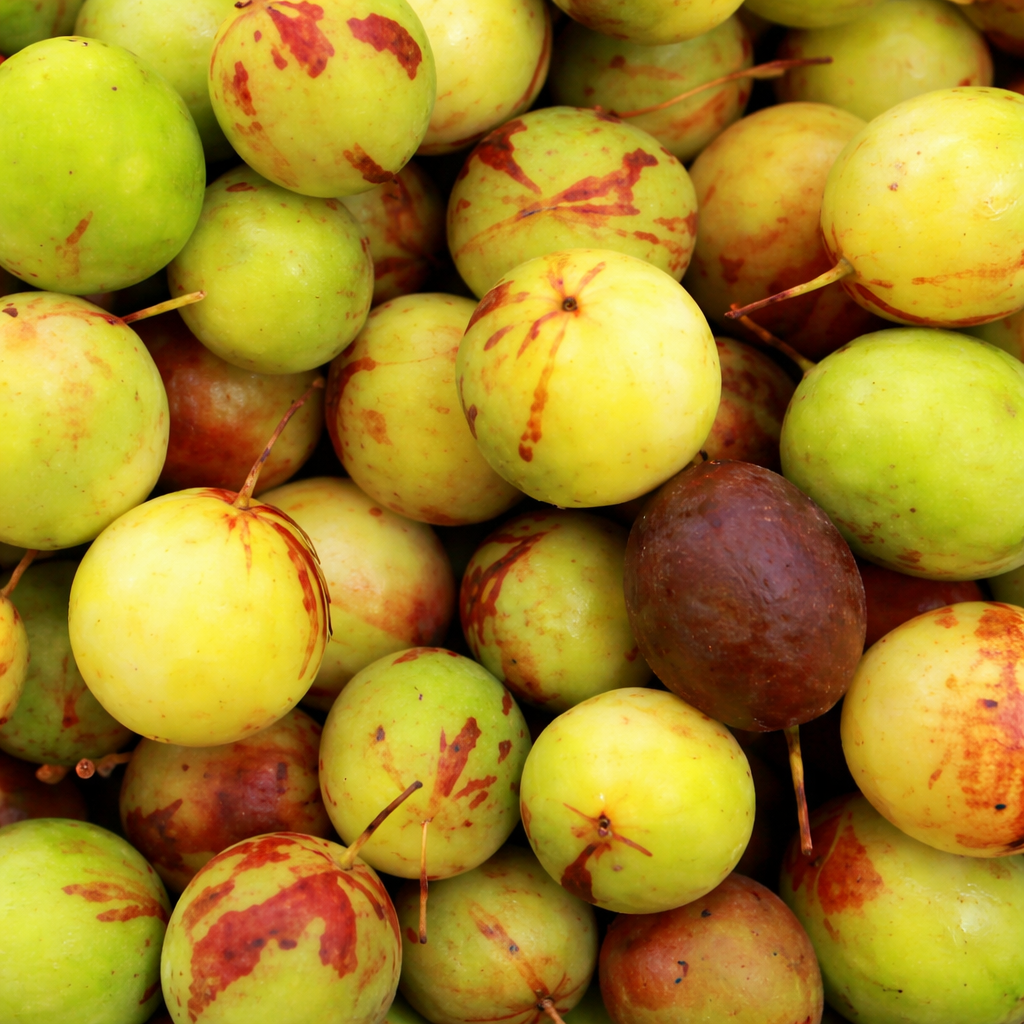
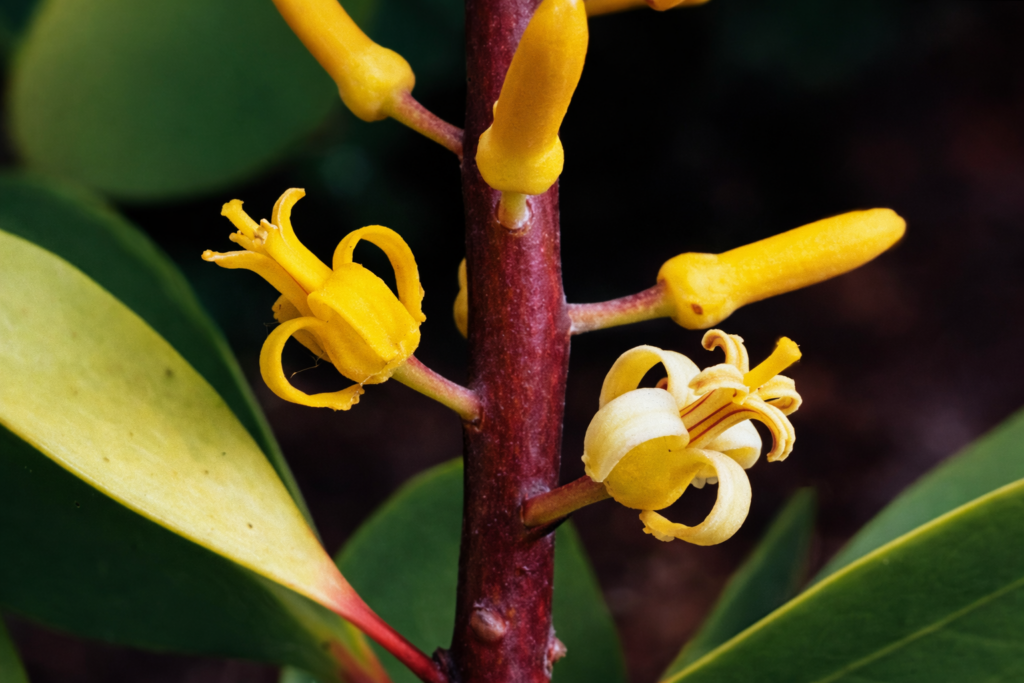
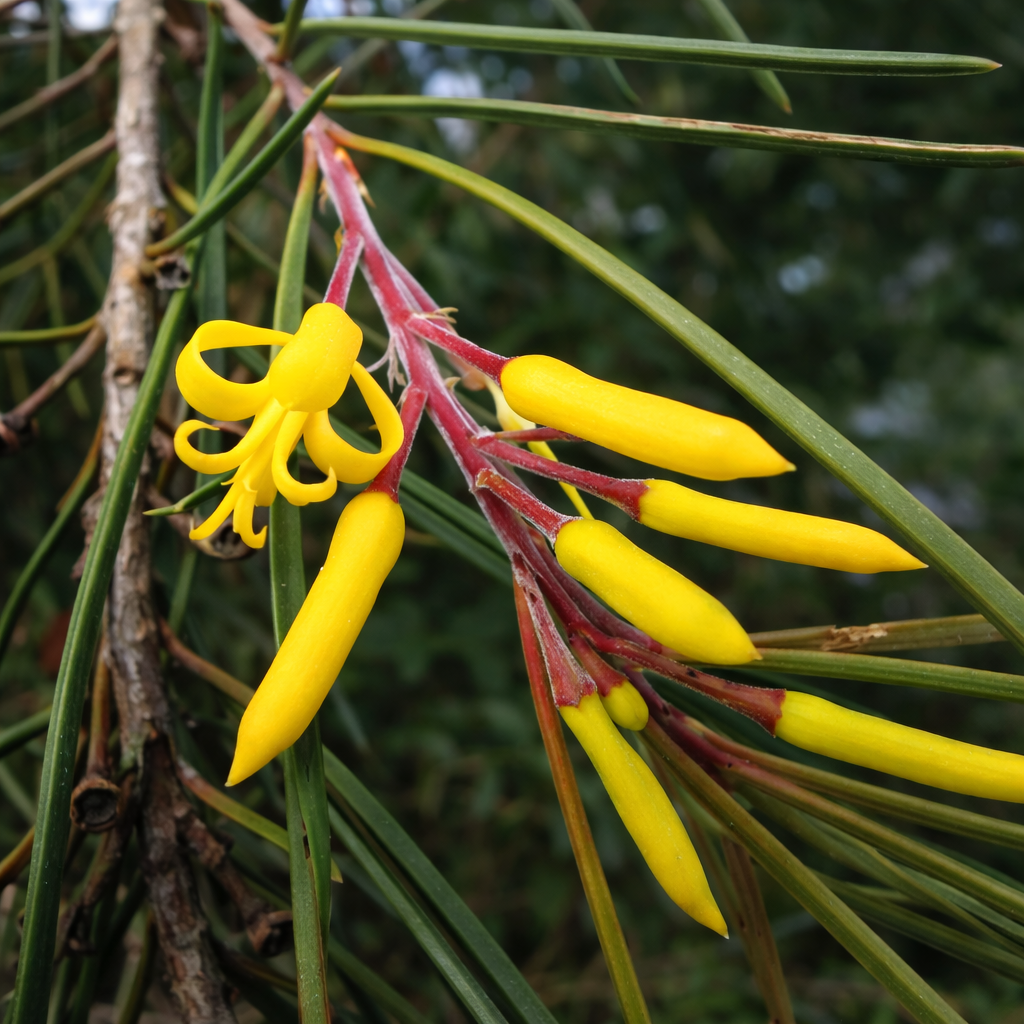
For those not familiar with the genus Persoonia, there are thought to be over 100 species in the genus endemic to Australia. Persoonias are in the Proteaceae family and are generally an understorey shrub to small tree. They have yellow flowers followed by a fleshy drupe. Persoonias are commonly referred to as “Geebung”, which is derived from an Aboriginal word “Jibbong”. This refers to the edible fruit/drupe of some of the species.
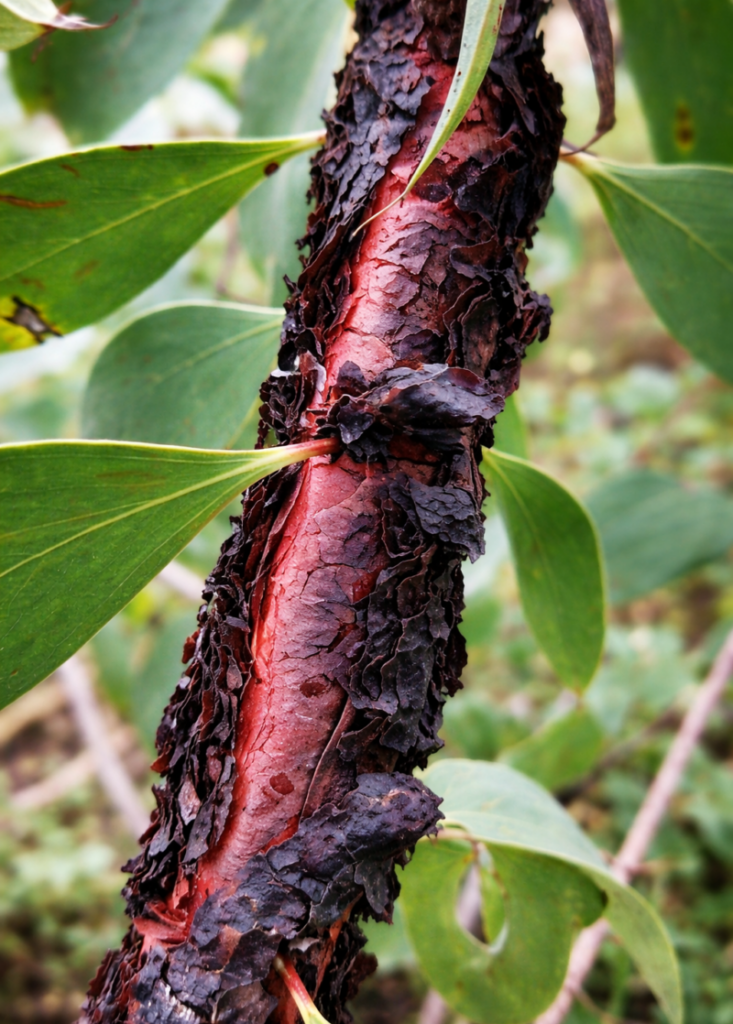
The shape of the leaves varies tremendously throughout the species. Flaky bark with red undertones can be an amazing feature of some of the species.
When it comes to propagating the Persoonia genus from seed, time is by far the main factor to consider. The first process itself takes 12 months alone and is primarily to remove the exocarp (outer layer/skin of fruit) and mesocarp (the fleshy part of fruit) to reveal the endocarp (hard layer that covers the actual seed).
Another important factor to consider when propagating persoonias is knowing the climate conditions of each species. Observation from when they naturally germinate is particularly helpful, especially at what temperatures, as some seed in this genus have physiological dormancy and require specific temperatures to break dormancy and germinate. In the nursery we have had success due to mimicking these natural germination processes.
Germination Process
The first process is collecting the fruit when it is ripe and fully formed. More often than not, fruit will be ripe when it has fallen off the plant and onto the ground. For most of the species grown in the nursery, collection time starts from November. Collection of a substantial amount of fruit will vary with each species as some produce many more flowers and thus fruit than others. It will also vary on each individual plant as flowers and fruit form at different speeds along spikes.
On stock plants in the nursery, fruit is collected over a few days and even weeks to build up bulk seed quantities. Out in the field, it is recommended that 20% or less is collected from any one plant so that we do not deplete the natural area of seed and natural regeneration.
Once the fruit has been collected, it is ready to be fermented. This is simply done by placing fruit into a plastic bag with some regular potting mix (we use a free draining mix), and a splash of water in it. The bag is then sealed and labelled with the genus, species, collection date and location of where the fruit was collected from. It is then placed under the benches in the glasshouse for 12 months, where it is humid and warm temperatures are constant over the 12 month period.
Fermenting the fruit this way replicates the fleshy fruit being processed through the digestion system of an animal. The flesh and skin of the fruit (exocarp and mesocarp) will be stripped away to reveal the hard layer (endocarp) that protects the seed. The seed, still with its hard outer layer protecting it, is retrieved 12 months later. This is done by placing the contents of the bag into a suitable sized sieve and the potting mix is washed away through the sieve.
With the hard layer/endocarp still protecting the seed and making it impervious to water, further treatment is required to help increase successful germination. Some studies have shown that up to 50% of the endocarp must be removed for germination to occur. Scarifying by abrading, pretreatment with boiling water and/or nicking the endocarp with a sharp knife or secateurs have all been suggested. In previous years at the nursery, all the endocarp would be nicked with sharp secateurs one by one. As you can imagine, this was very time consuming and fiddly work to say the least. In recent years, we have not only saved time but have had great success by using a different scarification technique. We now use sandpaper to scarify a large amount of seed at once. This is done by placing the seed into a suitable sized sieve. Again, the sieve should not be big enough for the seed to fall through, but not small enough that the seed will move around like on a flat surface, but rather be held in place by each hole of the sieve. Sandpaper over a sandpaper block is then used to scarify seeds.
After this process it is now time to sow the seed. It is very important that the seed needs to be able to absorb water, so the seed raising mix needs to stay moist and not dry out. Water absorption will allow seed to swell and become soft and germination to happen. For this reason, a 50:50 mix of perlite and vermiculite is used (and is what the nursery uses for all its seed sowing). It works well as it allows for an excellent air and water flow. Perlite allows for air which is particularly important for good root formation and so that excess water can drain away. Vermiculite is used for its water-holding capacity, as it can hold up to four times its volume.
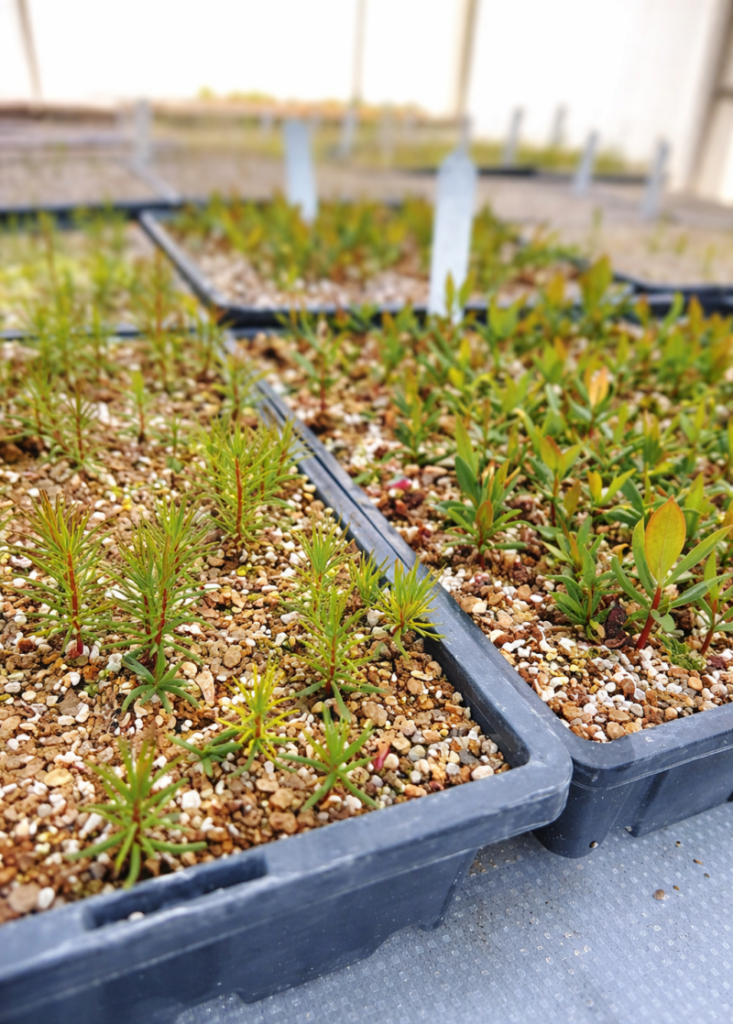
Seeds are sown the same as other seeds in a normal seed sowing tray. Once the seeds have been sown, labelled and recorded, the trays are placed into the poly tunnel where the environment is controlled with regular irrigation and protected from harsh conditions.
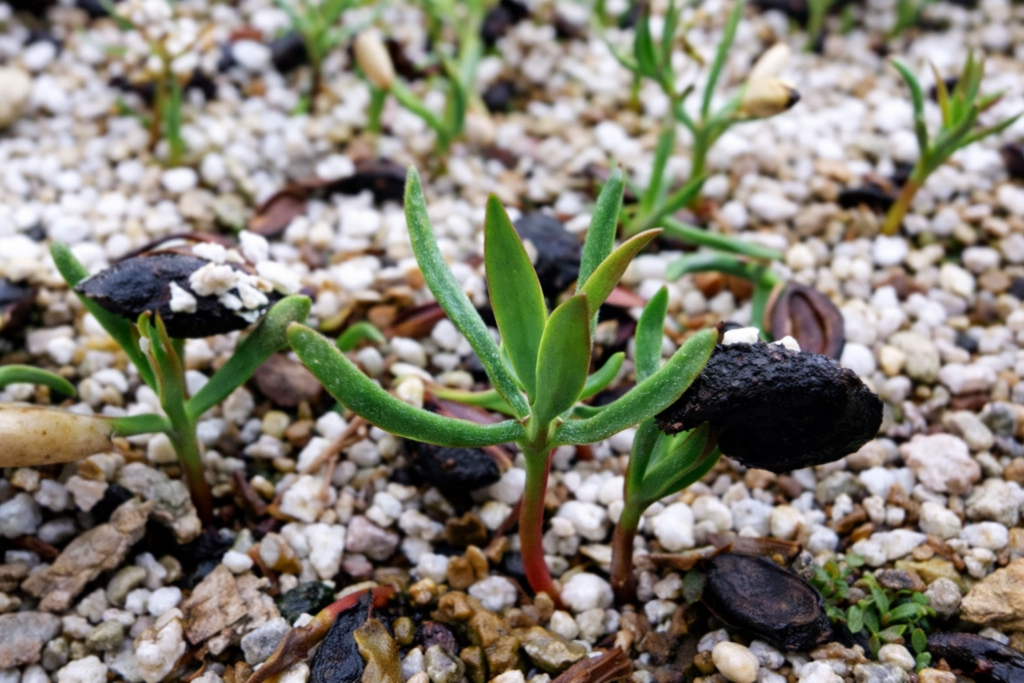
The trays are left and monitored for months before they begin to germinate. It isn’t until approximately six months later, usually in April when temperatures have dropped and we have our first real frosty night of the year, that the seed starts to germinate. The cotyledons start to emerge and then the first true leaves develop. A combination of time and temperature change has allowed the seed dormancy to break and begin germination. The persoonia seedlings are tubed up approximately three months later, when they are big enough (usually when they have two sets of leaves or more), into a free draining potting mix with a slow release native fertiliser. The seedlings are then placed into the shade house for a minimum of 2 to 3 months, where they will continue to put on new growth and develop a stronger root system. The shade house will protect young seedlings from harsh elements such as full sun, wind and heavy rain. After the shade house, seedlings will go out into full weather conditions to harden off.
Persoonia seeds can remain viable for many years and for this reason, the seeds that do not germinate are not thrown out. They are picked and cleaned from the seedling tray. When they dry, they are then re-scarified and re-sown. From excellent record keeping in the nursery, we have learnt that seed can still remain viable for up to five years.
Space is however a hot commodity in a nursery, so on average, treated seed is kept and re-sown for around three years and replaced with fresh seed (if we are lucky enough to collect in reasonable quantities).
Generally, at the nursery we always have persoonia on the go at each stage of the germination process. It is a very long continuous cycle taking a minimum of 18 months to get a reasonable sized persoonia seedling. We are about to tube up the seedlings that started germinating in April. We have fruit fermenting from collecting in November 2022 and our stock plants are finishing up flowering and will hopefully produce fully formed fruit. Now that we have a good cycle going, we are starting to get good stock levels, particularly with Persoonia pinifolia and P. lanceolata, and are hoping to build up our P. linearis and P. levis.