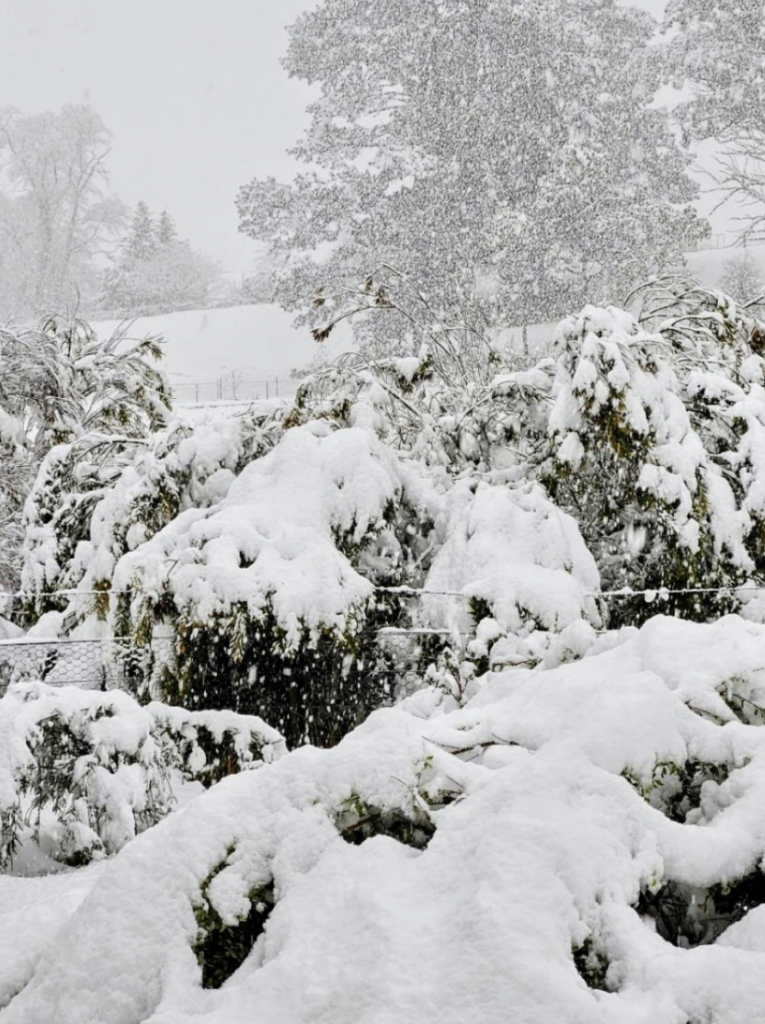
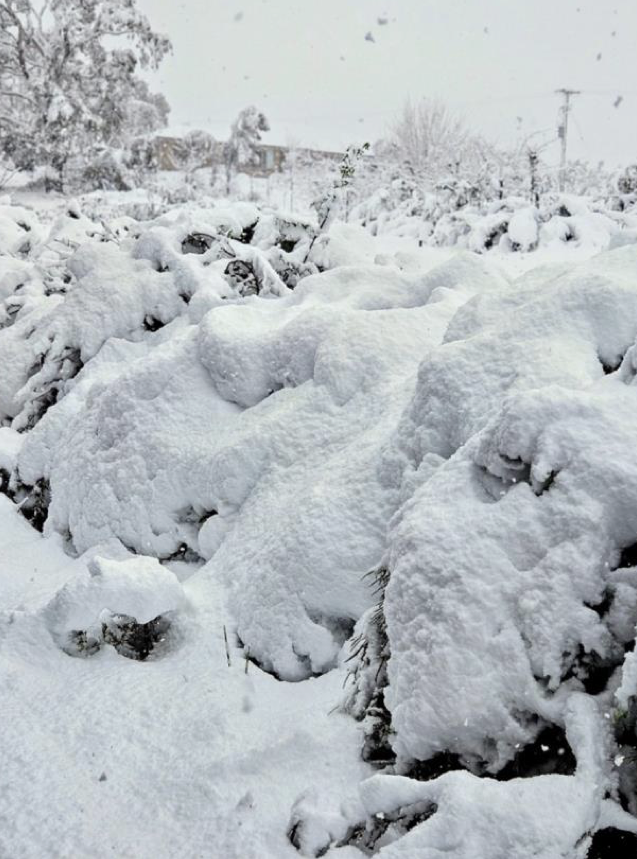
The heavy snowfall in August turned much of New England into a winter wonderland. We all marvelled at the depth of snow for much of the first day, before the range of negative impacts took hold across the region. Loss of power, loss of communications, road closures, freezing conditions and of course then came the sounds like gunshots as branches or whole trees began to fall under the sheer weight of snow.
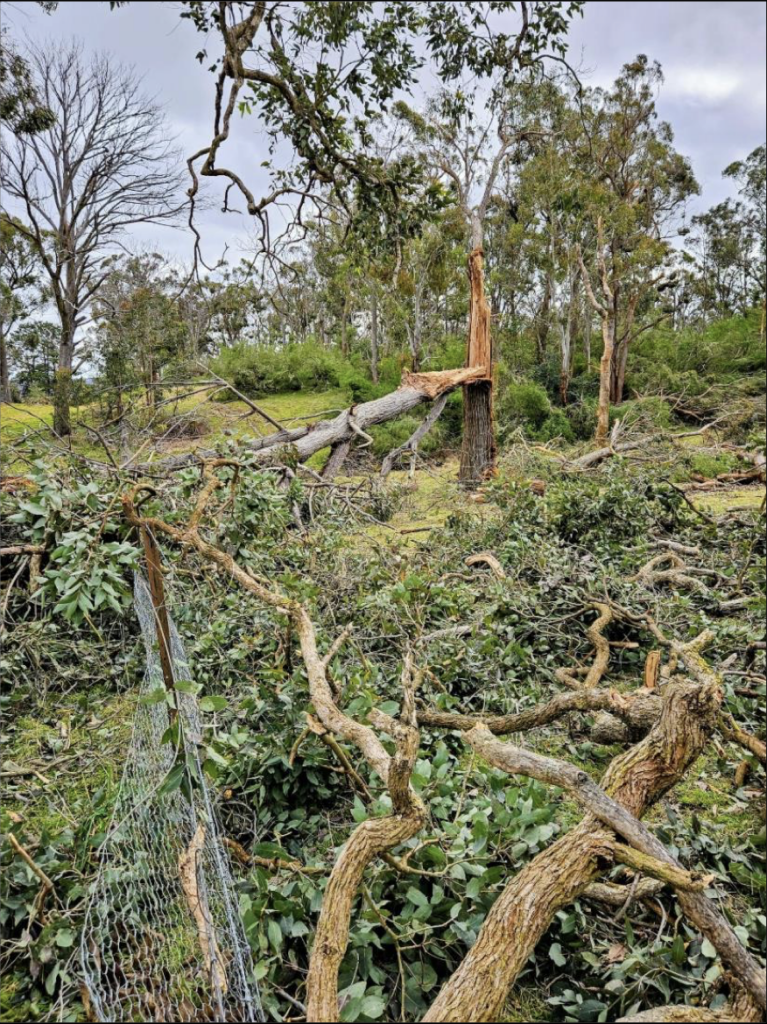
Acacias and Eucalypts along our windbreak were all squashed with many broken limbs and some pushed right out of the ground which was already soaked.
In this area we had many Correas and Hakea microcarpa, all of which escaped major damage and popped back up again after being weighed down to less than half their original height.
We had considerable gully flooding on the second and third days as the snow thawed, but once the snow had all melted, the widespread damage to trees, shrubs and some infrastructure became more apparent.
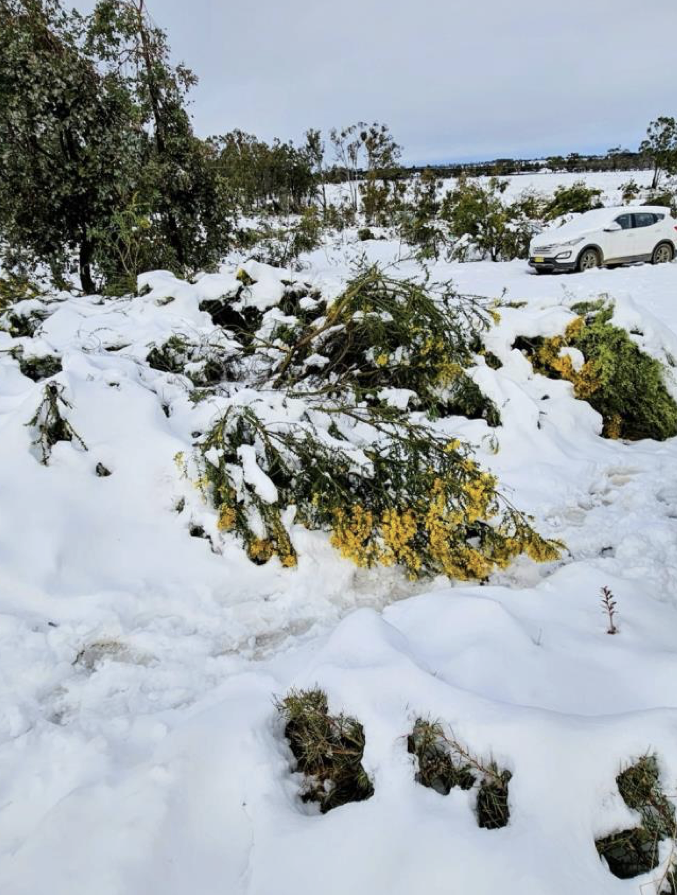
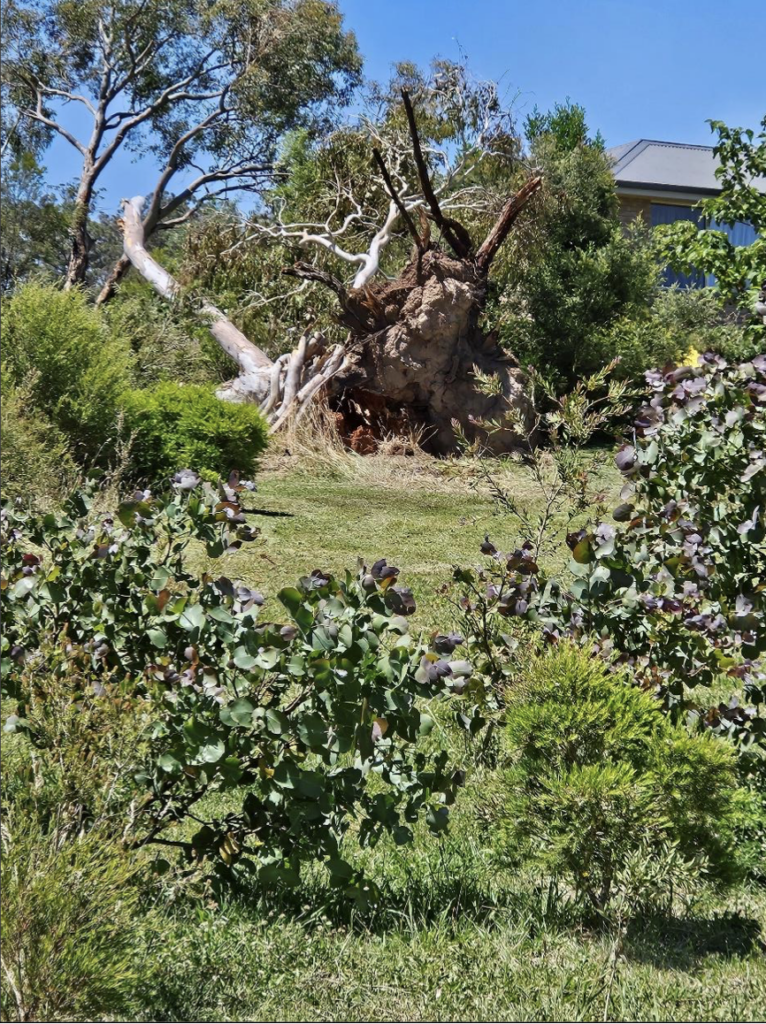
This Day Two photo shows large Acacia vestita shrubs which just popped out of the waterlogged ground with the weight of snow. This also happened to some Acacia rubida and Acacia floribunda which came out at the rootball. Others of the same species suffered many split branches, while some escaped unharmed.
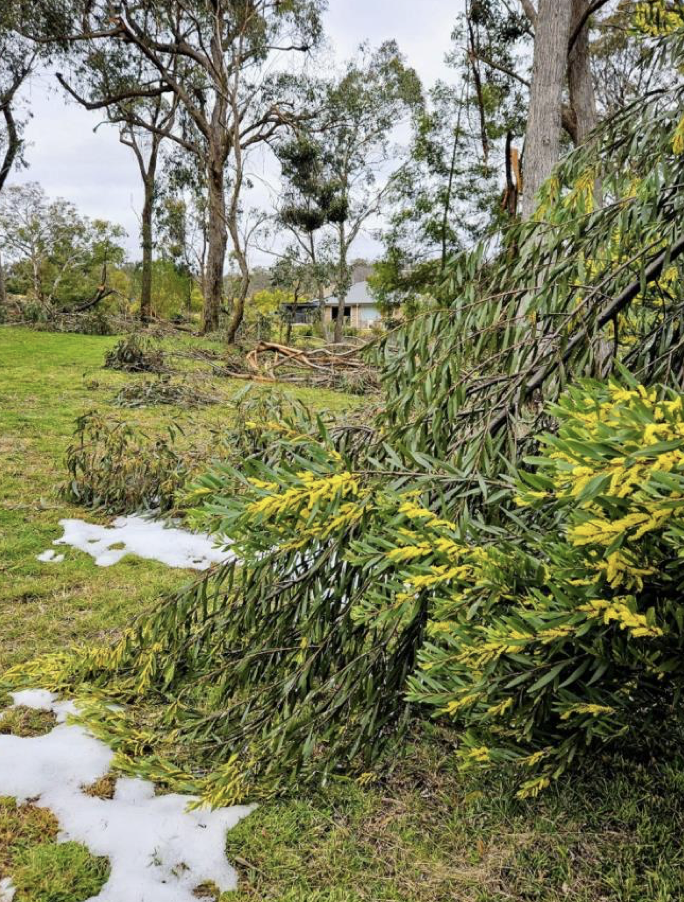
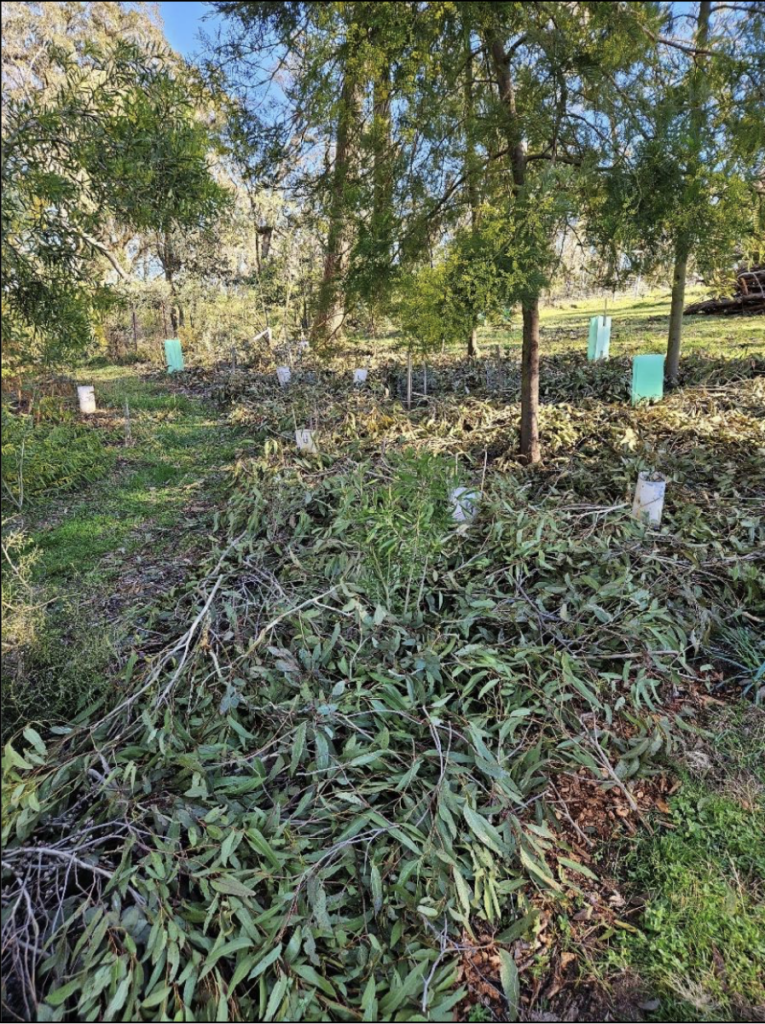
On the third day there was still snow evident in places, but the clean-up began. Here a flowering Acacia longifolia, reduced to a third of its height. In the background some of the many Eucalypts which fell down or lost branches.
The most extensive damage on our block was in the Acacias, Angophoras, Hakea salicifolia, Eucalyptus laevopinea, Eucalyptus melanophloia, with Melaleuca decussata in many places reduced to short matchsticks.
Angophora floribunda and Eucalyptus laevopinea were strewn about and across fences in many places.
Species that seem to have had the least damage include many Grevillea species, Correas, Banksias and Callistemons that hadn’t been pruned. Where Callistemons had been pruned in previous years, there were many splits at the joint of new stem growth.