
For the last thirty years, scientists have been concerned about increasing threats to animals that
act as plant pollinators. Over the last several years, concern has greatly increased. The worry is
that pollinator numbers are dropping and that this will adversely affect plants that rely on these
animals to reproduce. This decline is caused by human activities that have a detrimental effect
on the size and quality of plant and animal habitats, including human-induced climate change,
urbanisation, land clearing, improper use of pesticides (especially neonicotinoids, which are
among the most widely used insecticides on plants) and the spread of pathogens and
introduced species.
Research on pollinators in Europe and North America has focussed on the (European)
honeybee, while ignoring other types of pollinators such as butterflies. The wellbeing of the
honeybee is often equated with conservation of the diversity of bees in general. This ignores the
fact that the honeybee is a very adaptable species and has been introduced successfully to
habitats worldwide. Honeybees potentially disrupt the plant-pollinator relationship in habitats
where they are not native. They compete with native bees and other pollinators for pollen and
nectar, leading to reduced visits by native bees to plants. There is overseas evidence that plant
populations decline because of the prevalence of honeybees and the lack of native pollinators.
Honeybees themselves are important pollinators for agricultural crops, for example. Where
honeybees have become naturalised and other pollinators have declined, honeybees may
prevent some plants from failing to reproduce. Removing honeybees in that situation may
jeopardise the survival of plants they would visit. However, where honeybees have dramatically
increased in numbers, they are likely to disrupt ecological processes and interactions among
species.
Most of the research around the decline of pollinators has focussed on Europe and North America. We could conclude from this that Australia and its near neighbours have happily avoided this decline. However, some scientists who have looked at Australasia, in particular, beg to differ. They maintain that there’s little mention of the state of pollinators in our part of the world because nobody has done the research. Some research that has been done in Australia does not paint a glowing picture of the status of some invertebrate pollinators.Considerable amounts of public money in Australia are spent on programmes and research related to the honeybee but very little on native pollinators and the plants that rely on them. There’s a great need for Australia’s governments to invest in Australia’s native pollinators.
The varroa mite has caused feral or unmanaged honeybee colonies around the world to collapse and has recently arrived in Australia, where it will eventually spread across the country. Some scientists see this as an opportunity to assess the effect of feral honeybees on native plants and pollinators by carrying out before and after studies. They speculate that more research may show that many native pollinator species will benefit from a decline in honeybee numbers, with benefits flowing on to certain native plant species. Other plant species, however, may well suffer from the loss of honeybee pollination services in the short term, while other species again may not find a replacement pollinator because of the degraded habitat they grow in.
Home gardeners can help conserve native plants, particularly at-risk species, by growing them in their gardens and also help support native pollinator populations by making gardens attractive for pollinators. One of the more appealing but often overlooked pollinators is the butterfly. The butterfly house at Melbourne Zoo is a delightful showcase for some of Australia’s tropical butterfly species. Butterflies have a life cycle beginning with an egg, which hatches into a larva, and then develops into an inactive pupal stage before finally emerging as an adult butterfly. The larvae are caterpillars, described by the Australian Museum as “little more than tubular, efficient eating machines,” which chew on plant material. Losing some plant leaves to butterfly larvae is a small price to pay for bringing butterflies into your garden! As some butterflies may depend on one or a small number of native plants to survive, it’s preferable to plant host plant species for butterflies found locally. There are however some native plants that are popular hosts for various native butterflies. The adult has a liquid diet, sucking food through its long proboscis. As the adults feed on the nectar on flowers, pollen collects on their bodies and is transferred from plant to plant, contributing to plant pollination. Apart from the plants themselves, there are other aspects of garden design that will attract butterflies: spots for butterflies to bask in the sun, water, minimal pesticide use and some “messy” untrimmed grasses, for example, for shelter. There are plenty of good suggestions for making a butterfly-friendly garden given by Jaclyn Crupi, Koren Helbig and Sustainable Gardening Australia
Gardens that attract butterflies will also bring other native fauna, such as insects (e.g. native bees) and birds. Butterflies are very sensitive to changes in habitat and climate and for this reason scientists use them as one way to monitor those changes. Butterflies, in both the egg and adult stages, are also an attractive food for such predators as ants, wasps, spiders, praying
mantis and birds. Butterflies are quite low in the food chain, so if their populations decline, the effect will be felt higher up the food chain and may affect an entire ecosystem.
The last word goes to Kate Pearce, Invertebrates Manager at Melbourne Zoo: “Every species is important …. The average gardener can really protect those by planting the caterpillar plants and some nectaring plants. They’re beautiful! Why wouldn’t you want flowers and butterflies in your garden?”
Main sources
Native pollinators need more support than honeybees in Australia – here’s why The Conversation 15th January, 2026
All Aflutter: Gardening Australia ABC TV 5th December, 2025
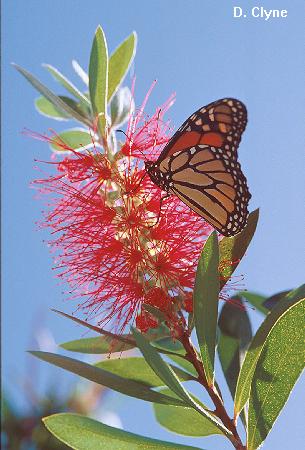
Wanderer Butterfly on a Callistemon (bottlebrush). Credit: Densey Clyne: Source
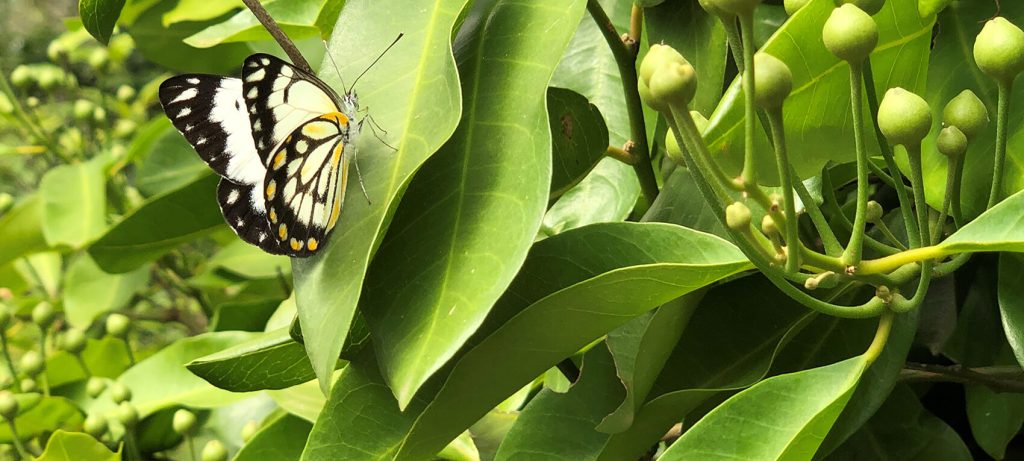
Caper White Butterfly at the Australian Botanic Garden Mount Annan. Credit: John Siemon: Source.
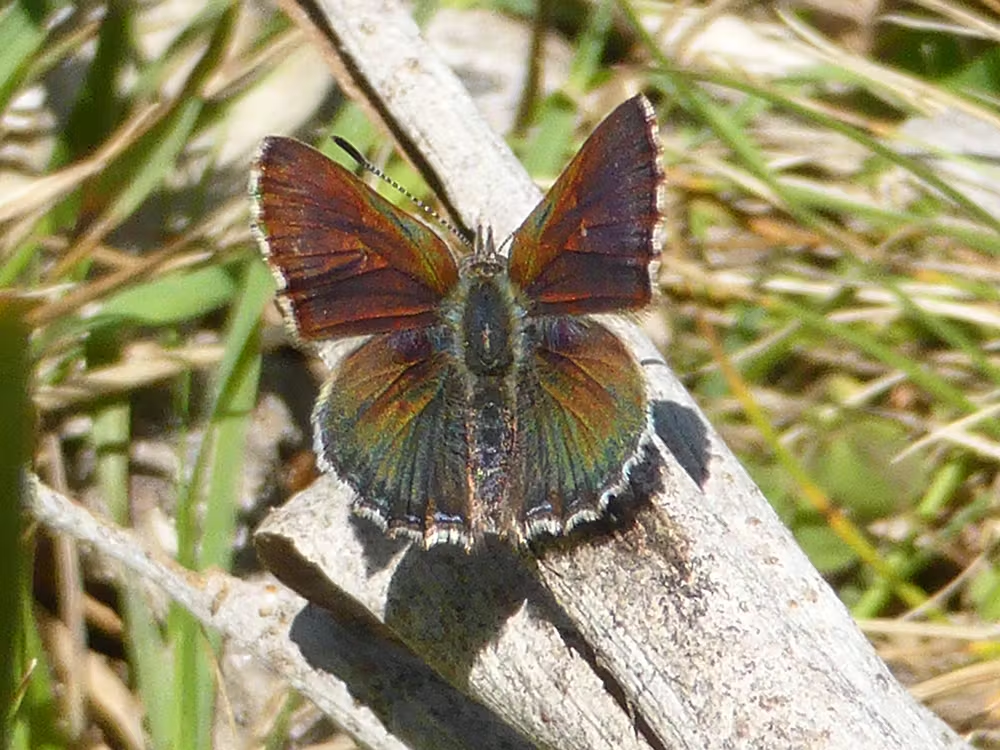
The Bathurst copper in NSW is benefiting from community planting of its food plant sweet bursaria. Credit: Tessa Barratt: Source