By Warren and Gloria Sheather. Editing and additional text by Dan Clarke.
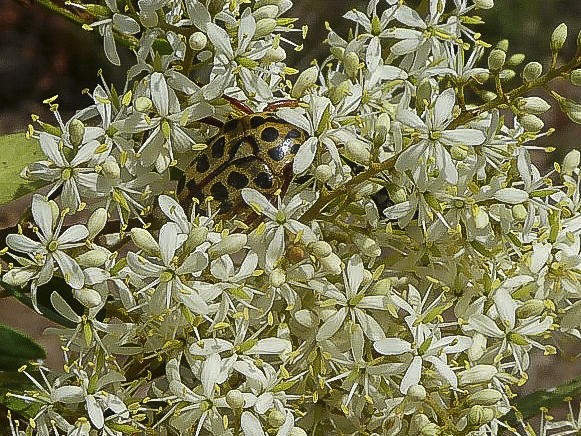
Bursaria-spinosa, image by Warren and Gloria Sheather.
An easy and useful plant for gardens. Although thorny and sometimes difficult to maintain, it can be grown in out-of-the-way areas or used as a barrier plant. Very hardy once established and highly recommended for attracting small native birds.
Blackthorn is ecologically significant, providing secure nesting sites for small birds.
Author’s note: Bursaria spinosa has regenerated vigorously in cold-climate gardens following the removal of grazing stock. Local clumps often show many old nests. The flowers provide nectar and attract insects such as Blue Flower Wasps (Scolia sp), whose larvae help control Scarab Beetles — a factor in eucalypt decline on the Northern Tablelands. The species is also crucial to the Bathurst Copper Butterfly (Paralucia spinifera), serving as its principal food plant; restoration work is underway to support its survival.
The plant may self-seed, can be pruned to maintain density and height, and may cause skin irritation due to sharp thorns. Handling prunings can be difficult. Occasionally affected by sooty mould and scale.
Plant in full sun with room to spread, away from traffic areas. Found naturally on clay, alluvium, and sandstone soils — generally thrives in most gardens once established.
The referenced photo shows a Spotted Flower Chafer Beetle seeking nectar.