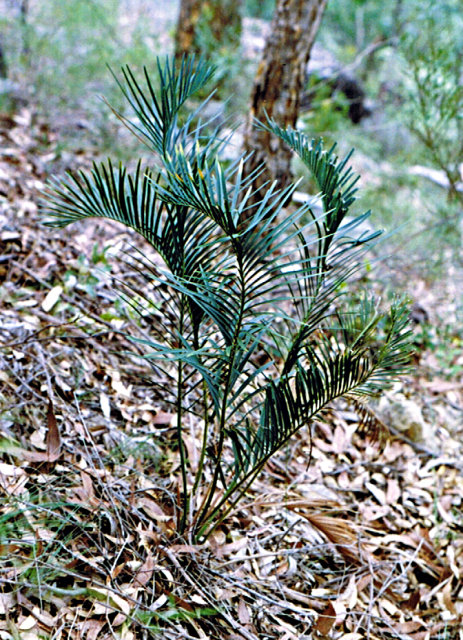
Cycads are among the most endangered plant groups on Earth. In 2020, 66 per cent of cycad species worldwide were identified as at risk. Australia has 80 of the approximately 360 cycad species in the world, making it a cycad hotspot. Through the Global Conservation Consortium for Cycads, a number of Australian institutions have joined the effort to prevent further cycad extinctions and create and maintain healthy cycad populations for the future.
Cycads originated 270 million years ago and are often thought of as living fossils that were associated with dinosaurs. While their lineage ranks them among the oldest seed plants, modern-day cycads have only developed over about the last 12 million years. They are very important in the study of plant evolution because their features allow botanists to make connections between early seed plants and the seed plants of today.
Cycads today are distributed globally in the tropics and subtropics. They are gymnosperms, along with conifers and the ginkgo and are also dioecious (i.e. there are separate female and male plants). Both the female and male plants bear cones, the female bearing seed cones and the male pollen cones. Despite a common view that cycads are wind pollinated, most species are pollinated by insects, such as particular species of thrips and beetles. Male cones are starchy and offer insects food as well as shelter. The insects become covered in pollen as they feed on the cones. What causes the insects to move from the male cone to the female cone, leading to pollination, is currently being researched; however, the male cones heat up each day and also produce volatile, repellent chemicals, with some research suggesting these factors may play a part in causing insects to move to nearby female plants. It can take at least several months from fertilisation for a mature seed to develop. Seeds are dispersed mainly by water and animals. Some species produce brightly coloured seeds that have an edible covering and are attractive to a variety of animals, such as marsupials, large birds and fruit bats, all of which can distribute the seeds widely.
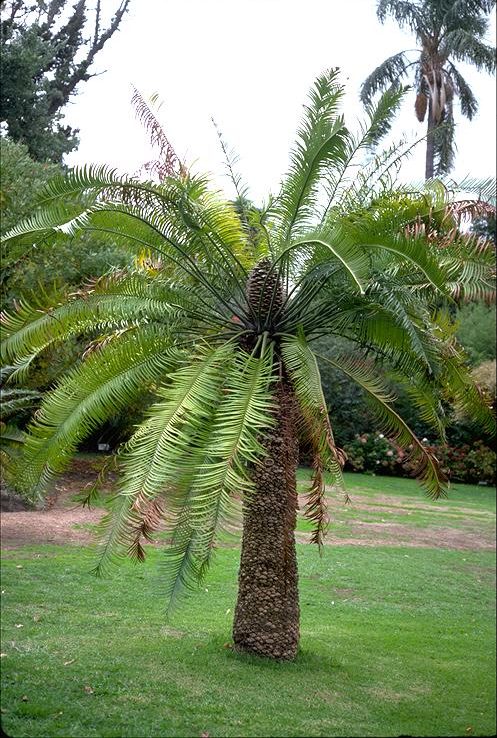
Cycads generally have some resistance to fire, with cone and new foliage production possibly stimulated by fire; however, intense fires can badly damage plants and inhibit seed production. Cycad reproduction is very slow, with the majority of cycads not becoming sexually mature until they are at least ten years old, a factor adding to their vulnerability.
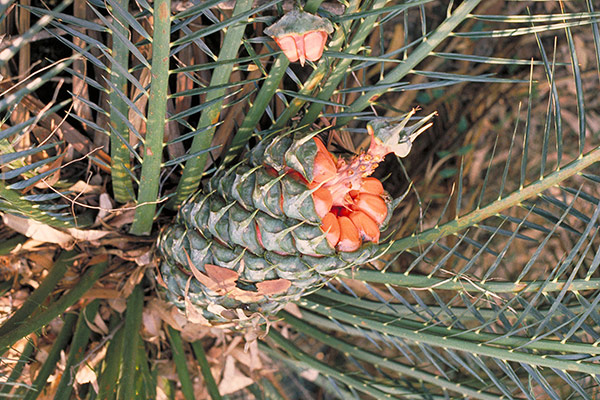
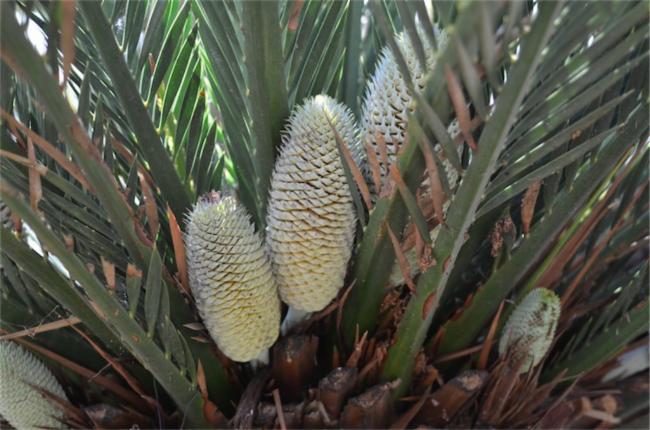
Indigenous peoples have sustainably used cycads as sources of food and medicine. English colonists realised Indigenous Australians ate cycad seeds. Various accounts state the unfortunate consequences of early colonists trying to follow suit, but unfortunately eating raw cycad seeds, one example being, “… our people… were violently affected by them both upwards and downwards… and our hogs… dyed after having eat them. It is probable however that these people have some method of preparing them by which their poisonous quality is destroyed” (Beaglehole, after J. Banks, 1770). Banks astutely realised that the seeds needed to be specially treated to make them edible.
The threats faced by cycads include the usual suspects of land clearing, habitat loss and degradation, which is intensifying with climate change. Attack by invasive insect species and poaching by collectors pose additional pressures to their survival. In Australia, a number of cycad species are distributed in arid areas where sheep and cattle are run. Cycads are more resilient than many other plants to drought and livestock have eaten their leaves during dry times in the absence of any other food. The result is permanent spinal cord damage, leading to “wobbles” in their back legs, or death. Farmers around the 1970s and 1980s were advised to carry out mass clearing of cycads in the interests of safeguarding stock but with devastating consequences for wild cycad populations. Expansion of development has also taken its toll of cycad populations, as habitat has been destroyed.
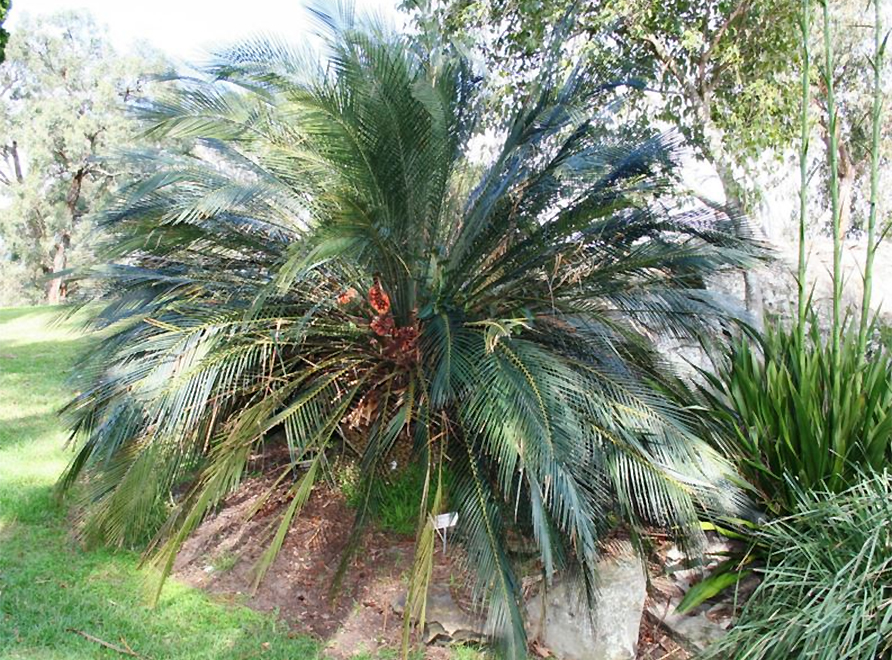
Cycads, as many plant lovers recognise, are very attractive plants. Their appeal has led, as with various other types of desirable garden plant, such as orchids and cacti, to poaching plants from the wild. Not only does this deplete plant numbers in a population but also reduces the genetic diversity of the remaining plants to the point where the population may not be robust enough to survive.
One of the champions of cycads is James Clugston, currently a researcher at Western Sydney University. He is also co-chair of the Global Conservation Consortium for Cycads and an enthusiastic science communicator. Some insights into his work to conserve cycads are shown in two very informative and entertaining short videos produced by Botanic Gardens of Sydney in their What the Flora!? series, – season 3, Saving cycads from extinction, parts 1 and 2).
James describes a number of key issues in conserving cycads. Cycad seeds cannot be successfully stored in seed banks using currently available techniques. Royal Botanic Gardens Victoria is developing methods to store cycad pollen to preserve at least some genetic material for the long term. Maintaining genetic diversity of any organism is essential to ensure survival. Species that have high genetic diversity are more able to survive pressures placed on them by the threats mentioned above. Underlining the need to understand and assess the level of genetic diversity in cycads, James has also worked on an analytical technique that can be used to provide insights into the genetic diversity of cycads and that will help in making informed decisions about future conservation management plans for cycads. Because cycads are very slow growing, have long generation times and face many unwelcome pressures, natural regeneration cannot keep pace with losses in wild populations. Conservation efforts are consequently looking at plantings outside cycads’ natural environments, such as botanic, public and private gardens, to maintain both plant numbers and as much genetic diversity as possible.
James emphasises that to successfully conserve cycads, they have to be kept in the front row at botanic gardens so visitors will learn to appreciate the real threats to cycads’ survival. “We can connect to our audience on a personal level,” he says. “We can say why these plants are important and by creating ownership of these plants and getting people to care about them, we can conserve these plants into the future.”