An attractive pest, or maybe not (Hibiscus Jewel Beetle)
By Jeff Howes
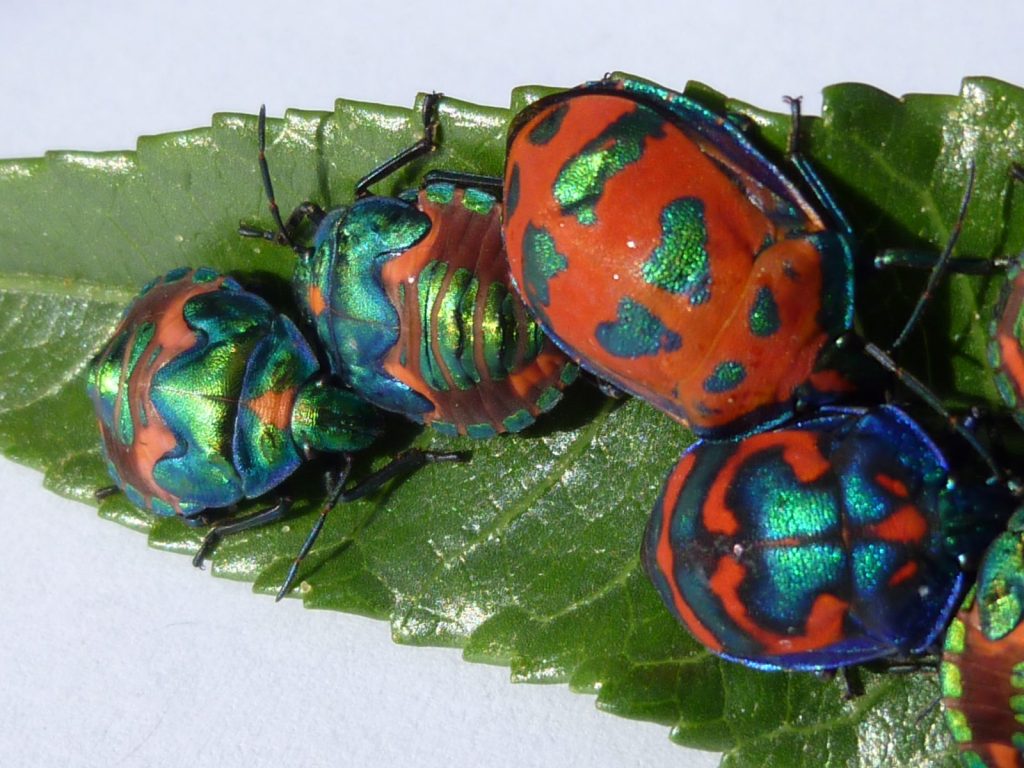
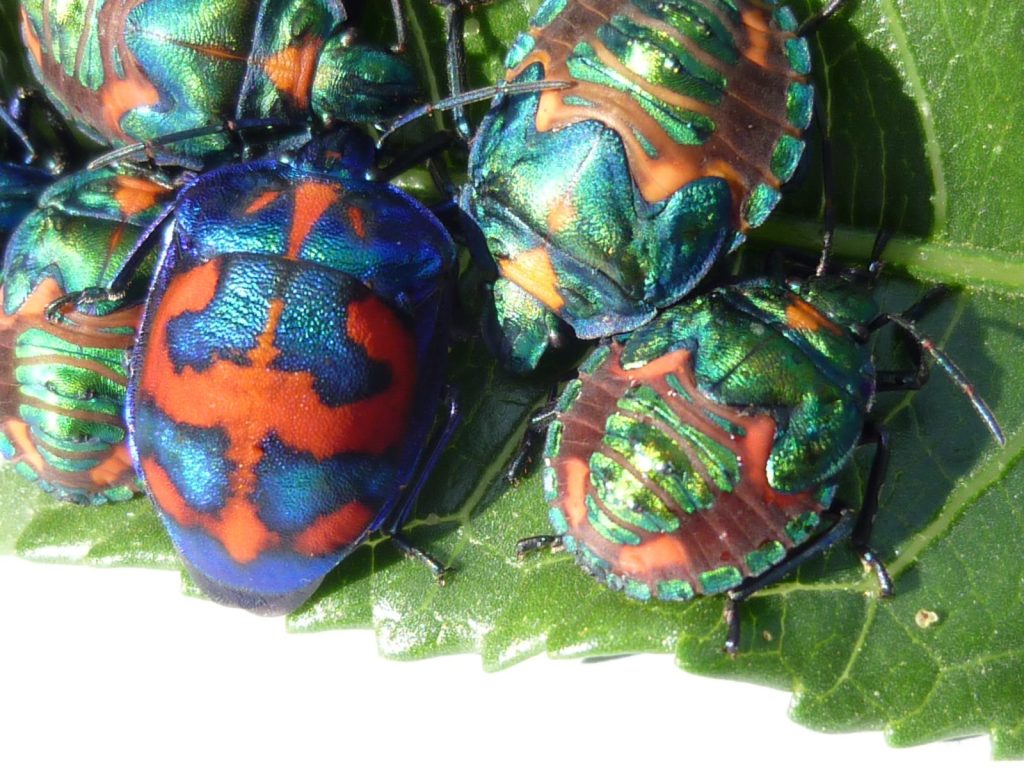
The hibiscus jewel beetle, also known as the Cotton Harlequin Bug or Hibiscus Harlequin Bug, is a brightly coloured insect feeding on hibiscus plants. The males and females are different colours, with the females mostly orange and the males mostly blue-red. They live in urban, agricultural and coastal areas in eastern Australia and feed on the sap of hibiscus plants, particularly young shoots, by piercing the stems. They are not known to bite or sting humans.
While generally not a major pest, they can be managed by hand-picking them off plants or by using soapy water to drown them. As I did not have many on my Hibiscus Gold Haze plant, I left them alone as they were too attractive not to.
Distribution: Found mainly along the east coast of Australia, from Queensland through New South Wales and into Victoria, but also occurs in nearby Pacific regions.
Appearance:
Males are usually metallic blue to red with iridescent green or purple markings.
Females are larger and mainly orange or yellow with black markings.
Their bright colours act as a warning to predators, as they contain foul-tasting chemicals.
Life cycle: Females lay clusters of eggs on the underside of leaves or stems and often guard them until hatching. The nymphs are wingless and brightly coloured, moulting several times before becoming adults.
Host plants: While hibiscus and related Malvaceae plants are preferred, they may also feed on cotton, okra, and other soft-stemmed ornamentals.
Role in gardens: Although they can cause minor damage by sucking sap from stems and young shoots, in most cases they do not threaten plant health unless present in large numbers.
Predators: Their vivid colours deter many predators, but birds, spiders, and assassin bugs may still prey on them.