This article first appeared in Hunter Valley Group Newsletter, Gumleaves June 2025 edition
Allelopathy is the production and release of chemicals by organisms into their environment that act on other organisms. It is important for plants and other organisms that cannot move, as this provides a chemical defence mechanism. For plants this can be used to protect against herbivores, disease, and is even used when competing with other plants.
These chemicals are not waste products, the plant must spend energy and resources to produce them. If the cost of producing an allelopathic chemical is significantly less than say the damage from a herbivore, then it represents a worthwhile investment for the plant.
Many native plants (e.g. Myrtaceae & Rutaceae) produce oils to make them less palatable for herbivores, this in turn has resulted in herbivores that have adapted to be able to eat these leaves (e.g. Koalas & spitfire grubs). An unfortunate side effect of the plants that produce oils is increased flammability and the resulting bushfire risk.
Many of the chemicals produced by plants also serve to help fight bacterial and fungal disease. We make use of many of these (e.g. Tea Tree Oil) in our own treatments. There is a rich collection of allelopathic chemicals produced by plants that are already used, with more being researched for further uses.
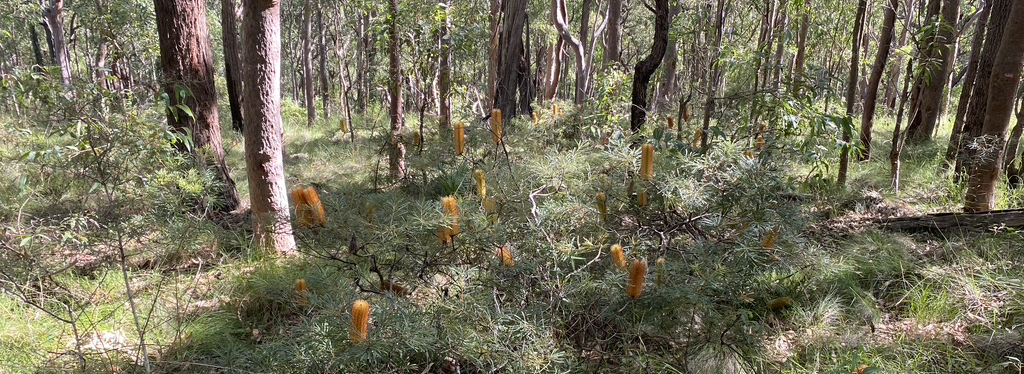
Some of these chemicals also have the effect of suppressing the growth of plants that are exposed to them. Have you ever wondered why plants have difficulty growing under some trees (e.g. Casuarinas & Eucalypts)? It is not just about resource (water & nutrients) competition, allelopathic chemicals that get released from the tree can suppress the growth of plants growing below. It is a way to reduce the competition from other plants. Like with herbivores, some plants have adapted to be resistant to these chemicals, so that they can manage to grow under the trees.
These chemicals are one of the reasons that help plants to become weedy when taken from their natural environment. Without the organisms that have evolved with them, they have no natural enemies to keep them in check, and can end up becoming a problem. Many of our worst weeds are from other countries and they have a different set of allelopathic chemicals. The local herbivores will avoid eating them, they are resistant to local pests and diseases, and many of the local plants do not like growing in close proximity. e.g. Lantana, Onion Weed, Camphor Laurel, African Olive and many others. This also applies to Australian plants taken overseas, there are dense paperbark (Melaleuca quinquinervia) forests in Florida, Acacia longifolia in South Africa, and Eucalypts in California.
Bringing this back to your garden, there are some things that you can do to help with growing plants under trees. First try to pick plants that grow naturally as understory plants, these have evolved to live under trees and are thus more likely to be able to grow there. Also consider where the plants are originally from and pick plants that are from a similar geographic area. Another option is to trim branches that are directly above selected plants.
Don’t also forget that in addition to allelopathy, you could also be simply seeing the result of competition for resources (light, nutrients and water). Addressing these by supplemental watering, fertiliser & pruning the shading tree, may all help.